The Centers for Disease Control and Prevention (CDC) and the Washington State Department of Health officially confirmed the first human fatality from avian influenza A(H5N1) in the United States in 2026 during early November, involving an agricultural worker in Yakima County with pre-existing health vulnerabilities exposed to infected dairy cattle; state epidemiologists documented three cumulative human infections since mid-October across commercial dairies as the viral outbreak spread across 33 cattle herds in Yakima County and adjacent facilities in Benton County, prompting the CDC's November 6 FluView national surveillance update to maintain general public risk at low while issuing heightened containment protocols across livestock corridors.
What Epidemiological Data Points Define the Washington H5N1 Outbreak?
- Cumulative Human Confirmed Cases: 3 total confirmed cases in Washington dairies
- CDC Weekly FluView National Status: Week 43 Report: Low risk to general public
- Preventive Consumer Health Advisory: Strict prohibition against raw unpasteurized milk;CDC One Health Emergency Operations
What Biological Transmission Vectors Led to Fatal Cross-Species Spillover?
The individual engaged in prolonged occupational handling of symptomatic dairy cows within enclosed, high-pressure milking parlors where aerosolized unpasteurized milk was present. Although the patient presented with chronic cardiopulmonary and metabolic co-morbidities, viral replication triggered acute respiratory distress syndrome (ARDS) and multi-organ failure. Infectious disease clinicians noted that the fatality illustrates the vulnerability of immunocompromised agricultural workers exposed to dense mammalian viral loads, underscoring that H5N1 presents clinical severity when mucosal barriers are breached.
What Biosecurity Lapses Permitted Rapid Spread Across 33 Commercial Herds?
Yakima and Benton counties represent the industrial core of Pacific Northwest commercial dairy production, and the transmission of the virus across 33 discrete dairy operations within three weeks revealed critical vulnerabilities in farm biosecurity infrastructure.
State veterinary field investigations identified shared mechanized milking equipment, inadequate vehicle tire sanitization between separate facilities, and the unmonitored movement of temporary contract milking laborers between agricultural enterprises as primary vectors driving horizontal herd transmission. Furthermore, a significant cohort of infected cows displayed subclinical manifestations with mild, transient reductions in milk production. This asymptomatic carriage delayed timely physical quarantine, permitting high viral titers within unpasteurized milk pools to contaminate barn surfaces and bedding substrate.
How Are Federal and State Public Health Frameworks Deploying One Health Countermeasures?
In its national surveillance briefing on November 6, the CDC emphasized that while viral sequences maintain avian-like alpha-2,3 sialic acid receptor binding preferences without adaptations for human-to-human transmission, sustained replication in dairy cattle creates evolutionary opportunities for mammalian adaptation.
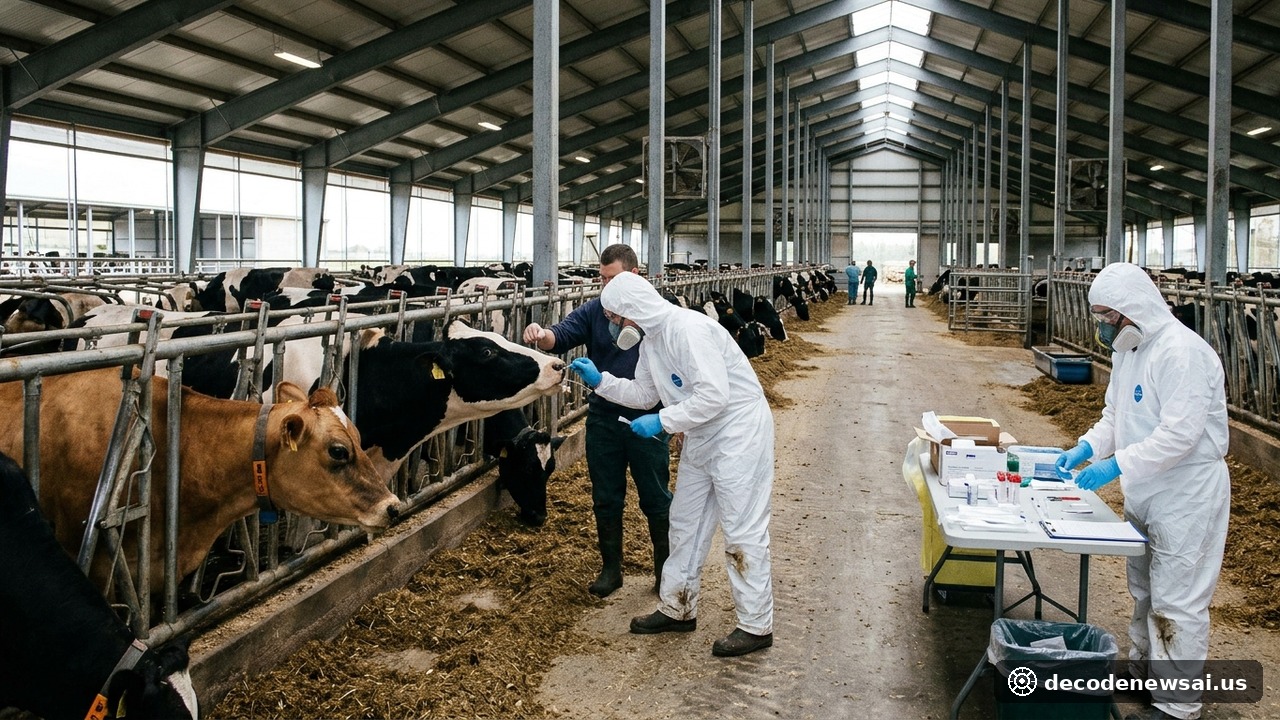
State departments of agriculture and public health agencies are executing interagency One Health containment protocols across livestock regions. Mobile epidemiological teams are conducting on-farm health screenings and distributing specialized personal protective equipment (PPE), including N95 respirators and eye protection, alongside prophylactic antiviral regimens of oseltamivir to exposed dairy personnel. Simultaneously, the USDA enforced mandatory premovement lactating dairy testing across state lines, while the FDA reiterated federal advisories prohibiting the distribution and consumption of unpasteurized raw dairy, severing transmission pathways into civilian food systems.