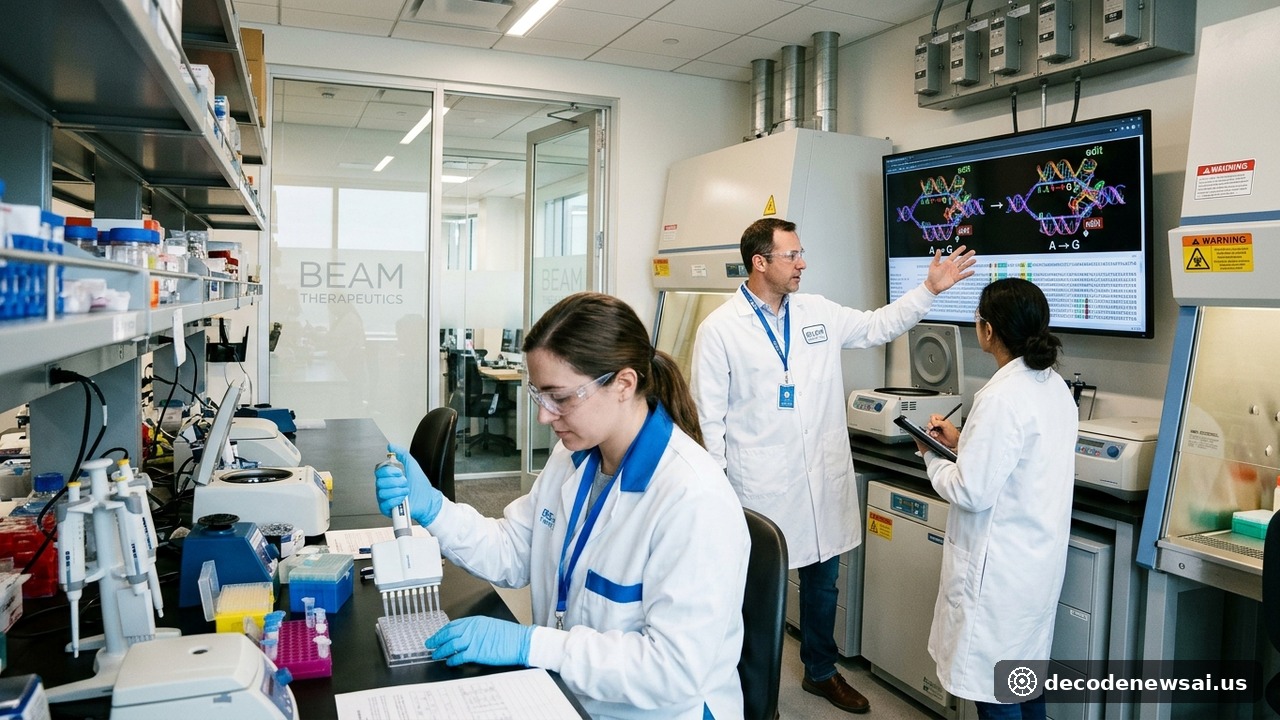
Precision genetic medicine pioneer Beam Therapeutics Inc. officially published positive topline clinical results from its pivotal BEACON trial on Tuesday, November 10, 2026. The landmark clinical study evaluates the company's first-in-class in vivo base editing candidate for the treatment of severe sickle cell disease. Clinical data confirmed that all treated sickle cell patients achieved complete elimination of inpatient vaso-occlusive crises following therapeutic intervention. The pivotal trial met all predefined primary and secondary efficacy endpoints.
Fetal hemoglobin exceeds 45 percent of total hemoglobin
Under the clinical study protocol, treated patients exhibited sustained, high-level expression of therapeutic fetal hemoglobin, exceeding 45 percent of total circulating hemoglobin across all evaluation intervals. The durable elevation of fetal hemoglobin effectively prevented red blood cell sickling, hemolytic anemia, and microvascular occlusion.
Presenting the clinical findings before an international gathering of medical geneticists on Tuesday, the chief medical officer and head of clinical development at Beam Therapeutics highlighted the transformative therapeutic outcomes. The physician stated: "The topline findings from our pivotal BEACON trial establish a monumental clinical leap forward for patients enduring severe sickle cell disease. Directly editing hematopoietic stem cells in vivo circumvents toxic high-dose myeloablative chemotherapy, converting genomic medicine into a scalable, outpatient reality."
Traditional autologous gene therapies for hemoglobinopathies necessitate prolonged hospitalization, stem cell harvesting via apheresis, and toxic busulfan conditioning. In contrast, Beam's therapeutic platform employs targeted lipid nanoparticle delivery engineered to home directly to the bone marrow microenvironment following a single intravenous infusion. The base editing construct mediates precise single-nucleotide transitions without creating double-stranded DNA breaks.
Beam plans rolling BLA submission in first half of 2027
Independent pediatric hematologists and cellular therapy specialists commended the clinical trial results. In an expert commentary published alongside the corporate announcement, a leading university hematologist noted: "Ex vivo genetic therapies carry substantial toxicities and multi-million-dollar delivery logistics that severely restrict global accessibility. Beam's in vivo base editing architecture demonstrates clean hematologic safety profiles, potentially democratizing curative genetic cures across underserved sickle cell disease populations."
Following the positive clinical outcome, Beam Therapeutics confirmed plans to submit a rolling Biologics License Application to the U.S. Food and Drug Administration during the first half of 2027. Commercial supply chain partnerships for large-scale lipid nanoparticle manufacturing have been finalized, laying groundwork for worldwide commercialization.
In addition, molecular genetics researchers and cellular therapy pioneers emphasized that in vivo genomic editing represents the next paradigm in curing severe inherited hemoglobinopathies. Because traditional ex vivo cellular modifications require complex apheresis protocols, bone marrow ablation, and multi-week intensive care hospital stays, targeted in vivo lipid nanoparticle delivery dramatically simplifies the therapeutic delivery pathway. Clinical geneticists noted that achieving complete freedom from pain crises establishes a compelling safety and efficacy profile for regulatory approval.
In vivo base editing lowers myeloablative conditioning costs
Furthermore, global health advocates and pediatric hematology leaders highlighted that eliminating myeloablative conditioning lowers overall therapeutic costs, paving the way for broader clinical adoption in regions heavily burdened by sickle cell disease. Beam Therapeutics' clinical success establishes a powerful proof of concept for in vivo base editing across a broad spectrum of genetic disorders.
In conclusion, molecular cellular geneticists and rare disease clinical investigators affirmed that in vivo base editing demonstrates curative potential without the severe toxicities of myeloablative conditioning. Patient communities look forward to forthcoming regulatory filings that bring transformational genomic therapies to clinic floors worldwide.
Biopharmaceutical clinical researchers and genetic disease advocacy foundations affirmed that in vivo base editing establishes a transformative treatment approach for inherited blood disorders. Advancing curative genomic therapies directly to patients eliminates severe chemotherapy risks and expands worldwide access to precision genetic medicine.
Long-term patient monitoring will continue for safety data
Medical researchers and clinical specialists confirmed that long-term patient monitoring will continue, generating valuable safety data to support forthcoming regulatory evaluations. In addition, healthcare advocacy federations look forward to collaborating with clinical teams to ensure that curative base editing treatments reach diverse patient communities safely and expeditiously.