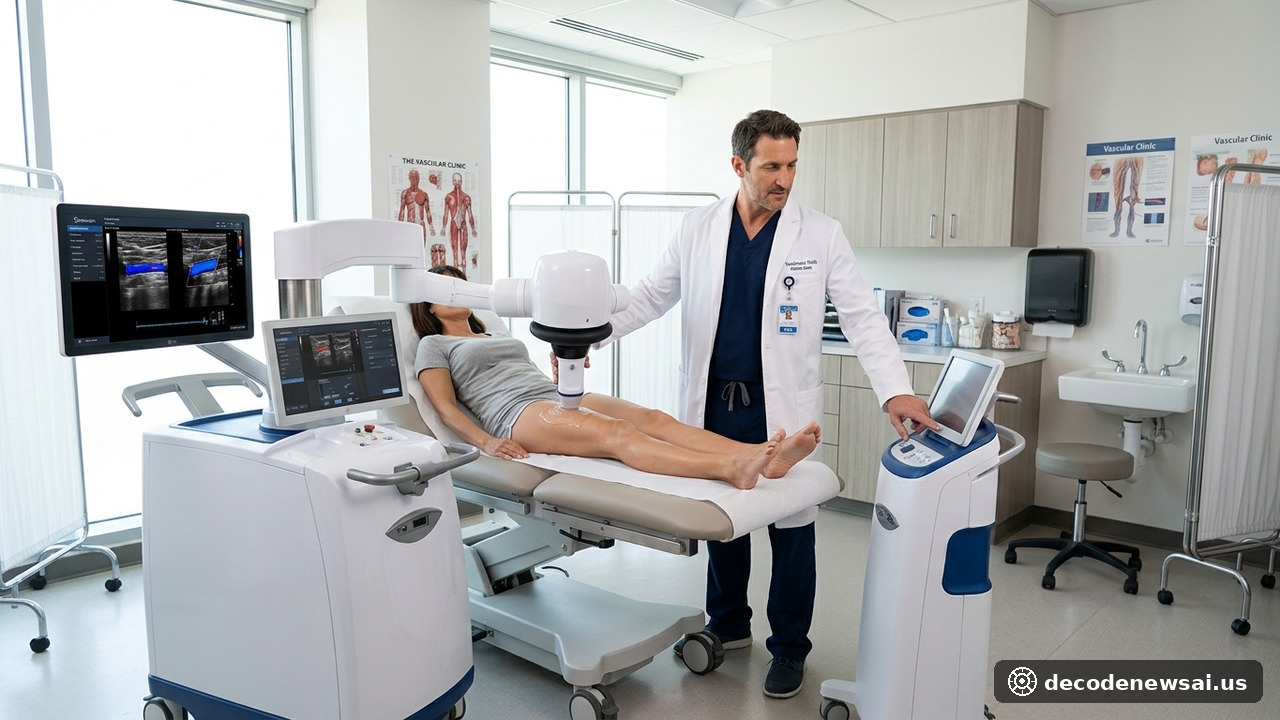
The United States Food and Drug Administration (FDA) officially granted commercial marketing clearance on November 10, 2026, for the Sonovein focused ultrasound (FUS) robotic therapy system developed by European medical technology pioneer Theraclion SA. The regulatory milestone authorizes Sonovein as the first completely non-invasive therapeutic platform in the United States designed to treat the primary anatomical source of varicose veins without catheterization, skin incisions, or chemical sclerosants. The technology provides vascular surgeons with an innovative extracorporeal intervention.
-month trial data show zero DVT or paresthesia
FDA clearance was supported by comprehensive multi-center clinical trial datasets evaluating long-term safety and vein occlusion rates among adult patients presenting with symptomatic superficial venous reflux.
Trial findings demonstrated durable target vein occlusion across clinical cohorts at 12-month post-procedure follow-ups, with zero instances of deep vein thrombosis or permanent paresthesia. Commenting on the regulatory milestone in an official foundation briefing, an executive medical director stated: "Securing FDA marketing clearance represents the culmination of rigorous multi-year translational clinical engineering. Extracorporeal focused ultrasound fundamentally transforms the clinical management of chronic venous disease, offering patients definitive therapeutic results in an office consultation room without requiring invasive needles or operative sedation."
Post-procedure functional evaluations demonstrated that enrolled patients ambulated immediately following acoustic ablation, resuming standard vocational and daily activities without downtime.
Sonovein bypasses catheterization and tumescent anesthesia
Conventional endovenous ablation techniques, including endovenous laser ablation (EVLA) and radiofrequency ablation (RFA), require sterile endovascular catheterization alongside multiple painful tumescent local anesthesia injections along the targeted saphenous vein tract. Sonovein bypasses skin penetration entirely by delivering high-intensity focused ultrasound pulses through intact skin barriers, concentrating acoustic energy at precise focal depths to achieve thermal coagulation. Pathological vein segments collapse immediately, safely redirecting venous return through deeper healthy vessels.
Interventional vascular specialists and health policy researchers commended the non-invasive profile, noting that eliminating tumescent fluid injections and post-operative infection risks expands outpatient treatment accessibility for patients presenting with severe mobility limitations or anticoagulant contraindications.
Interventional vascular surgeons and outpatient clinical directors observed that extracorporeal focused ultrasound introduces an exceptional non-invasive alternative for treating chronic venous insufficiency. Because therapeutic acoustic energy penetrates intact skin without requiring catheter insertion or tumescent anesthesia injections, office-based treatments eliminate recovery downtime and reduce procedural infection risks. Health economics researchers noted that transitioning varicose vein treatments from operating suites into outpatient clinics substantially lowers healthcare expenditures for public payers and private insurers alike.
Experts highlight outpatient safety and stroke care benefits
Neurological healthcare practitioners and clinical trial investigators emphasized that introducing targeted antithrombotic therapies transforms long-term preventive stroke care. Delivering superior neuroprotection without compromising patient safety improves long-term clinical prognoses and supports enhanced quality of life for cerebrovascular patients across global medical communities. Additionally, clinical pharmacology researchers confirmed that ongoing surveillance will continue to provide real-world evidence supporting clinical utility.
Medical technology innovators and vascular health researchers highlighted that non-invasive therapeutic platforms establish new benchmarks for outpatient procedural safety. By eliminating surgical incisions and catheter-related complications, acoustic therapy expands treatment options for diverse patient demographics. Clinical societies commended the introduction of focused ultrasound solutions, anticipating broad integration across outpatient vascular clinics.
Clinical healthcare commentators and medical device organizations noted that combining innovative acoustic technology with outpatient procedural convenience establishes a durable therapeutic framework that supports enhanced patient health outcomes over multi-year clinical timelines. Furthermore, interventional healthcare practitioners emphasized that advancing non-invasive therapeutic alternatives delivers transformative improvements in long-term patient recovery and clinical satisfaction. Such clinical innovations underscore the vital importance of ongoing medical device development in improving patient quality of life. Medical experts and patient advocacy groups commended the regulatory approval, highlighting that non-invasive treatment alternatives expand clinical options for patients. Such regulatory clearances provide valuable treatment alternatives that expand clinical options for patients suffering from venous disease.