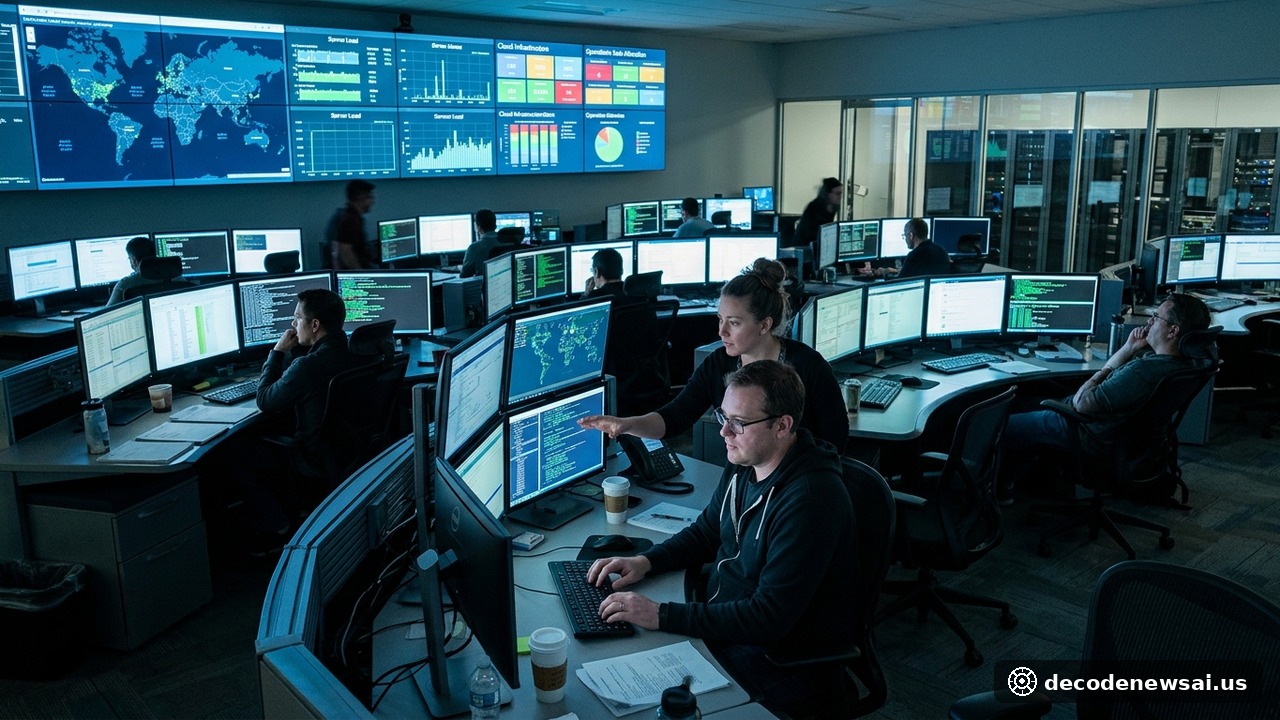
Microsoft announced a policy update on November 9, 2026. It adds automated concurrency and usage rate caps to Microsoft 365 Copilot Chat. The caps apply to large enterprise tenants. The framework covers organizations with 2,000 or more licensed user seats.
Rate limiters and token throttling for peak-hour demand
Microsoft is adding algorithmic rate limiters. It is also adding tenant-level token throttling. Compliance audit logging is part of the release. Microsoft says the goal is cloud availability. It also cites lower latency spikes and protection of sovereign enterprise data.
The deployment reflects rapid operational normalization of generative AI. Multinational corporate environments are the setting. Hundreds of thousands of knowledge workers run concurrent complex analytical queries. Hyperscale cloud clusters see acute peak-hour demand.
Microsoft set standardized rate limits under the updated rules. The limits govern automated script executions. They also govern bulk API queries. When tenant telemetry detects automated processes above baseline quotas, cloud gateways apply temporary smoothing delays.
The policy keeps shared computational resources for general interactive productivity. Engineering documentation said throttling protects ordinary desktop users. It guards them from performance degradation. Daily document generation keeps sub-second latency targets.
Meeting summarization and spreadsheet automation also keep those targets. The targets hold across core productivity applications. The release also delivers enterprise data governance capabilities. These are tailored to regulated financial services and healthcare organizations.
Audit retention and cryptographic purge at compliance deadlines
Enterprise tenant administrators can configure granular audit retention schedules. They can also set cryptographic deletion parameters. Compliance officers can configure corporate audit consoles. The consoles archive sensitive conversational metadata into immutable tamper-proof logs.
Retention policies automate permanent cryptographic purge of operational transcripts. The purge occurs at statutory compliance deadlines. This lowers liability risks for corporate legal teams. The executive spoke during an enterprise architecture briefing.
The briefing was at corporate headquarters in Redmond, Washington. A corporate vice president of business applications detailed the engineering rationale. The executive stated: "Operating enterprise AI at global scale requires disciplined equilibrium between boundless computing power and uncompromising data governance, guaranteeing that corporate data assets remain insulated."
Industry analysts noted that tenant capacity governance marks an essential transition. They said it moves toward mature commercial resource management. Enterprise computing competition has moved beyond raw model parameter counts. It now favors dependable multi-tenant cloud orchestration.
Enterprise technology directors and cloud infrastructure architects observed a quota effect. Seat quota adjustments let corporate tenants optimize generative AI software licensing expenditures. They do so while maintaining robust governance standards. Large-scale deployments of autonomous workplace assistants generate substantial compute loads.
Usage-based governance for third-generation autonomous agents
Those deployments also generate recurring enterprise subscription fees. Targeted allocation ensures seats are actively used by high-productivity business units. Cybersecurity compliance officers praised the administrative enhancements. They noted that standardized permission baselines significantly decrease the risk of inadvertent data leakage.
The leakage risk spans corporate knowledge repositories. Industry market research analysts projected a shift. Usage-based governance models will become standard operational practice. That will happen across global enterprise software ecosystems over the next decade.
The framework prepares enterprise tenants for third-generation autonomous business agents. Corporate technology leaders can deploy autonomous accounting and code testing agents. They get transparent cost and bandwidth parameters. Microsoft began activating the administrative telemetry across eligible enterprise tenants globally.
Enterprise IT infrastructure consultants and corporate cybersecurity directors emphasized a safeguard. Proactive cloud resource governance protects critical enterprise assets. It also contains operational overhead. Standardizing tenant-level usage parameters establishes a solid operational foundation.
The foundation supports secure, scalable artificial intelligence integration. That integration is aimed at Fortune 500 enterprises. Cloud management professionals noted that transparent administrative controls foster trust. They also support predictable operational planning for global tenants.
Executives expect seamless multi-regional integration
Enterprise technology executives commended the structured rollout. They anticipate seamless integration across multi-regional cloud environments. They expect no administrative disruption. Enterprise software researchers also observed a governance effect.
Clear administrative guidelines empower organizations to extract maximum value. The value comes from cloud-based generative AI systems. Organizations do so while upholding strict data governance standards. Global corporate leaders look forward to continued improvements across enterprise cloud services.