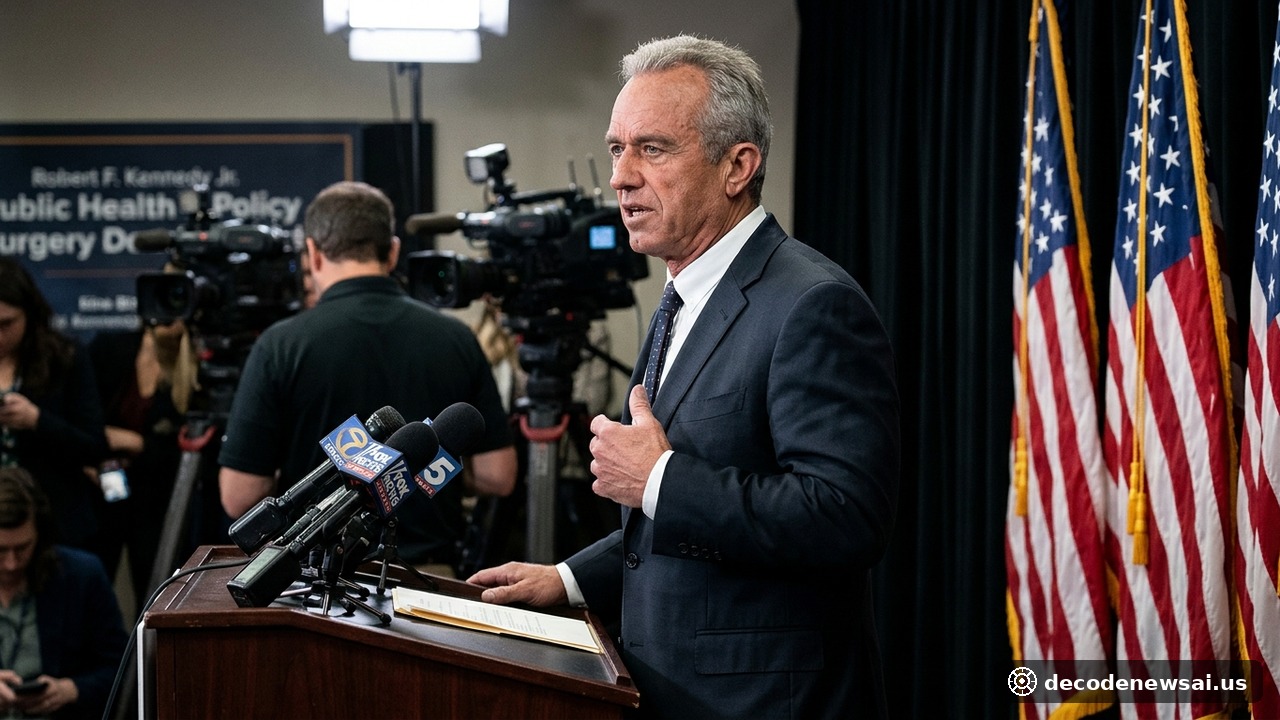
President-elect Donald J. Trump issued an official personnel directive on November 13, 2026, establishing the external advisory entity Department of Government Efficiency (DOGE), directed jointly by Tesla Chief Executive Officer Elon Musk and entrepreneur Vivek Ramaswamy. Its mandate focuses on identifying bureaucratic redundancies, dismantling regulatory barriers, and auditing federal expenditures; the panel will conclude structural reviews no later than July 4, 2026, the 250th anniversary of the Declaration of Independence. DOGE will function as an external presidential advisory committee outside formal statutory cabinet departments, bypass Senate confirmation requirements, and establish direct operational integration with the White House Office of Management and Budget, recommending executive orders to repeal administrative rules. Musk declared publicly that the effort intends to review the entirety of the $6.5 trillion annual federal budget, targeting at least $2 trillion in waste and structural spending reductions.
Delivering keynote remarks from Palm Beach, Florida, documented by the Associated Press and CBS News, Trump said Musk and Ramaswamy would apply private sector commercial principles to federal administration, confront entrenched government spending, and provide an agile, transparent, and accountable federal structure as the nation celebrates its 250th anniversary. Co-director Vivek Ramaswamy stated on social media that government commissions should incorporate firm statutory expiration dates and that DOGE's ultimate organizational objective is to dismantle unnecessary bureaucratic overhead and formally conclude operations.
The American Federation of Government Employees, representing hundreds of thousands of federal civil servants, warned that unelected corporate executives lack statutory authority to override civil service protections codified by Congress, and labor legal teams announced intentions to use administrative grievance procedures. Constitutional and administrative legal scholars noted that under Article I power over the federal purse belongs exclusively to the legislative branch; non-statutory advisory commissions cannot unilaterally rescind statutory appropriations or dissolve federal agencies established by Congress.