North American Elimination Status Under Review
International health experts convened in Washington this week under the Pan American Health Organization (PAHO) to determine whether the United States and Mexico have lost measles elimination status after sustained viral transmission lasting more than one year; closed-door deliberations examine genomic sequencing from outbreaks that started in early 2025, and final findings are scheduled for release next week.
Mexico has reported more than 20,500 confirmed measles cases and 50 related deaths as of this week, with most fatalities among children younger than 5 years old; the United States declared measles eliminated in 2000, while Mexico achieved that status in 2016. Federal data published November 13, 2026, showed U.S. confirmed measles infections reached 5,412 cases across 47 jurisdictions, roughly 2.4 times the 2,289 cases recorded in all of 2025 and up from 285 cases in 2024; 96% of 2026 cases are outbreak-associated, hospitalizations climbed to 591 patients, and children under age 5 had the highest hospitalization rate at 17%.
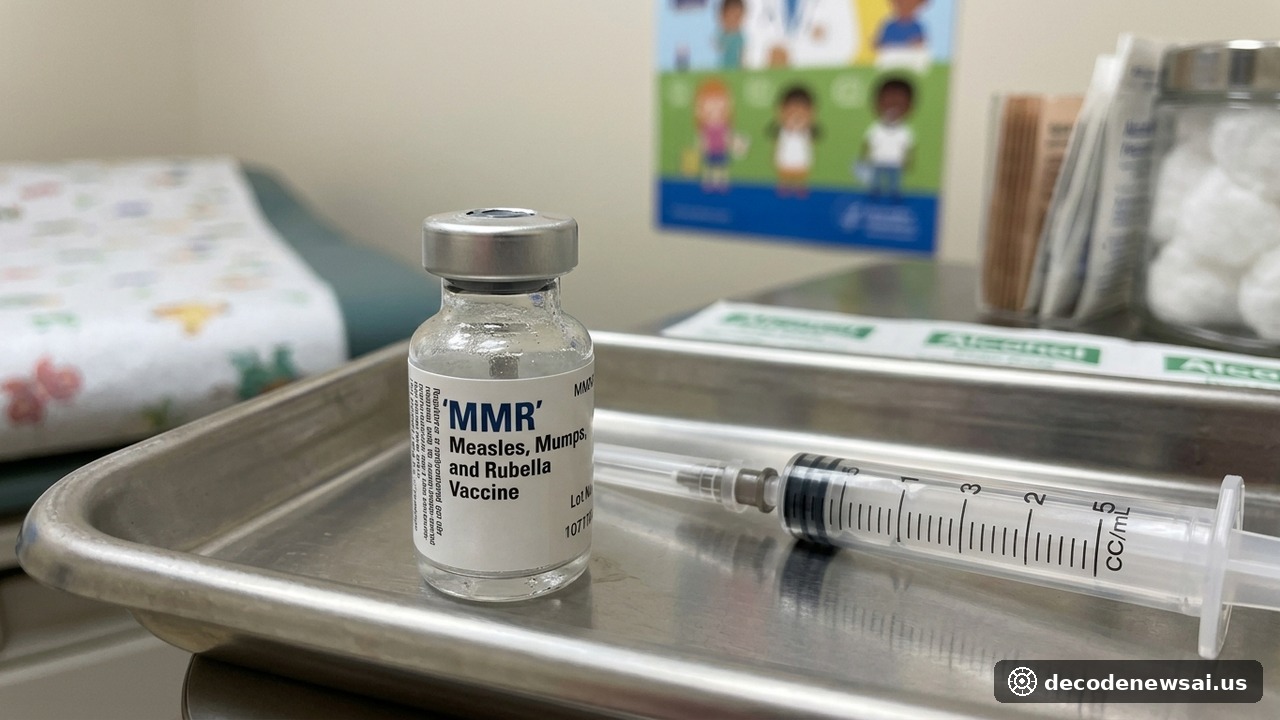
CDC figures show kindergarten MMR vaccine coverage dropped from 95.2% in 2019–2020 to 92.4% in 2025–2026, leaving roughly 280,000 kindergartners vulnerable; CDC also lists six U.S. measles deaths in 2026, compared with three in 2025. PAHO's verification commission bases its determination strictly on whether genetic evidence proves the same measles strain has circulated uninterrupted for 12 months or longer; Dr. Amesh Adalja of the Johns Hopkins Center for Health Security confirmed the assessment relies solely on viral genetics. PAHO Director Dr. Jarbas Barbosa will issue the formal ruling after receiving the commission's report; PAHO noted that only 33% of countries reached at least 95% first-dose MMR coverage, and just 20% met that threshold for the second dose.