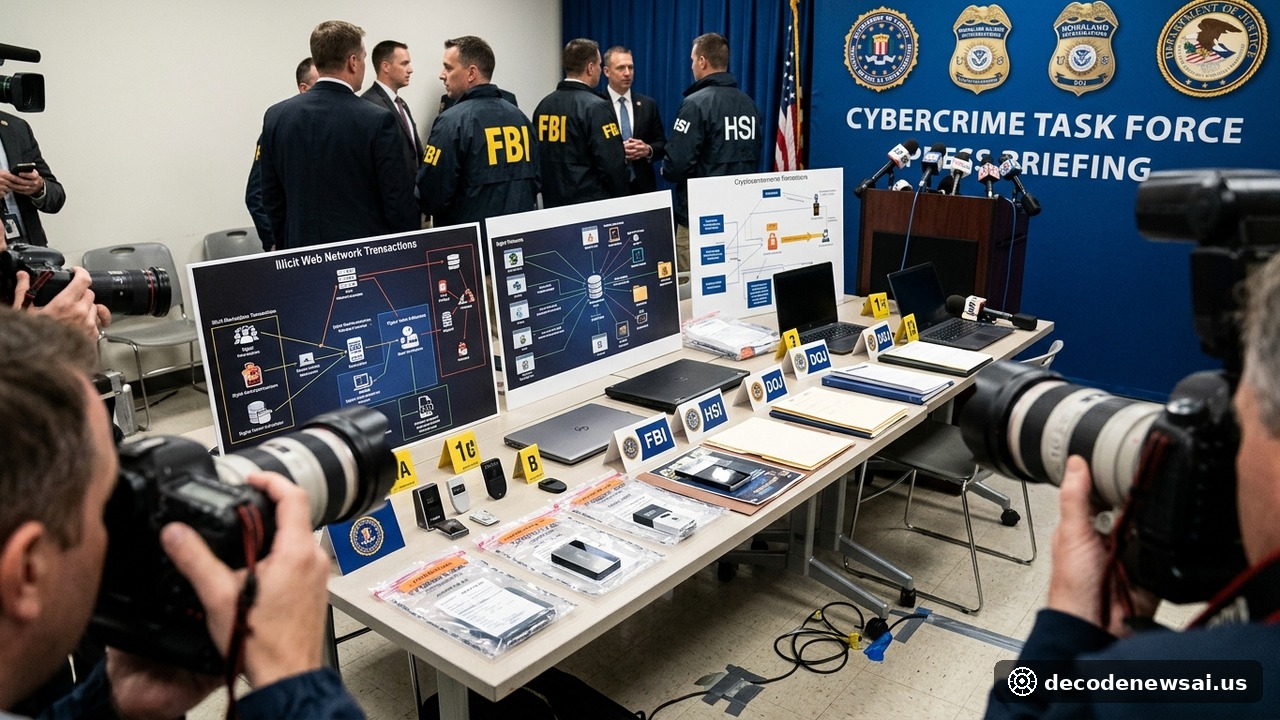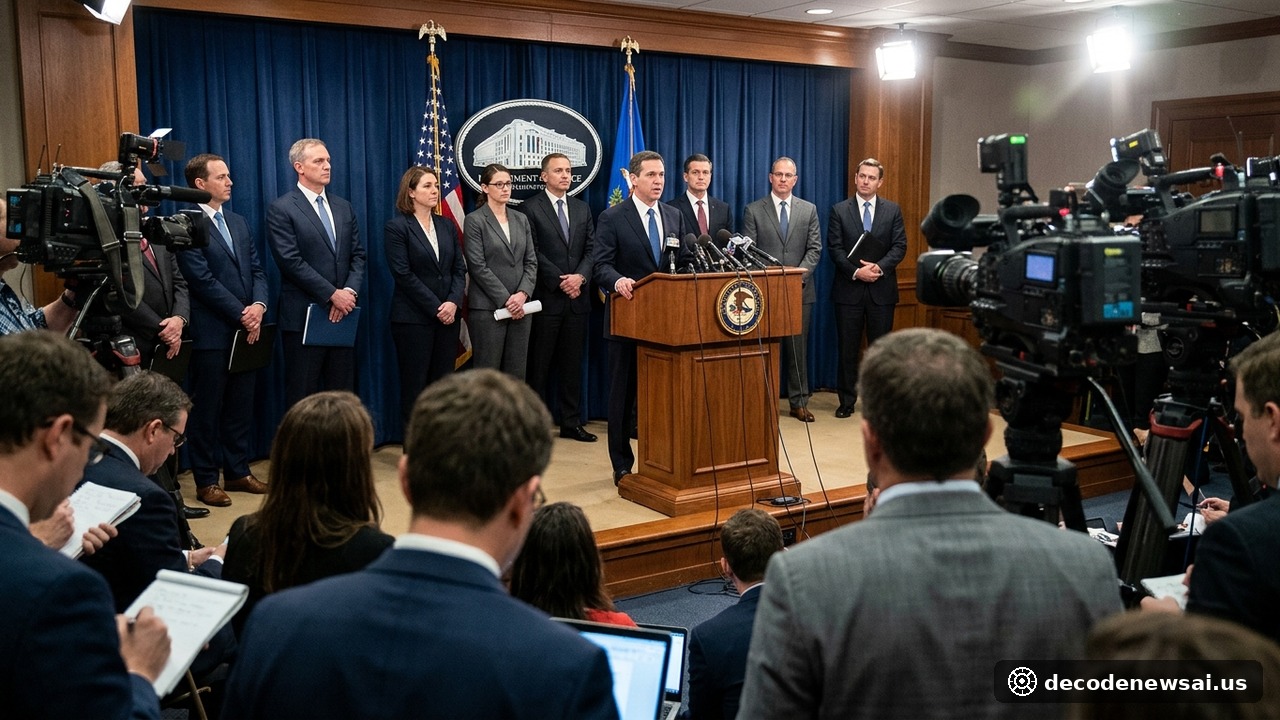
On November 12, 2026, the United States Department of Justice announced judicial measures targeting illicit hacking rings controlled by the Democratic People's Republic of Korea. Federal authorities froze more than 1.2 billion dollars in stolen digital assets and dismantled malicious cloud server infrastructure. According to court filings unsealed in federal district courts in Washington and Los Angeles, the enforcement action targeted an identity theft apparatus code-named FaceStealer by the FBI. Cyber operatives used generative artificial intelligence and high-resolution facial deepfake technology in fraudulent remote technical interviews; imposter engineers secured remote programming positions within Western cryptocurrency enterprises.
Investigators proved infiltrated workers established hidden backdoors across decentralized liquidity protocols, draining over 400 million dollars from victim accounts over an eighteen-month timeframe. Federal agents seized critical web domains, commercial cloud hosting clusters, and automated proxy relays used to obfuscate server locations. The Department of Justice press announcement detailed: “Today the Department of Justice announced coordinated enforcement actions against illicit government hacking operations, seizing over 1.2 billion dollars in stolen cryptocurrency assets and disrupting automated cloud infrastructures utilized to target American digital asset platforms.”
Federal prosecutors secured court authorization in the District of Columbia to freeze 1.2 billion dollars in cryptocurrency tied to the late-October breach of Binance. The stolen funds were linked directly to TraderTraitor. Blockchain analytics specialists assisted federal agents in mapping multi-hop cross-chain bridges. Treasury Department sanctions officers blacklisted forty-eight digital wallet addresses and three international escrow facilitators.
The FBI issued an emergency cyber advisory instructing technology companies to overhaul identity verification protocols for remote personnel, mandating in-person biometric verification or hardware-backed security keys for employees granted administrative access to code repositories and financial payment gateways. National security prosecutors said state-backed cyber heists generated an estimated 7.4 billion dollars for foreign weapons programs this year alone.