Halley's 1986 Flop, 40 Years On: The Comet That Disappointed Millions and Rewrote Astronomy
A once-in-a-lifetime promise, a faint smudge
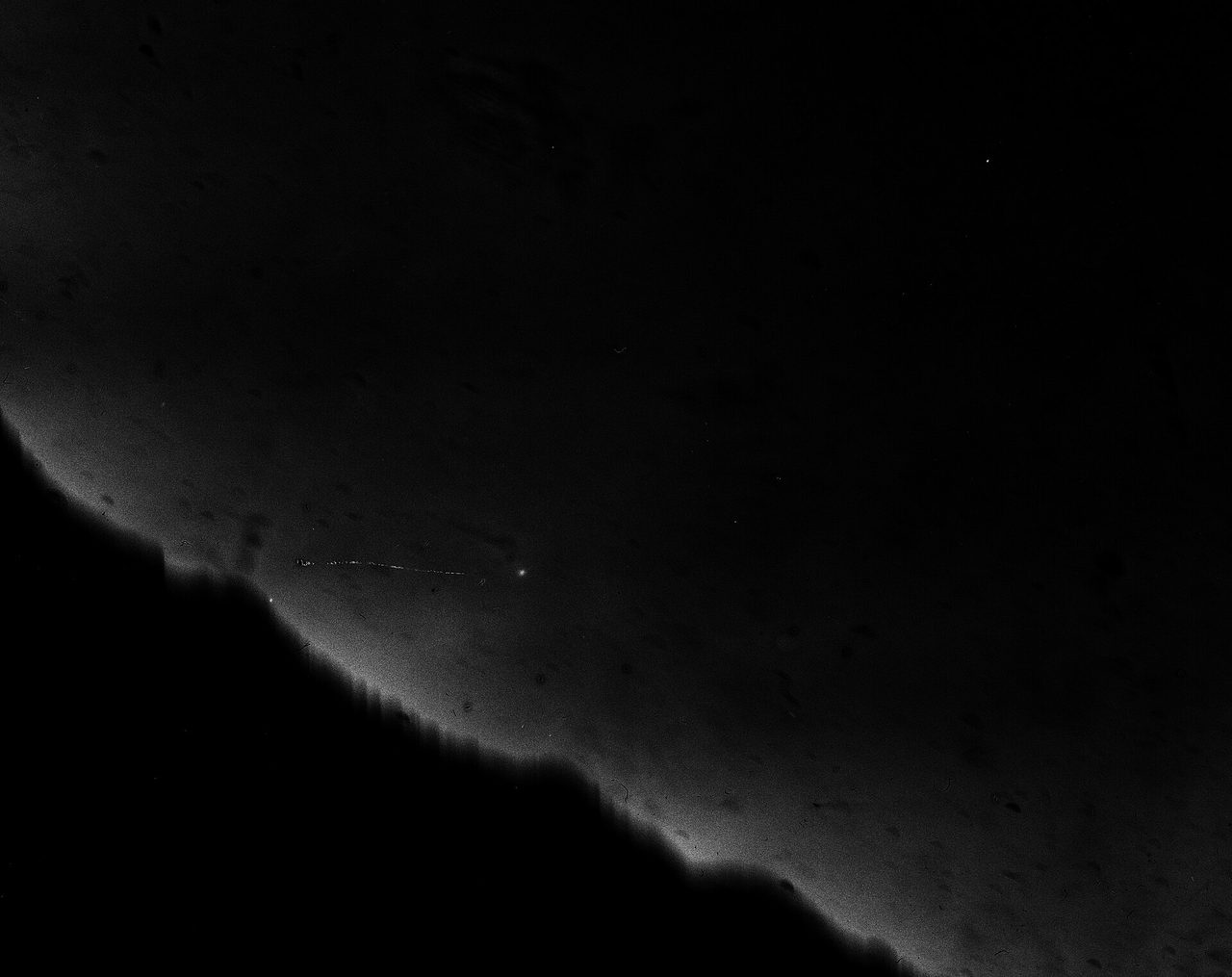
Twenty twenty-six marks 40 years since Halley's Comet last came through the inner solar system. Halley returns roughly every 76 years — writer Guy Ottewell calls it "the wildest of the tame comets," tame because it can be predicted, wild because it is still fresh and bright, the brightest of all the recurring comets and the only one that periodically becomes conspicuous to the naked eye. It reached perihelion on February 9, 1986, and came closest to Earth on April 10, about 63 million kilometers away. Billed as the most anticipated celestial event of the second half of the 20th century, it delivered a faint smudge that belied promises of a spectacle never to be seen again.
The geometry was against everyone
City lights finished the job
Space.com's 40th-anniversary retrospective adds a second culprit: light pollution. Total outdoor illumination in the United States had risen enormously since Halley's previous visit, and many of the largest cities were bathed in permanent twilight, with only the brightest stars and planets visible from near city centers and astronomically unacceptable conditions out to 50 miles (80 km) away. Hype did the rest.
Five spacecraft stole the show
The dirty snowball, confirmed in close-up
Those images rewrote the textbooks. Halley's nucleus was larger than expected — a peanut- or potato-shaped body about 14 km long and 8 km wide, spinning once every 7.4 days around its longest axis while the whole body wobbled in half that time. It was as black as coal or velvet, encrusted in a dark shroud of its own debris, with three active regions venting gas and dust; jets blasted material out with explosive intensity as sunlight heated the surface. Giotto was struck at least 12,000 times by dust grains, including a roughly one-gram fragment that briefly cut communication with the ground. The probes measured some three tonnes of material ejected per second from about seven jets, confirming Fred Whipple's "dirty snowball" model of volatile ices mixed with dust and ending older "flying sandbank" theories.