Perseverance Becomes the Longest-Driven Vehicle Off Earth
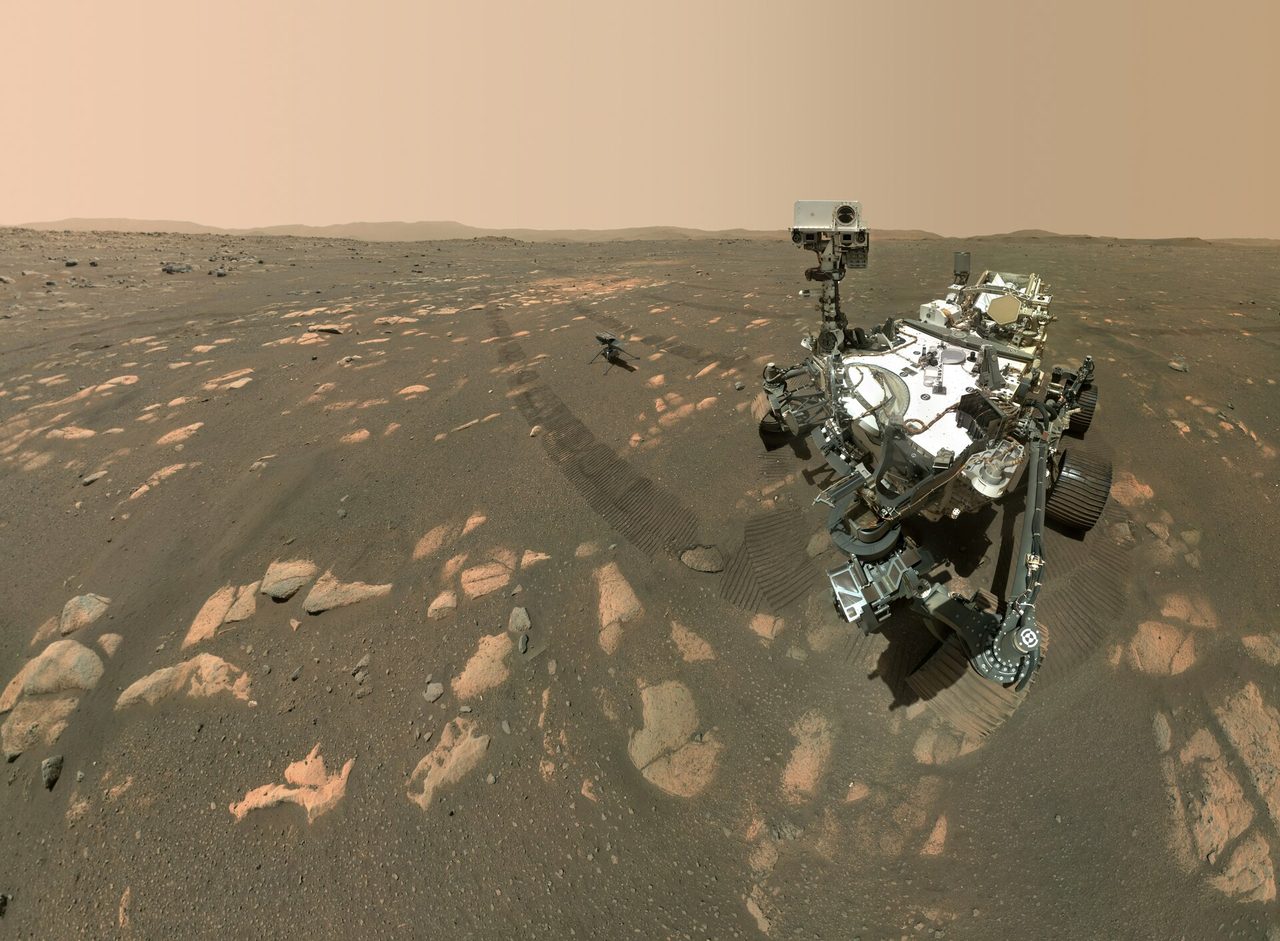
NASA's Jet Propulsion Laboratory announced on October 12 that the Perseverance rover has driven 28.10 miles (45.22 kilometers) across Mars, passing the 28.06 miles (45.16 kilometers) logged by Opportunity between 2004 and 2018. The milestone was reached on October 11, the 2,006th sol of the mission, making Perseverance the vehicle that has travelled farthest on any world other than Earth.
The Drive That Sealed the Record
Project Manager: We Blew Well Past the Plan
Ninety Percent of Drives Run Themselves
NASA credited the rover's autonomous navigation system, AutoNav, for much of the distance. Lee said 90 percent of drives are done autonomously, with no human intervention: Perseverance takes stereo images of the terrain ahead, generates a 3D software map, and selects the safest path toward a drive goal chosen by the operations team.
A Coprocessor Keeps It Driving Blind-Free
Five and a Half Years vs. Nearly Fifteen
Why This Stretch of Mars Matters
The rocks and landscape at Lac de Charmes are so ancient that their terrestrial counterparts were long ago destroyed by erosion and plate tectonics; Mars has no plate tectonics. The science team hopes to find evidence of ancient hydrothermal systems in the Jezero area, and the rover is exploring what may be some of the oldest geological features ever studied in the solar system.
Lunar Records Already Left Behind
What It Means for Science and Sampling
For the mission team, the record is proof that the mobility system has held up over years of Martian terrain, buying time and credibility for continued science. For planetary researchers, a rover that keeps moving is the only way to read ancient rock layers in sequence — and the sealed sample tubes Perseverance has cached remain its most valuable legacy until a way to return them exists.
Next Stop: Rainbow Falls and the End of 2028
NASA has approved an extension that carries exploration of the crater rim to roughly the end of 2028. After Lac de Charmes, Perseverance will continue skirting the crater and move south toward Rainbow Falls, a block of ancient crust 100 meters (328 feet) wide uplifted by the impact that formed Jezero. With systems expected to last into the 2030s, the record is likely to keep growing.