Japan's MMX Probe Lifts Off Tuesday to Bring Phobos Samples Home
Japan launches its first round trip to the Martian system
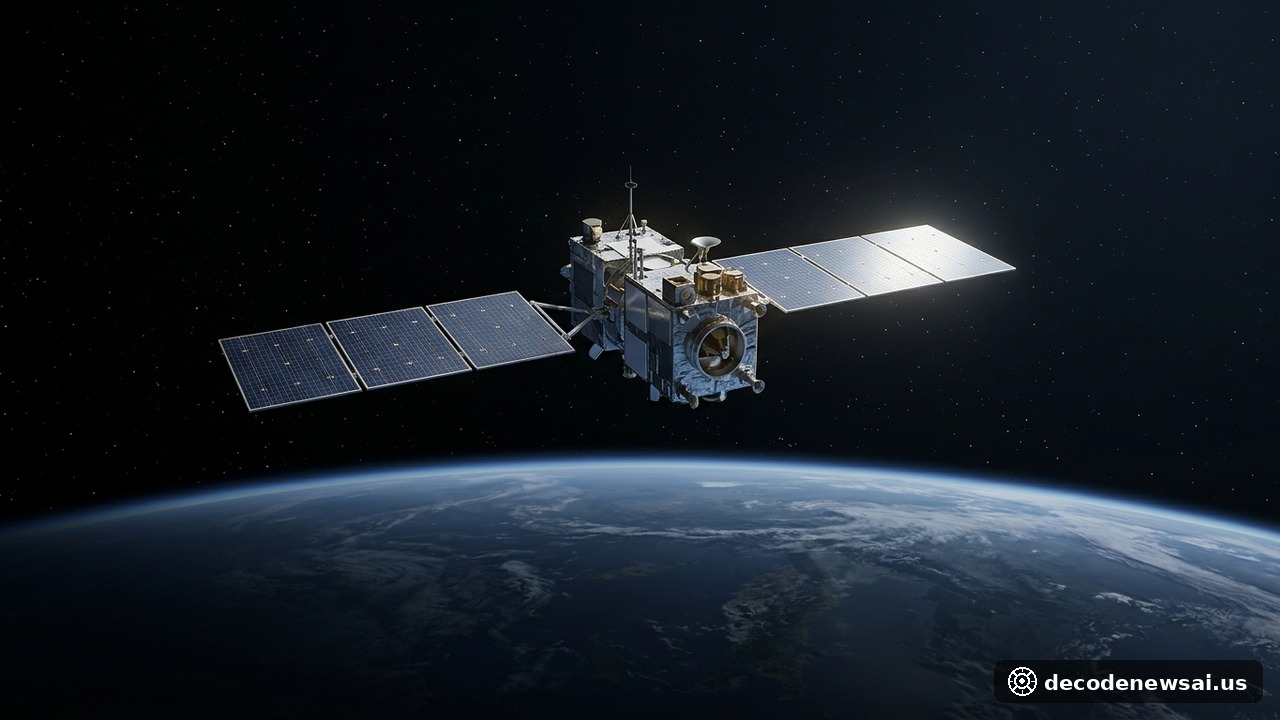
The Japan Aerospace Exploration Agency (JAXA) is set to launch its Martian Moons eXploration (MMX) spacecraft early Tuesday from the Tanegashima Space Center in Kagoshima Prefecture. If it works, MMX will be the first mission ever to land on a Martian moon and bring material back from the Martian system.
Liftoff set for 4:41 a.m. Japan time
At least 10 grams of Phobos regolith
Two theories, one oddly shaped moon
The sample may hold clues to Martian water
The second goal points at Mars itself. Today the planet is cold and thin-aired, but early Mars had a thick atmosphere and liquid water on its surface. Researchers suspect some of the material Mars lost ended up on Phobos, recorded in its regolith. A tiny laser built at Fraunhofer IOF in Jena will fly on MMX to help analyse the sample's composition.
A 25-kilogram rover goes down first
Seven instruments and two 8K cameras
MMX carries seven science instruments, among them the French-built MIRS near-infrared spectrometer and the NASA-backed MEGANE gamma-ray and neutron spectrometer, plus a lidar, a dust monitor and a mass spectrometer. Two ultra-high-definition cameras developed with Japan's public broadcaster NHK will film Mars and its moons in 8K for the first time.
Four agencies and about 20 institutions
NASA, ESA, CNES and DLR all contribute, alongside about 20 universities and technology companies, and NASA is sending 10 participating scientists. JAXA calls MMX the largest international collaboration in lunar and planetary exploration that Japan has ever led. Japanese reports put the mission's cost at roughly $345 million — about the price of one large American satellite.
Phobos pitched as a stepping stone to Mars
Project manager Yasuhiro Kawakatsu has said the sampling is a world first, but the bigger point is that this is the first round trip to the Martian system. JAXA hopes to show whether Phobos could serve as a "natural space station" for crews bound for Mars, something the agency calls essential for human exploration. Unlike earlier asteroid missions, MMX must approach Mars and then escape its heavy gravity, and the landing legs had to be designed for Phobos's extremely weak pull.
Live coverage starts 55 minutes before liftoff
JAXA plans to stream the launch on YouTube and Niconico from about 55 minutes before liftoff until roughly 75 minutes after; the timing can shift with launch preparations.