What is a neutrino anyway? The science behind this year's Physics Nobel
Neutrinos: the lightest, most elusive elementary particles
Neutrinos are elementary particles, meaning they cannot be broken into smaller components, as far as we know. There are three neutrino "flavors": electron, muon, and tau. Unlike many other elementary particles, neutrinos carry no electric charge. Although they have mass, they are extraordinarily light—perhaps 10 million times lighter than an electron. Scientists do not actually know the mass of neutrinos, nor where that mass comes from. Because they interact only weakly with matter, they can travel through space nearly at the speed of light.
From Pauli's guess to the first laboratory catch
This year's prize honors the founder of neutrino astronomy
On October 6, the Royal Swedish Academy of Sciences announced that the 2026 Nobel Prize in Physics goes to Francis Halzen of the University of Wisconsin–Madison, "for decisive contributions to the IceCube Neutrino Observatory and the discovery of high-energy neutrinos of astrophysical origin." Halzen is the first solo physics laureate since 1992, receiving 12 million Swedish kronor (about $1.2 million). Mark Pearce, chair of the Nobel Committee for Physics, praised Halzen's "tenacity and scientific vision," which "paved the way for a new kind of astronomy."
A telescope buried in Antarctic ice
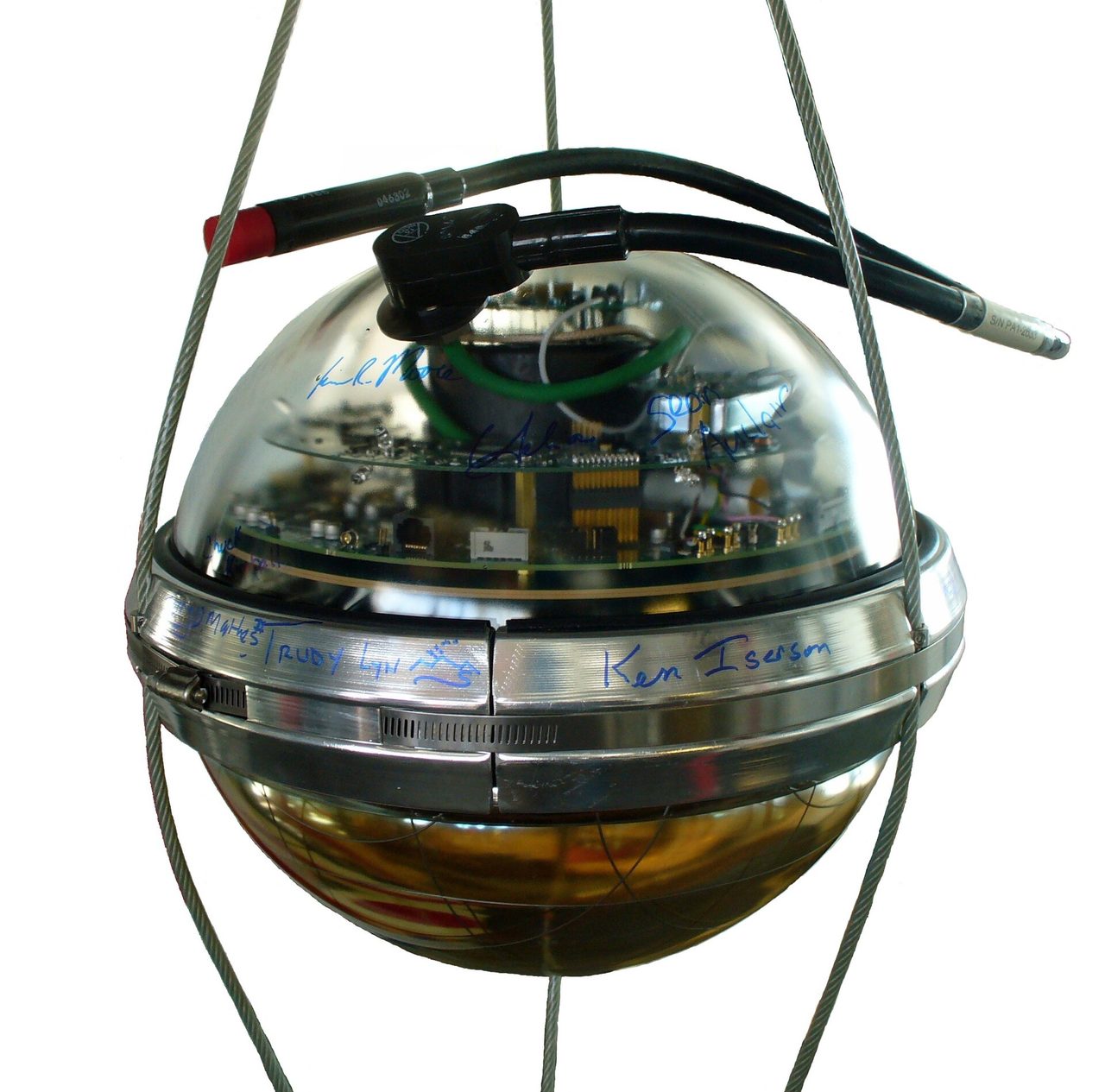
IceCube turns ghost particles into a new astronomy
IceCube came online in 2011 and surpassed expectations. "The biggest risk we took is that nobody knew if the kilometer-cube detector was actually large enough to detect neutrinos beyond our atmosphere from the Universe—and that was our biggest one. But it only took two years to detect that," Halzen said at the Nobel press conference. "We found evidence for neutrinos coming from supermassive black holes in other galaxies, and they shine so strongly that when you look at a neutrino sky, you don't see the Milky Way." Cosmic neutrinos with extremely high energies are created in the same environments as other particles, but unlike them, neutrinos reach us without changing direction or losing energy—carrying information unavailable in any other way.
What the "ghost particle" really means
Neutrinos are called ghost particles because their interactions with matter are extraordinarily weak—about 20 orders of magnitude weaker than electromagnetism. This weak interaction both enables their detection and makes it almost impossible without extraordinary measures. Billions of neutrinos pass through your hand every single second. They are produced in nuclear reactions, mostly in space. Though very difficult to detect, a small flash of light may occur when they collide with other particles. Neutrino astronomy thus opens an entirely new window on the universe, potentially illuminating distant galaxies and exploding stars.