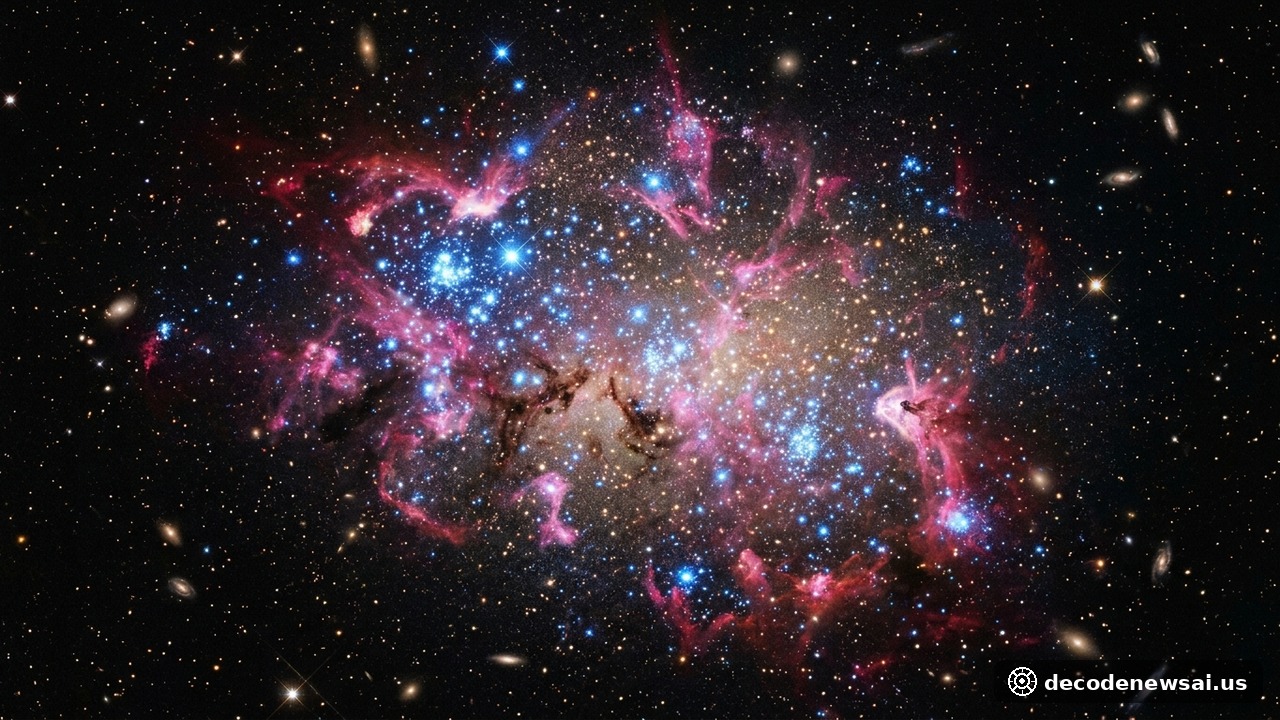
A comprehensive astronomical investigation published Sunday in The Astrophysical Journal confirmed that low-mass dwarf galaxies retain only 11 percent of the oxygen synthesized by their constituent stars. Utilizing multi-band archival imaging from the Hubble Space Telescope, international researchers determined that approximately 89 percent of synthesized oxygen is ejected into the intergalactic medium. Observational astrophysics models face structural revisions.
GLOW survey evaluates 37 dwarf galaxies near Earth
The research initiative was executed under the Galaxies Losing Oxygen via Winds (GLOW) survey. The collaboration was directed jointly by Rutgers University and NASA's Goddard Space Flight Center. The observational cohort evaluated 37 low-mass dwarf galaxies situated within approximately 22 million light-years of Earth. Astrophysicists reconstructed historical star formation rates by analyzing stellar population color-magnitude diagrams in the ultraviolet and optical spectra. Photometric precision reached unprecedented levels.
Classical galactic chemical evolution models posit that massive stars synthesize oxygen in their cores and enrich surrounding gas reservoirs through supernova explosions. However, the empirical data gathered by the GLOW team demonstrated that the oxygen remaining trapped in cold interstellar gas and dust constitutes a minor fraction of historical production. Only a tiny fraction of heavy elements remains gravitationally bound within dwarf galaxy halos. Supernova feedback and collective stellar winds vent enriched gas into intergalactic space. Theoretical models diverged sharply from observed values.
Lead project investigator Professor Kristen McQuinn of Rutgers University presented the findings during an astronomical colloquium. McQuinn stated: "Tracking the production and distribution of oxygen provides the fundamental clock for deciphering cosmic evolution, and observing massive element loss across dwarf galaxies directly challenges prevailing cosmological hydrodynamic simulations." The publication elicited widespread attention across the astrophysics community.
Shallow gravity wells vent oxygen into intergalactic space
University of Utah astronomer Grace Telford documented the gas ejection mechanics in the collaborative paper. Observations indicate that the shallow gravitational potential wells characteristic of dwarf galaxies fail to contain expanding supernova blast waves. High-enthalpy thermal plasma is accelerated beyond escape velocity thresholds, venting pristine heavy elements into intergalactic filamentary voids. The discovery provides definitive observational evidence explaining the chemical enrichment of intergalactic space.
The investigative team cross-referenced Hubble imaging data against spectroscopic infrared observations from the James Webb Space Telescope. Infrared spectroscopy verified that even when accounting for cool gas reservoirs extending into diffuse outer halos, total observed elemental oxygen falls dramatically short of nucleosynthetic predictions. Tracing the ultimate cosmic sink of missing metals has become a primary investigative frontier.
Theoretical astrophysicists noted that the observational census imposes binding constraints on cosmological hydrodynamics codes. Leading cosmological simulation suites consistently underestimate the efficiency of galactic wind mass-loading factors. Theorists must recalibrate kinetic energy coupling efficiency parameters within feedback algorithms. Code updates are currently underway.
Roman Space Telescope to survey fainter dwarf systems
The research team confirmed that exploratory observing time has been secured on the upcoming Nancy Grace Roman Space Telescope. Investigators plan to deploy its wide-field infrared instruments to survey fainter, low-surface-brightness dwarf systems across expanded cosmic volumes. Expanding observational samples will verify whether atmospheric wind venting operates universally across all low-mass stellar systems.
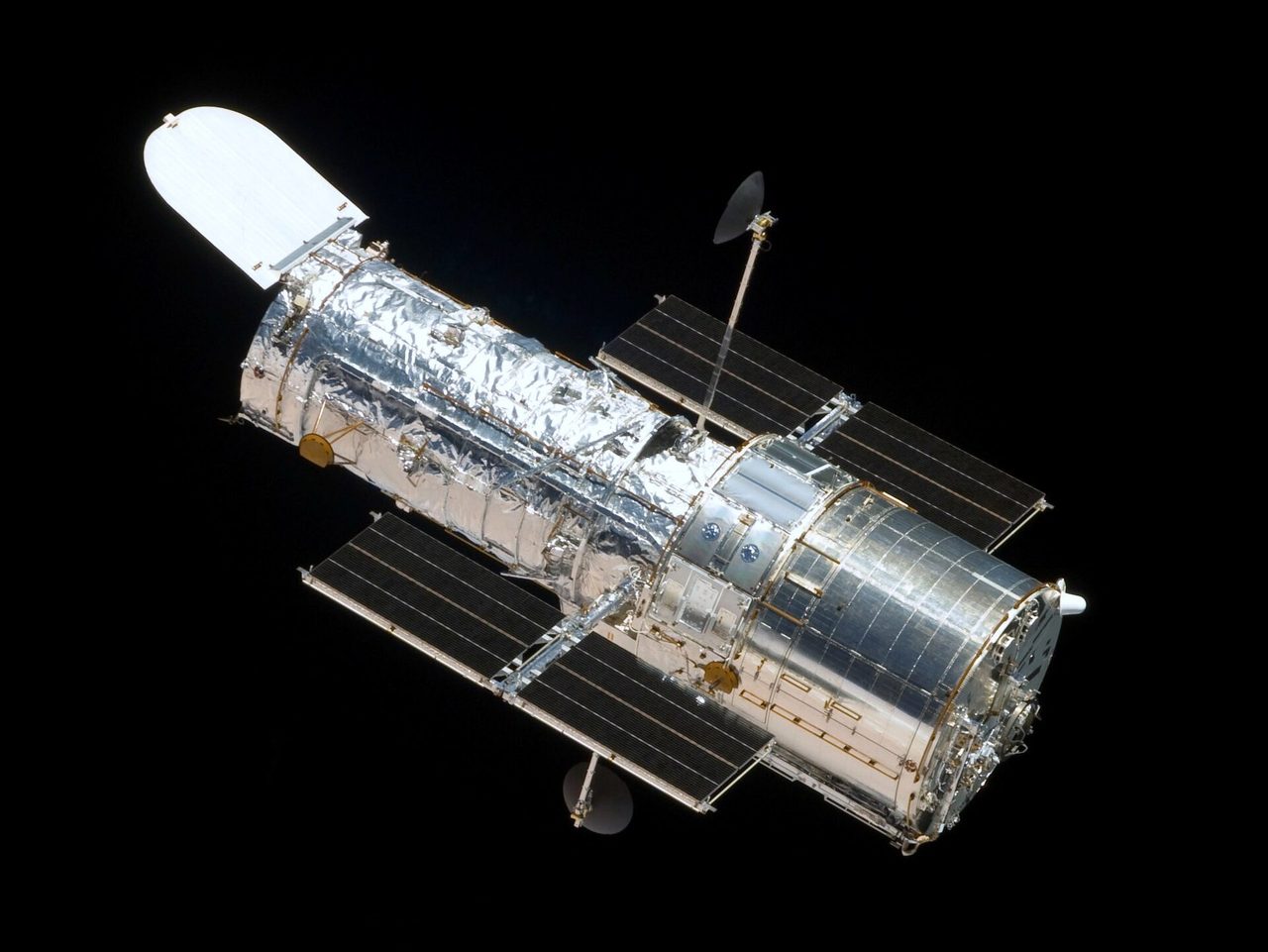
Officials from the National Science Foundation and NASA's Science Mission Directorate commended the research team for innovative archival utilization. Agency leaders emphasized that the Hubble observatory continues to deliver definitive frontier science more than three decades after initial orbital deployment. Space astronomy investments continue to generate profound fundamental returns.
Astrophysicists agree that the census provides foundational insights into the chemical enrichment of early galaxies during cosmic dawn. The dispersion of stellar nucleosynthetic products represents an essential link connecting the pristine primordial universe with metal-rich planetary systems. Deep space exploration continues to unravel cosmic history.
Simulations to incorporate empirical mass-loss velocity curves
Cosmological simulation consortia confirmed plans to incorporate empirical mass-loss velocity curves into next-generation supercomputing runs. Theoretical astrophysicists emphasized that reconciling gas-phase metallicity gradients across low-mass galaxies will resolve longstanding discrepancies between optical spectroscopic observations and numerical galaxy formation codes.