Modded DLSS 5 Makes Modern Warfare 4 Look Filmic, but Costs Real Frames
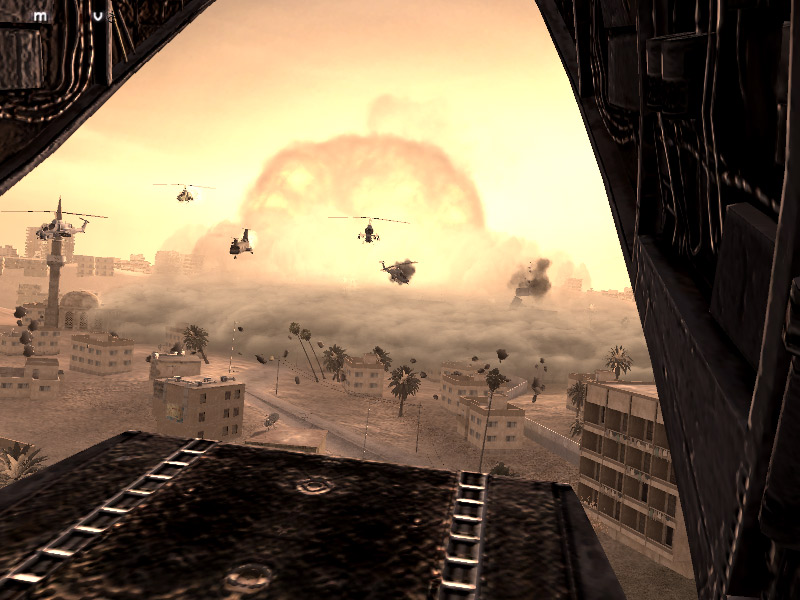
Photo: N8 Balcom / CC BY-SA 4.0 · via Wikimedia Commons
Modded DLSS 5 Makes Modern Warfare 4 Look Filmic, but Costs Real Frames
An Unofficial Mod Delivers Neural Rendering the Game Lacks
Call of Duty: Modern Warfare 4 does not natively support DLSS 5. The game officially supports DLSS 4.5 upscaling, with campaign early access starting October 16, according to NVIDIA. Enthusiasts used third-party tools such as the RHI Mod to inject an experimental DLSS 5 neural-rendering pipeline that generates pixels, lighting and materials with AI for a more cinematic image, as reported by DSOGaming.
Test Rigs Span Mainstream to Flagship at 1440p and 4K
Testing centered on 2560x1440. GameGPU tested at that resolution on a Ryzen 7 9800X3D with an MSI GeForce RTX 4070 Ti, 32GB of DDR5-6200 memory and a 1TB Samsung 970 EVO Plus SSD. DSOGaming used a Ryzen 9 7950X3D, 32GB of DDR5 at 6000MHz, NVIDIA RTX 5080 and RTX 5090 cards, 64-bit Windows 10 and the 621.01 Game Ready driver. Italy's VGMag used a Core i5-13600K at 5.1 GHz with 14 cores and 20 threads paired with an RTX 4070.
DLSS 5 Sharpens Detail While Ray Tracing Breaks Upscaling
Without the neural network, in-game anti-aliasing visibly blurs fine textures, while DLSS 5 renders vests, plate carriers, belts, helmet mounts, fabric weave, camouflage patterns, chevrons and uniform folds much more sharply, GameGPU found. The cost on the RTX 4070 Ti is a drop from 36 to 26 FPS, meaning neural rendering consumes 10 frames, or 27.8 percent. Worse, ray tracing currently cannot run together with DLSS, FSR or XeSS. Enabling it forces the engine's own denoiser, turning shadows, reflections and midtones into pixelated mush and scattered dots.
A 3060 Ti Handles 1440p, and Integrated Graphics Can Boot It
PC Gamer found Activision's recommended RTX 3060 Ti holds up at 1080p or at 1440p with Quality upscaling, lifting frame rates from just above 60 to around 90 or even 100 FPS on the Quality preset, with little visible difference between the older CNN model and the Transformer model. Notebookcheck reports that even modern integrated GPUs can run the game at Full HD on the lowest settings, while an RTX 4050 still delivers reasonably smooth gameplay at QHD and maximum detail.
Flagship Cards Scale With Multi Frame Generation, Lows Lag Behind
At the 4K Extreme preset with DLSS Balanced, Notebookcheck measured 72 FPS on an RTX 5070 Ti Laptop GPU and 85 FPS on an RTX 5090 Laptop GPU. With multi frame generation the figures rise from 53 to 107, 44 to 177 and 37 to 224 FPS on the 5070 Ti class, and from 65 to 129, 53 to 214 and 41 to 247 FPS on the 5090 class. Gizbot measured an average of 90 FPS with High ray tracing, Ultra graphics and Frame Generation on, but the 1% low fell to 31 FPS. VGMag at 1440p recorded 80 FPS at native DLAA, 110 FPS at Quality, 123 FPS at Balanced, 140 FPS at Performance and nearly 160 FPS at Ultra Performance.
For Now Pure Rasterization Remains the Sensible Choice
The verdict across outlets is consistent. GameGPU concluded that running DLSS 5 through an injector makes sense only as an experiment or for screenshots, since static texture sharpness and edge smoothing are excellent, while for normal play disabling both ray tracing and hacked DLSS 5 gives a stable 90 to 100-plus FPS on pure rasterization. Gamesoffood similarly criticized developer Beenox for switching off every upscaler when ray tracing is on and forcing Variable Rate Shading, arguing players should choose their own combination. Until a patch lets ray tracing work with upscalers, rasterization plus Quality upscaling is the best-value path. Discussion: Would you trade about a third of your frame rate for a more film-like image in a fast shooter, or does smoothness always win for you? Which single graphics setting do you tune first?
Sources
- GameGPU: DLSS 5 Neural Rendering in Call of Duty Modern Warfare 4: graphics, RT, and performance benchmarks
- PC Gamer: Call of Duty: Modern Warfare 4 actually runs pretty smoothly with Activision's 'recommended' RTX 3060 Ti graphics card, and here are the settings I use to get the best performance from it
- Notebookcheck: Call of Duty: Modern Warfare 4 review - Runs on integrated graphics but pushes the RTX 5090 to its limits
- Gizbot: Call of Duty: Modern Warfare 4 PC Performance Review
- VGMAG: Call of Duty Modern Warfare 4: i nostri benchmark della versione PC