Bomb Threats Disrupt European Flights and an Israel-Bound Cruise Ship; Searches Find No Explosives
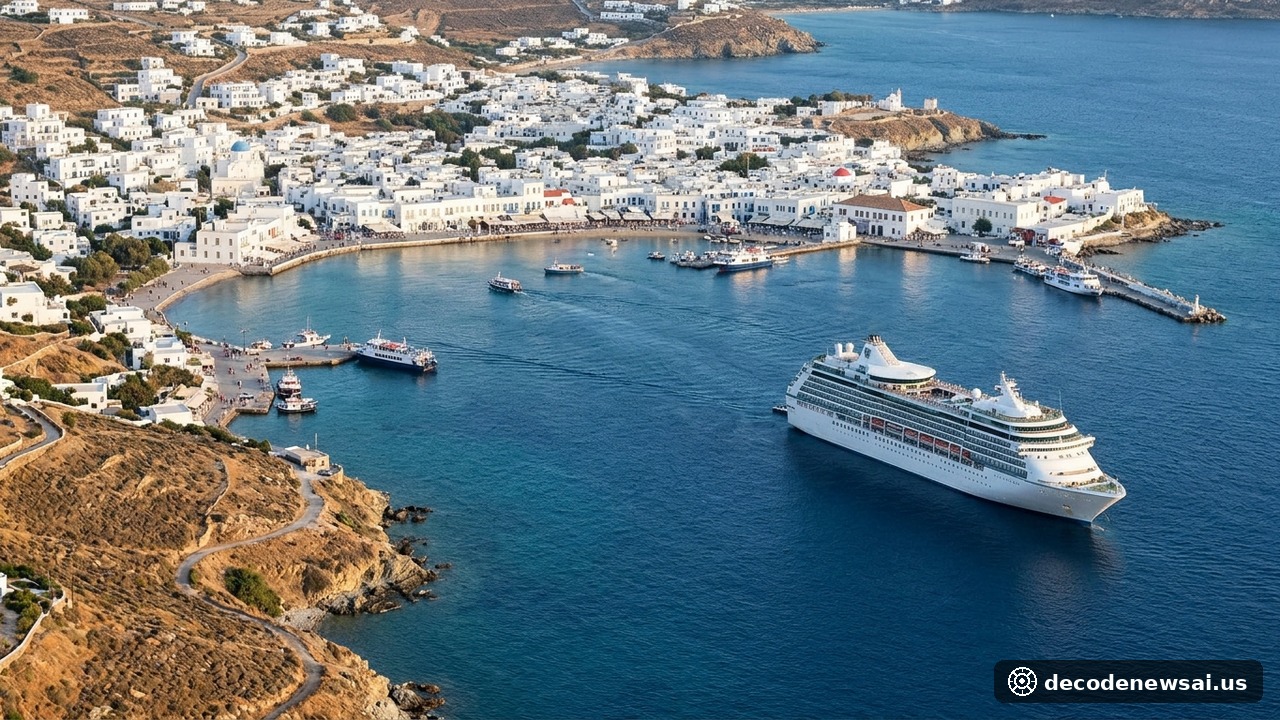
Photo: AI-generated
At least seven passenger flights across Europe received bomb threats on November 3, prompting security checks at airports in Poland, Italy, Spain and Bulgaria. On the same day, the Crown Iris, a cruise ship preparing to sail from the Greek island of Syros to Haifa in Israel, was searched after a threat claimed an explosive device had been attached to its hull. The affected flights landed safely and searches found no explosives. An initial inspection of the ship also found no device, although a more extensive underwater check was planned for later that evening. The incidents disrupted airport and port operations, but authorities had not established whether the threats were connected.
Seven flights across Europe were targeted
The Guardian's roundup listed seven flights affected on Tuesday. They included a LOT service from London Heathrow to Warsaw, an SAS flight from Copenhagen to Warsaw, a Ryanair flight from Manchester to Murcia in Spain, and Ryanair services bound for Rome and Sofia. Some aircraft were diverted or subjected to additional inspections. Warsaw Modlin Airport was briefly closed, while an Italian Air Force aircraft escorted one of the Rome-bound flights before it landed. All the affected aircraft landed safely. Airport and police authorities inspected planes, passengers and baggage, and reports said no explosives were found. Bulgaria's transport ministry later clarified that the two Sofia-bound flights had come from Bergamo in Italy and Dublin in Ireland, rather than Israel as some early reports had suggested.
The Crown Iris cruise ship was also searched in Greece
Reuters reported that the Panama-flagged Crown Iris was docked at the port of Syros in Greece and was preparing to sail to Haifa. Greek authorities said an unknown person had claimed that an explosive device was attached to the vessel's hull. The ship is operated by Israeli company Mano Maritime and had 940 passengers and 597 crew members on board, for a total of 1,537 people. Coast guard personnel, an explosives-detection dog and a private diver searched the vessel. A specialized coast guard underwater unit was also deployed. Initial checks found no explosive device, but authorities planned a more extensive underwater inspection before allowing the ship to resume its voyage. The security operation temporarily held the vessel and its passengers and crew at the port.
Authorities activated emergency procedures at several locations
In Poland, the LOT flight was diverted to Warsaw Modlin, which temporarily closed while the aircraft was inspected. A separate SAS flight landed at Warsaw Chopin Airport, where part of a runway was closed for security checks. In Italy, two Ryanair flights were searched after arriving at Rome Fiumicino Airport; the Dublin service was escorted by fighter jets before landing. Police also inspected the Ryanair aircraft after it reached Murcia in Spain. The cruise ship incident required a different response involving coast guard teams, underwater search personnel and port authorities. Unlike an aircraft search, an inspection of a vessel's hull below the waterline requires specialized equipment and procedures. The completion of an initial check therefore did not mean the ship could immediately depart.
Authorities have not established a connection between the threats
The Guardian reported that the British government described the warnings involving two UK departures as malicious hoaxes, while a source at the Department for Transport said the threats were not credible. Reuters and other outlets reported that there was no evidence linking the European flight alerts and the Greek cruise ship incident to the same individual or organization. No group had publicly claimed responsibility. Police still need to identify the sources of the anonymous warnings and examine communications and other evidence. The fact that several alerts occurred on the same day may prompt speculation about coordination, but timing alone is not evidence that the incidents were organized together.
Travelers should follow official airline and port updates
As of November 3, the affected flights had landed safely and airports were returning to normal operations. The initial search of the Crown Iris found no explosives, but further checks were still planned. Travelers could face delays, diversions, additional screening and time held at the port. Airlines, airports and the cruise operator must continue to follow instructions from police and coast guard authorities before confirming onward travel.
Sources
- Reuters: Bomb threat prompts checks on Israel-bound cruise ship in Greek port
- The Guardian: Seven planes across Europe searched or diverted after ‘malicious hoax’ bomb threats
- Euronews: Hoax bomb threats target four European flights as scares spread across the continent
- eKathimerini: Cruise ship searched at Syros port after bomb threat
- The Times of Israel: Over 1,500 held up in Greece as bomb threat prompts checks on Israeli-operated cruise ship