Supreme Court Hears Catholic Preschool Case on Religious Liberty and Nondiscrimination
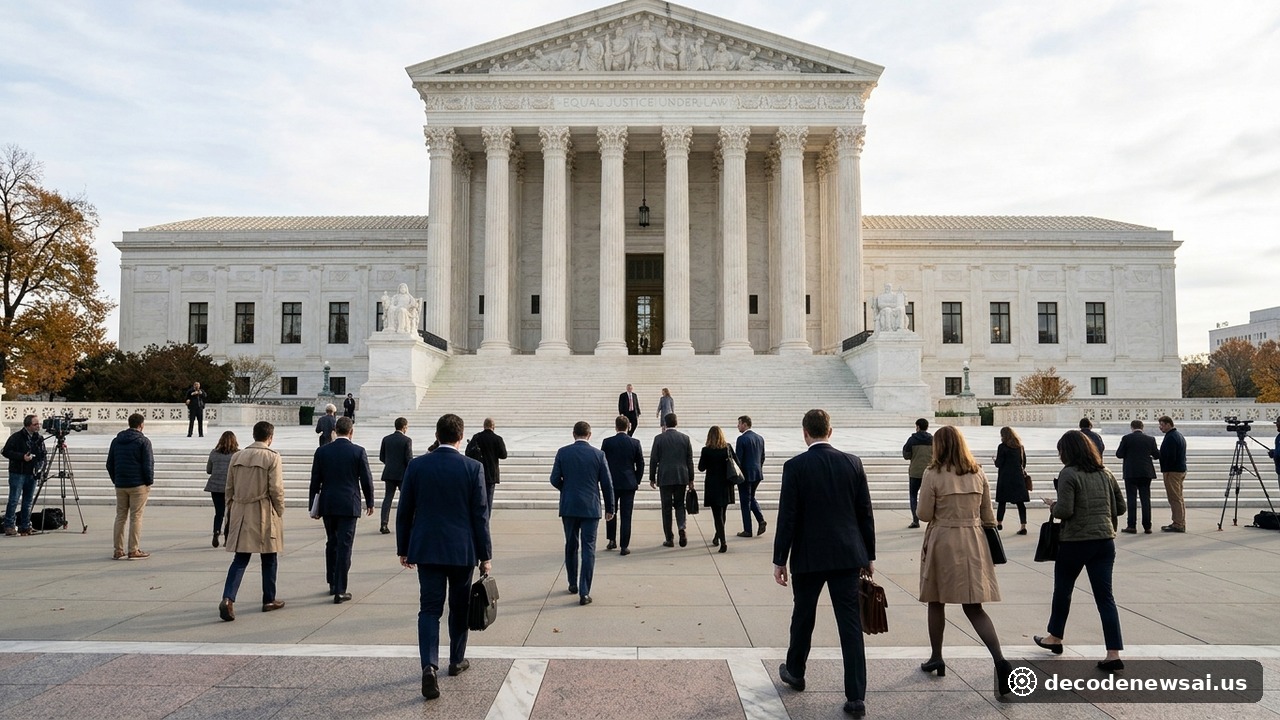
Photo: AI-generated
A dispute over Colorado’s publicly funded preschool program
The U.S. Supreme Court heard oral arguments on November 3 in *St. Mary Catholic Parish v. Roy*, a case about whether two Catholic preschools may participate in Colorado’s publicly funded universal preschool program without following the state’s nondiscrimination requirements. Colorado’s program provides public support for eligible families, but participating providers must offer equal access regardless of characteristics including race, religion, sexual orientation and gender identity. Two Catholic parish schools and the Archdiocese of Denver sought a religious exemption. They argue that their admissions policies reflect Catholic teaching and that conditioning public funding on compliance with the state rule burdens their religious exercise. Colorado argues that it has not excluded religious schools because of their religious identity. The state says religious and secular providers may participate under the same conditions, and that public funding should support equal access for eligible children and families. The dispute therefore turns on whether a generally applicable nondiscrimination condition can be imposed on organizations receiving public money, or whether religious providers must receive an exemption.
The justices tested the limits of both arguments
Coverage by CBS News, Chalkbeat, The Guardian and The Washington Post described a divided set of questions during the two-hour argument. Some conservative justices questioned whether Colorado’s requirement could function as a barrier to religious schools whose beliefs conflict with the state’s enrollment conditions. Justice Amy Coney Barrett asked how the state could distinguish a neutral participation rule from a condition that effectively prevents some religious schools from joining. Justice Brett Kavanaugh also questioned why the dispute had reached the Supreme Court if a solution might allow the schools to participate while preserving other families’ choices. Liberal justices focused on the consequences of granting the requested exemption. Justice Sonia Sotomayor pressed the schools’ lawyer on whether the schools could reject a child because the child’s parents are gay. Justice Elena Kagan questioned whether the state’s rule was neutral on its face and generally applicable. Justice Ketanji Brown Jackson raised concerns about whether the same reasoning could support exclusions based on race or other protected characteristics. The questions do not establish how the justices will vote. Oral arguments can reveal areas of concern, but a justice’s questions are not a final legal position or a reliable substitute for the Court’s written decision.
The ruling could shape future public-benefit programs
The case concerns the First Amendment’s Free Exercise Clause and follows earlier Supreme Court decisions about religious schools’ access to public benefits. The schools argue that a state cannot deny a generally available benefit because an institution is religious or follows religious doctrine. Colorado responds that the state is not excluding religion; it is requiring every publicly funded provider to meet the same nondiscrimination standard. The Court’s official transcript identifies the case as No. 25-581 and confirms that arguments took place on November 3, 2026. The Court has not issued a ruling. Chalkbeat reported that a decision is expected by the end of June 2027. The consequences could extend beyond preschool. A ruling for the schools could affect how states structure scholarship programs, childcare subsidies and other public benefits involving religious organizations. A ruling for Colorado could reinforce the authority of governments to attach neutral nondiscrimination conditions to publicly funded services. Either way, the Court will have to address the tension between religious exercise and equal treatment in programs supported by public funds. For now, the only confirmed legal development is that the Court heard arguments. It would be inaccurate to say the justices have already ruled for the schools merely because some conservative members asked skeptical questions of Colorado’s lawyer. The outcome remains pending until the Court releases its opinion.
Sources
- CBS News: Supreme Court seems likely to side with Catholic preschools in fight over Colorado program
- Chalkbeat: Here’s what the Supreme Court said during oral arguments in Colorado’s Catholic preschool case
- The Guardian: US supreme court questions arguments in Catholic preschools’ LGBTQ+ exclusion case
- Cornell Legal Information Institute: St. Mary Catholic Parish v. Roy
- National Catholic Reporter: Supreme Court takes up religious liberty, LGBTQ rights in Catholic preschool case