Supreme Court Weighs Colorado Funding Rules for Catholic Preschools and LGBTQ Families
The dispute centers on conditions attached to public funding
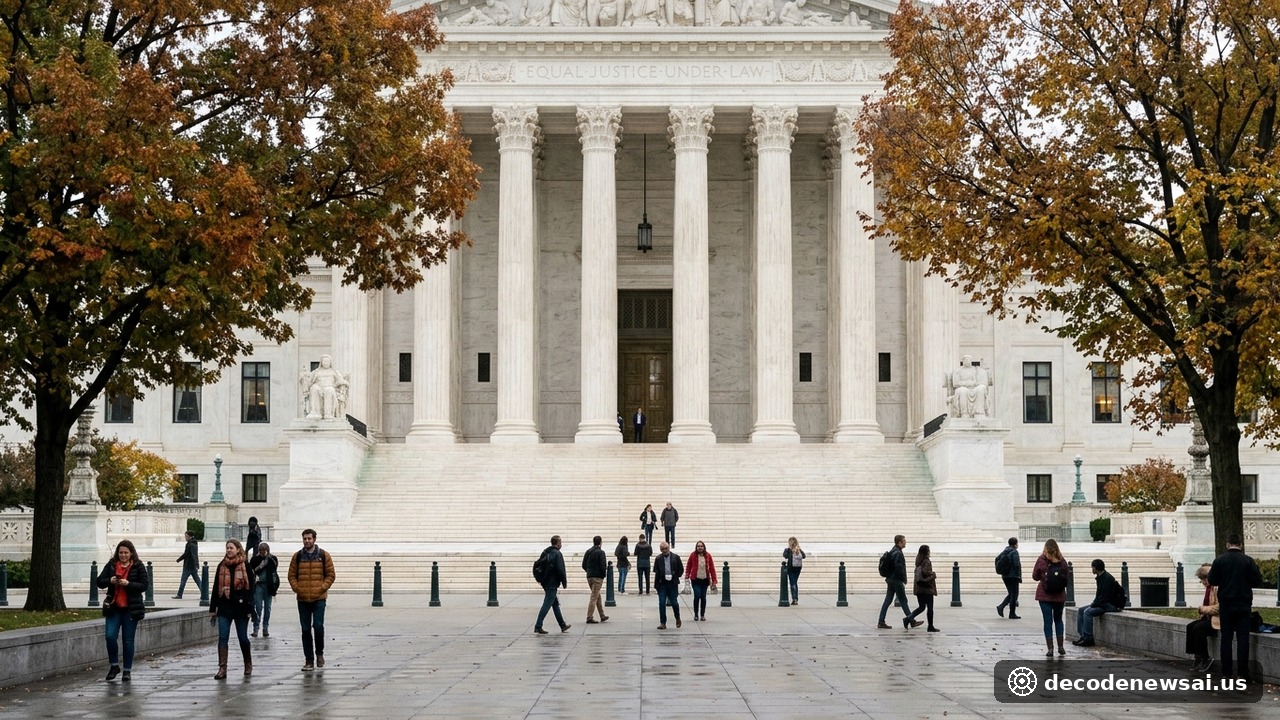
The U.S. Supreme Court heard oral arguments on November 3 in St. Mary Catholic Parish v. Roy, a case testing whether Colorado may require preschools that receive state funding to provide equal enrollment opportunities to children regardless of their sexual orientation or the status of their parents. The Archdiocese of Denver and two Catholic parishes say the requirement conflicts with their religious teachings and violates the First Amendment’s protection of the free exercise of religion. Colorado argues that religious schools remain free to teach their beliefs, but must follow the same nondiscrimination conditions as other providers if they choose to participate in a publicly funded program. The case concerns Colorado’s Universal Preschool program, which allows eligible public and private providers to receive state support for early-childhood education. Participating schools must agree to provide families an equal opportunity to enroll without discrimination based on protected characteristics, including race, religion, sexual orientation and gender identity. The Catholic plaintiffs sought an exemption from parts of that requirement, arguing that their religious beliefs require them to limit enrollment to families who support the church’s teachings on marriage and sexuality.
The parties disagree over equal treatment
The Catholic schools argue that Colorado has allowed certain enrollment preferences, including preferences related to income or disability, while refusing to accommodate religious schools whose admissions policies reflect their faith. They say the state is treating religious conduct less favorably and conditioning access to a public benefit on giving up a constitutional right. Colorado disputes that characterization. The state says the program is open to religious and secular schools alike, provided that all participating providers accept the same basic nondiscrimination conditions. State lawyers argue that the rules do not prevent Catholic schools from teaching their religious views or operating outside the publicly funded program. Instead, they govern the terms under which a provider may receive taxpayer support. The disagreement is not simply about whether religious schools may exist or teach doctrine. It is about whether a state may attach equal-access requirements to a public benefit and whether the Constitution requires an exemption when those requirements conflict with a school’s religious practice.
Questions from the justices do not predict the outcome
During arguments, some conservative justices questioned whether Colorado’s approach placed an undue burden on religious exercise and whether the state could accommodate the schools without undermining the program. Liberal justices raised concerns about the consequences of allowing publicly funded schools to reject children because their parents are in same-sex relationships. Justice Sonia Sotomayor pressed the schools’ lawyer on whether the policy would permit a child to be rejected solely because the child’s parents are gay. Other questions focused on whether exceptions for secular enrollment criteria undermine the state’s claim that its rule applies generally. The official transcript shows that the justices examined the relationship between the Free Exercise Clause, neutral laws of general applicability and conditions on government benefits. But oral-argument questions are not votes. A justice may test an argument without ultimately accepting it, and the questions alone do not establish that the Court has decided to side with either the schools or Colorado.
The case tests the reach of earlier religious-liberty rulings
Two major precedents frame the dispute. In Employment Division v. Smith, decided in 1990, the Court held that neutral laws of general applicability may generally be enforced even when they incidentally burden religious practice. In Carson v. Makin, a 2022 decision, the Court ruled that a state could not exclude schools from a public tuition program simply because they were religious. The Catholic schools argue that Colorado’s exceptions make its enrollment rule insufficiently general and that the state cannot deny them a public benefit because of their religious exercise. Colorado says the rule applies equally to every participating provider and that the program’s nondiscrimination requirements are central to ensuring access for families. The Supreme Court agreed to review two questions involving general applicability and the reach of Carson. It did not accept a separate request to overrule Smith outright. That distinction matters: the case could alter how religious exemptions are evaluated without formally overturning the 1990 decision.
A ruling is expected by the end of the term
The Associated Press reported that the Catholic schools say their enrollment has fallen 20% since the program began in 2020. That figure is the schools’ claim, not a judicial finding. Colorado argues that families are harmed when they are denied access to a publicly funded school that fits their needs, particularly when the school’s refusal is based on a protected characteristic. A decision is expected before the Supreme Court’s term ends, likely by late June 2027. The ruling could affect how states design publicly funded preschool and other education programs, as well as the conditions they may impose on religious providers. It may also shape the practical balance between religious liberty and protections for LGBTQ families in publicly supported services. For now, the Court has heard arguments but has not issued a decision. The outcome should not be described as a ruling in favor of either side, and the justices’ questions during the hearing should not be treated as a final judgment.
Sources
- Reuters: Preschool case tests religious conservatives' US Supreme Court win streak
- CBS News: Supreme Court seems likely to side with Catholic preschools in fight over Colorado program
- Chalkbeat: Here’s what the Supreme Court said during oral arguments in Colorado’s Catholic preschool case
- ACLU of Colorado: St. Mary Catholic Parish v. Roy (Amicus)
- Lambda Legal: U.S. Supreme Court Hears Argument on Whether Taxpayer-Funded Preschools Can Turn Away LGBTQ+ Families