Taiwan Plans to Expand Mango Pineapple Plantings to 1,000 Hectares as It Targets Export Markets
A larger crop is intended to support long-term exports
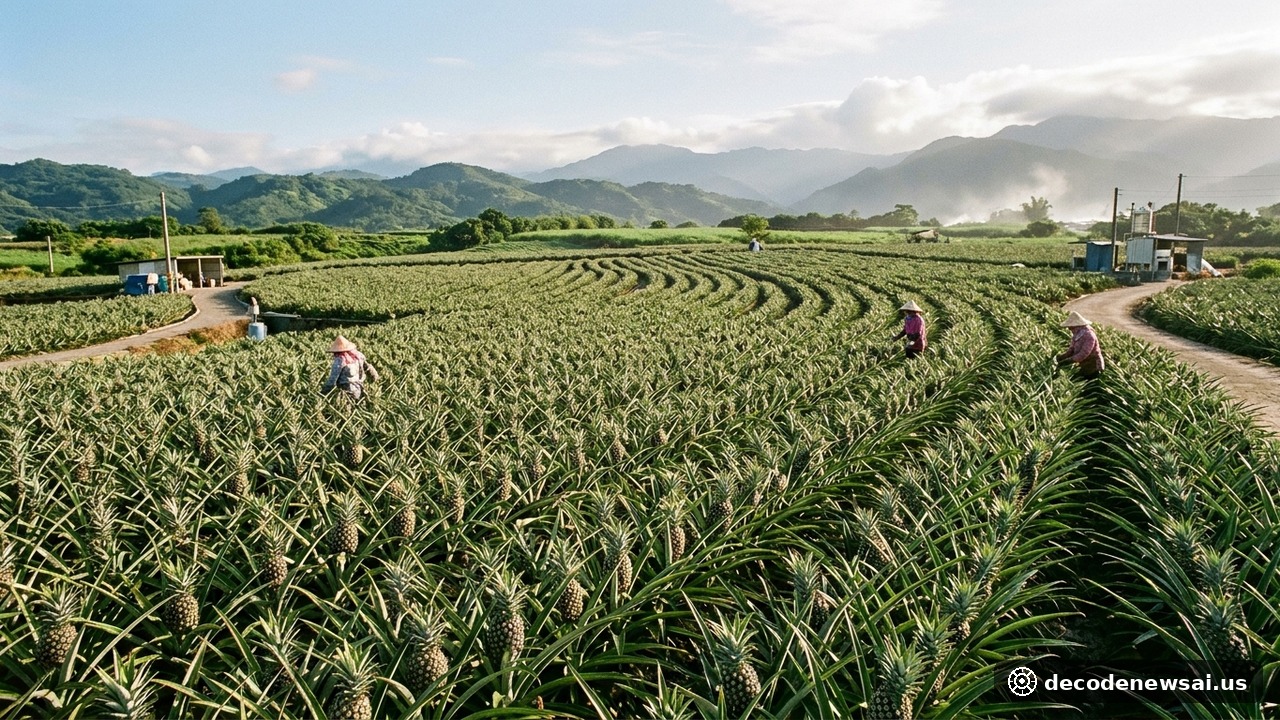
Taiwan plans to expand the area planted with mango pineapples from about 50 hectares to 1,000 hectares over the coming years, according to the Ministry of Agriculture. The goal is to build a more reliable supply base for overseas buyers as Taiwan seeks to strengthen sales in Japan, Australia and New Zealand and prepare for a possible entry into the United States market. Deputy Agriculture Minister Hu Jong-i described the expansion plan in an interview reported by the Taipei Times. The term “mango pineapple” refers to Taiwan’s Tainung No. 23 pineapple cultivar. It is not a hybrid of mango and pineapple. The 1,000-hectare figure is a future policy target, not the amount currently under cultivation. Taiwan’s present mango-pineapple area is about 50 hectares, making the proposed expansion substantial. The initiative reflects a broader effort to diversify Taiwan’s agricultural export destinations. China’s restrictions on imports of Taiwanese fruit have encouraged the island to seek more customers elsewhere, while Japan remains its largest overseas pineapple market. The expansion is intended to give exporters more volume and a more consistent product for retailers that need dependable deliveries over an extended season.
Cold-chain performance shapes the choice of cultivar
The Ministry of Agriculture selected the mango-pineapple cultivar partly because of its performance during long-distance transport. A Taiwanese delegation studying market conditions in Australia and New Zealand found that local cold chains can require at least two weeks to move fruit from customs clearance to retail shelves. Ministry officials said mango pineapples can maintain their external quality during storage at about 13 degrees Celsius for at least two weeks, while continuing to develop sweetness. The fruit also has an edible core, a feature that may appeal to consumers. Taiwan’s better-known Golden Diamond pineapple, or Tainung No. 17, is less suited to some long-distance routes because its appearance and flavor can deteriorate more quickly during storage, according to the ministry’s account. That does not mean Golden Diamond will be abandoned. It remains the dominant variety in Taiwan, and earlier government statements identified it as a likely first variety for shipments to the United States once the relevant import procedures are completed. The commercial case for mango pineapples therefore rests on matching a cultivar to the requirements of distant markets. Shelf life alone will not guarantee success. Exporters must also manage harvesting standards, grading, packaging, temperature control, pest prevention and the quality of fruit when it reaches stores.
Longer Japanese contracts could improve planning
Japan remains central to Taiwan’s pineapple export strategy. The Ministry of Agriculture says it has negotiated longer supply arrangements with Japanese importers, extending the average contract period from 18 months to as long as five years. Farmind, a major Japanese fruit and vegetable importer, has agreed to the arrangement, according to the Taipei Times report. Longer contracts can help growers and exporters plan acreage, labor, packaging facilities and logistics with greater confidence. They may also reduce the uncertainty created by short purchasing cycles, which can make it difficult for farmers to justify investments in orchards and post-harvest equipment. For importers, a longer agreement can provide a more predictable source of supply. However, a longer contract term should not be confused with a guaranteed increase in purchase volume. The amount bought, the price, quality specifications and delivery schedule depend on the terms negotiated by the parties. The ministry has presented the agreement as a model for future partnerships, but the results will depend on whether the arrangement proves commercially workable for both growers and buyers.
Access to the United States is not yet the same as a functioning market
Taiwan is also preparing to enter the U.S. market. In October, Agriculture Minister Chen Junne-jih told lawmakers that the U.S. Animal and Plant Health Inspection Service had announced import requirements for Taiwanese pineapples. Taiwan had completed the necessary domestic administrative steps and was waiting for formal notification from U.S. authorities, according to the Taipei Times report. The regulatory process has focused on pest risks, including oriental fruit fly and mealybug caterpillar. Taiwanese officials said pineapple varieties meeting specified genetic criteria could qualify under the rules without special quarantine treatment, but shipments would still have to satisfy applicable plant-health requirements and certification procedures. The Ministry of Agriculture has previously said that Taiwanese pineapple exports to the United States could begin in 2027. That remains a target rather than proof that regular commercial shipments have started. The market opening also does not guarantee immediate demand or profitability. Importers must be willing to buy the fruit, and exporters must demonstrate that they can meet U.S. requirements consistently.
The supply chain will determine whether expansion succeeds
Taiwan’s Agriculture and Food Agency describes a broader export-support system that includes contract farming, registered orchards, traceability, technical guidance, grading and packaging facilities, cold-chain improvements and pesticide-residue testing. These measures are designed to make export supply more reliable and ensure that fruit meets the standards of destination markets. Such infrastructure will become more important if mango-pineapple acreage grows from roughly 50 hectares toward 1,000 hectares. More planting requires coordination among growers, exporters, packing facilities, logistics providers and overseas retailers. Without that coordination, rapid expansion could create inconsistent quality, oversupply or price volatility rather than stable export growth. The plan is therefore more than a decision to plant additional hectares. Taiwan is trying to build a cultivar-specific export chain around a fruit that can tolerate longer journeys and appeal to premium buyers. Its success will depend on whether the industry can turn the target acreage into reliable production, meet quarantine and food-safety rules, and secure repeat orders at prices that make the investment worthwhile.
Sources
- Taipei Times: Ministry touts Taiwanese pineapple export success
- FreshPlaza: Taiwan plans to expand mango pineapple cultivation to 1,000 hectares
- Commodity Board (CMB News): Taiwan’s Mango Pineapples Shift the Global Pineapple Trade Map
- Taiwan Agriculture and Food Agency: Fruit export supply system
- Fruitnet / Asiafruit: Taiwan anticipates US opening for pineapple exports