Pentagon Priorities Face New Scrutiny After Democrats Win Congress
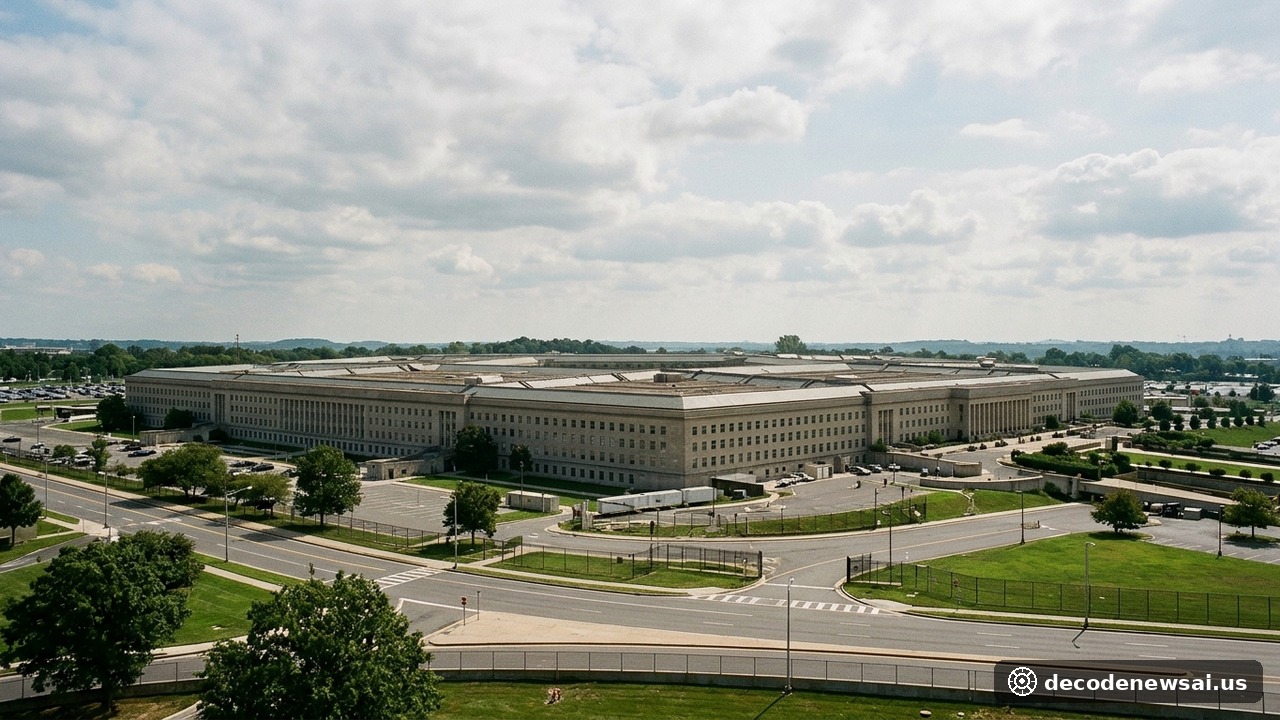
Democrats’ victories in the 2026 midterm elections have put the Trump administration’s defense budget and major Pentagon initiatives under greater congressional scrutiny. Axios reported that defense analysts see poor prospects for the administration’s proposed $1.5 trillion defense budget for fiscal 2027, which combines regular defense appropriations with additional funding sought through the budget-reconciliation process. Democrats are also expected to pursue more oversight of the Iran war, Defense Secretary Pete Hegseth and the Pentagon’s programs. That does not mean defense spending will immediately be cut or that every Pentagon initiative will be canceled. Republicans retain control of the current Congress through the end of the year, and the new Democratic majorities do not take office until January 3, 2027. The immediate questions are whether lawmakers can reach a funding agreement before the December deadline and how the incoming Congress will handle annual appropriations, supplemental funding and the administration’s military reforms.
The $1.5 trillion request faces two different approval paths
The Trump administration’s fiscal 2027 defense proposal totals about $1.5 trillion. It includes approximately $1.15 trillion in regular discretionary national-defense funding and another $350 billion sought through budget reconciliation. Regular appropriations require agreement between the House and Senate and face a higher procedural threshold in the Senate. Reconciliation can allow certain budget measures to pass by a simple majority, but it requires a budget resolution and compliance with specific procedural rules. The Center for Strategic and International Studies said the federal government and the Pentagon were operating under a continuing resolution through December 11. Congress still had substantial work to complete on full-year appropriations. If Democrats control the next Congress, they may prefer to delay final funding negotiations until the new session, giving them more leverage to protect nondefense spending priorities. Axios cited analysts who said the current Congress had little time and a poor chance of passing the additional reconciliation funding before the end of the year. The Congressional Budget Office’s analysis also makes clear that the administration’s headline figure is made up of different funding categories. The $1.15 trillion discretionary request and the $350 billion reconciliation component should not be treated as one already-approved appropriation. Congress can change, reduce or reject parts of the proposal.
Hegseth’s new initiatives could also face funding and authorization hurdles
At a September 30 address at Marine Corps Base Quantico, Hegseth announced six initiatives: an Autonomous Warfare Command, Project Meridian, the FORTRESS America resilience program, a proposal for a new major military installation, an expanded America’s Corps of Cadets and an Office of Religious Affairs. An Army-published Pentagon account listed the initiatives and said the proposed Autonomous Warfare Command is intended to become a four-star combatant command by October 2027. A new combatant command requires personnel, funding and congressional support for the necessary authorities. A new military installation would involve construction funding and long-term procurement. FORTRESS America covers energy independence at military bases, cyber protection, supply-chain resilience and strategic reserves. Inside GNSS reported that the program’s initial guidance specifically identifies positioning, navigation and timing resilience as a priority. Whether these efforts receive sustained funding remains an open question; it would be inaccurate to describe all six as already canceled or certain to be delayed. Project Meridian may also draw scrutiny over governance, cost and private-sector advisers. ## Oversight of the Iran war and Hegseth could intensify With Democrats controlling both chambers in the next Congress, committee investigations are likely to increase. Lawmakers may seek information about the legal authorization, cost, weapons consumption and objectives of the Iran war. Axios reported that some members of Congress have raised the possibility of impeaching Hegseth. That is a political proposal, not evidence that an impeachment process has begun or that the votes exist to remove him. Trump told reporters after the election that he was not considering replacing Hegseth and said the defense secretary was doing a very good job. The president’s support does not prevent Congress from holding hearings, requesting documents or scrutinizing the department’s spending and leadership decisions. Before the election, the Washington Post reported that lawmakers from both parties were already deadlocked over major defense policy and spending bills. The bipartisan consensus that has historically supported defense authorization and appropriations was under strain. The Iran war has consumed large quantities of munitions and other equipment, and delays in funding could complicate efforts to replenish inventories and begin new programs. CSIS noted that continuing resolutions generally restrict new program starts and production increases unless Congress specifically authorizes exceptions.
Defense spending may be reshaped rather than broadly reduced
Skepticism toward the administration’s $1.5 trillion request does not mean both parties oppose military modernization. CSIS analysts have said Democrats may resist the additional $350 billion in reconciliation funding while continuing to support some ammunition replenishment, the defense industrial base and readiness programs. Brookings similarly argued that the most likely changes under a Democratic Congress would involve budget priorities and oversight, rather than an immediate loss of presidential authority over military operations. Reuters reported that defense contractors’ shares fell after the election as investors worried that the proposed spending increase could be curtailed. Jefferies analysts said the final fiscal 2027 defense budget might be closer to the House’s roughly $1.15 trillion proposal than the administration’s $1.5 trillion total. The market reaction reflects uncertainty about future contracts and appropriations, not a confirmed reduction in the Pentagon’s budget. The administration’s request also includes specific high-profile projects, such as Golden Dome and Golden Fleet. Axios cited a TD Cowen research note warning that some projects branded as signature Trump initiatives could be curbed. Congress could protect some capabilities while changing the amount, timing or structure of funding for others.
December funding deadline is the first test
The immediate test is whether Congress can pass full-year appropriations before December 11 or must extend the continuing resolution again. If negotiations are pushed into 2027, the incoming Democratic majorities will have greater influence, but budget talks could become entangled with a possible government shutdown, the debt ceiling and supplemental military funding. Pay, training, base operations and procurement schedules can all be affected by the terms of a continuing resolution, although the specific impact depends on its provisions and any exceptions Congress approves. The Military Officers Association of America reported that the Pentagon’s Defense-State Liaison Office had identified 2027 state-level priorities involving military-spouse employment, child care, school policies for military children and professional-license portability. These are not the same funding programs as major weapons procurement, but they matter to the stability of military households. Democratic control of Congress will not automatically strip the Pentagon of its funding. It will, however, change who controls the committees, which programs receive scrutiny and how the administration must negotiate for money. The scale of the impact will depend on the lame-duck session, the next Congress’s funding decisions and whether lawmakers can restore enough bipartisan agreement to pass defense legislation.
Sources
- Center for Strategic and International Studies: FY 2027 Defense Funding: Potential Post-Midterm Outcomes
- The Washington Post: Inside the breakdown of Trump’s $1.5 trillion Pentagon plan
- Reuters: Defense firms fall as Democratic victory stokes fears of tighter Pentagon budget
- Brookings Institution: The midterm effect: What the 2026 election could mean for public policy
- Stars and Stripes: Hegseth returns to Quantico to lay out technology and people initiatives