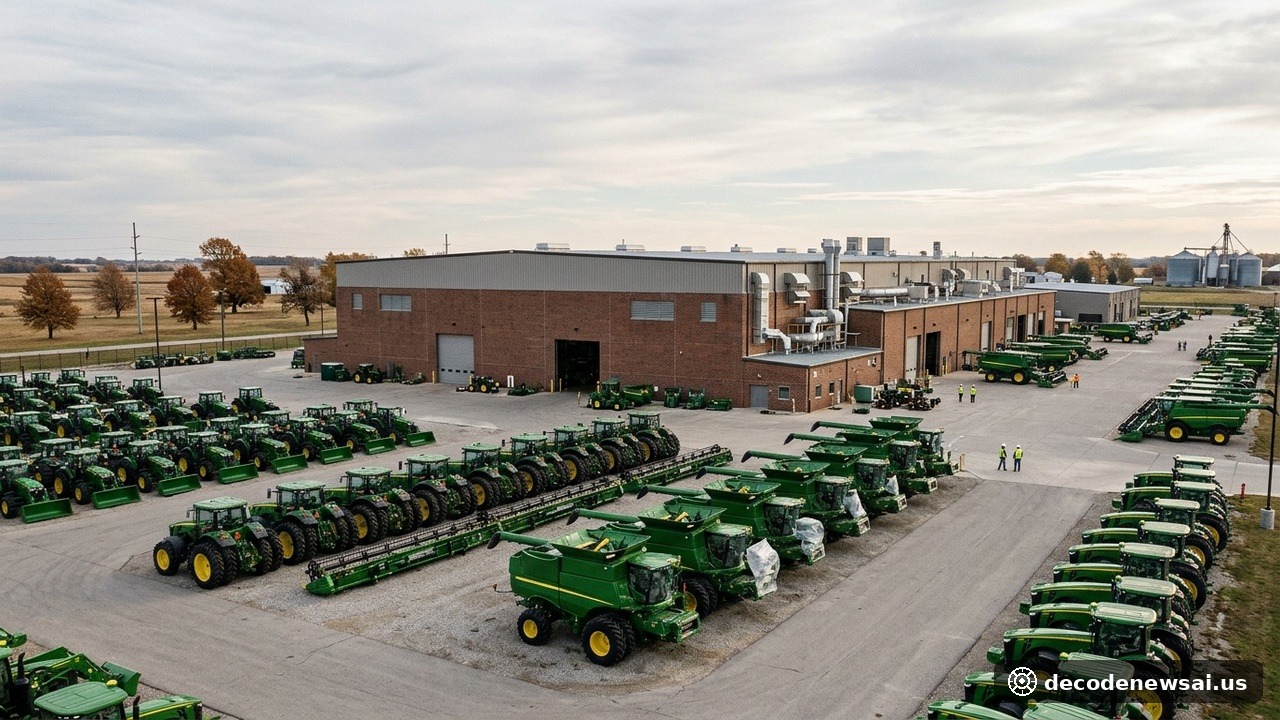
Agricultural equipment maker John Deere plans to close two factories in Iowa over the next several years and move some production to other facilities. The company announced the changes on Nov. 4, citing shifts in customer demand and available manufacturing capacity. Windrower production is scheduled to move by the end of fiscal 2027, followed by round baler production by the end of fiscal 2028. Once those transitions are complete, Deere intends to close its Ottumwa Works factory. Production of Hagie STS sprayers will move from Clarion, Iowa, to Louisiana, with manufacturing at the Clarion site expected to end by fiscal 2029.
Closures will happen in stages
Deere said windrower production will move from Ottumwa Works to Des Moines Works, with round balers to follow. Production of Hagie STS sprayers will begin moving from the Clarion facility to the company’s Thibodaux, Louisiana, factory in fiscal 2028. Deere intends to end manufacturing in Clarion by fiscal 2029. The company also plans to move some small-planter production from Moline, Illinois, to Paton, Iowa. The changes will take place over several years; neither factory is scheduled to close immediately.
The number of affected jobs remains uncertain
Deere has not published a final job-loss figure. The company told agricultural publication DTN that, at normal production levels, about 300 positions could be affected, but the actual impact will depend on future business conditions, output and staffing needs. Local officials and media have cited estimates of about 400 jobs, reflecting different assumptions and reporting. Deere said support could include transfers, retraining, retention arrangements, relocation assistance, severance and career-transition help.
The union criticizes the production moves
The United Auto Workers union criticized the closures and said it would use the 2027 contract negotiations, as well as legislative and executive channels, to try to preserve jobs in Iowa. Deere said it would work with employees, union representatives and local leaders and look for future uses for the Ottumwa and Clarion sites. The union’s response reflects workers’ concerns about job losses and how corporate profits are distributed. The final employment impact will depend on the company’s detailed transition plans.
A manufacturing reset amid a weak farm market
Deere attributed the changes to customer demand and manufacturing capacity. Farm-equipment demand is affected by crop prices, farm income, financing costs and the replacement cycle for machinery. The company had also recently announced plans to recall some workers and hire additional employees, illustrating how demand can vary across factories and product lines. Consolidating production may help Deere use its manufacturing network more efficiently, but the changes could affect local employment, suppliers and tax bases in Ottumwa and Clarion through 2029.