England Launches Multi-Cancer Blood-Test Trial for More Than 20,000 NHS Patients in Primary Care
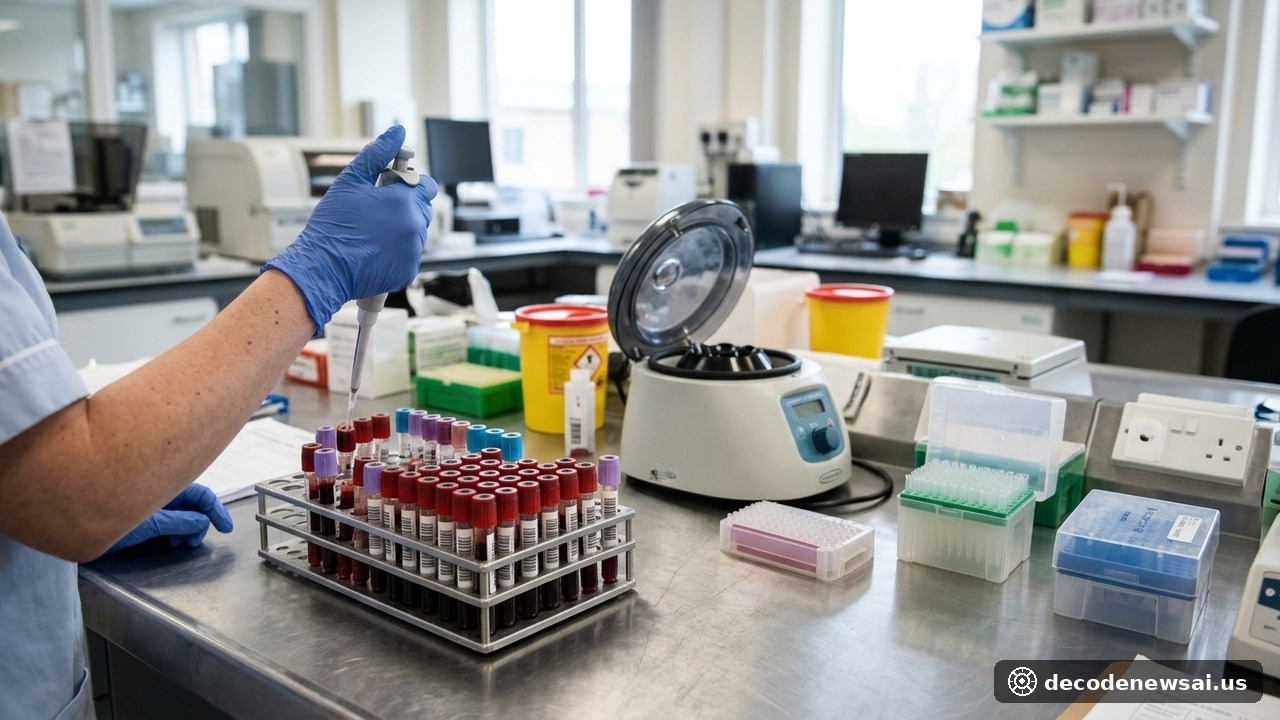
The UK government has announced STRIDE-RCT, a clinical trial that will recruit more than 20,000 NHS patients through at least 200 general practices in England. The study will assess whether several blood tests can help doctors identify signs of cancer earlier. Eligible participants must be at least 45 years old and visit a participating GP with symptoms such as persistent bloating or abdominal discomfort. It is not a population-wide screening program for people without symptoms.
The research will examine signals in blood samples, including proteins and cancer-related DNA, to help doctors decide whether patients need further investigation. The trial covers 13 cancer types, including bowel, pancreatic, stomach, liver, ovarian and prostate cancers. The government is providing up to £8.49 million through the National Institute for Health and Care Research. The results will help determine whether the tests should be used more widely in the NHS.
More than 20,000 patients will be recruited at 200 or more practices
The Department of Health and Social Care announced on November 4 that STRIDE-RCT will operate at a minimum of 200 GP practices across England. More than 20,000 patients are expected to take part. People must be aged 45 or older and attend a participating practice with abdominal symptoms such as persistent bloating, pain or discomfort. Eligible patients will be invited by their practices; the tests are not being offered for people to purchase independently.
Most participants will provide one or two tubes of blood at their GP surgery, alongside routine blood tests. The trial is intended to include practices serving inner-city, rural, coastal and deprived communities. Researchers will compare the performance of different blood tests in primary care and assess whether the results can help GPs decide which patients need urgent referral.
Blood samples will be assessed for signals from multiple cancers
STRIDE-RCT will examine tests that look for signs of several cancers in a single blood sample and may indicate where in the body those signals originate. The cancer types covered include bowel, small bowel, stomach, oesophageal, pancreatic, liver, bile duct, gallbladder, ovarian, endometrial, kidney, bladder and prostate cancers.
Sky News reported that the tests use different technologies, including patterns of amino acids, protein markers and circulating tumour DNA. Some systems use artificial intelligence to analyse multiple biological signals and help identify patients who may need further investigation. The tests are not identical, and their cancer coverage differs. The study is not testing one blood test that can accurately detect every cancer.
A positive result will not be a cancer diagnosis
Researchers stress that a positive blood-test result does not confirm that a patient has cancer. It is intended to help the GP and patient decide whether additional tests or an urgent referral are needed. A negative result also does not replace a doctor’s assessment or existing cancer-screening programs.
Government figures show that about 71,000 people in England are diagnosed each year with pancreatic, stomach, liver, ovarian or bowel cancer, and nearly 35,000 people die from those cancers. Researchers say abdominal cancers can be difficult to identify early because symptoms such as bloating or discomfort may have many causes. The trial will test whether blood tests can help GPs distinguish patients who need more investigation from those who do not.
The study is designed to generate evidence about how the tests perform alongside clinical judgment. It does not assume that earlier detection through blood tests will automatically improve survival or reduce late-stage diagnoses.
The trial has up to £8.49 million in funding, but nationwide rollout is undecided
STRIDE-RCT is being led by researchers at the University of Birmingham. The government is providing up to £8.49 million through the National Institute for Health and Care Research. Participating practices will use the tests alongside normal clinical care to assess whether they can more accurately identify patients who need further investigation.
The new study is different from large-scale multi-cancer screening research involving people without symptoms. Results from the NHS-Galleri trial, which included more than 142,000 participants, were reported in 2026. That study did not meet its primary goal of reducing the combined number of stage 3 and stage 4 cancers diagnosed. STRIDE-RCT instead focuses on people who already have abdominal symptoms and are seeking care from a GP.
The distinction matters because a test that performs well in a research setting may not necessarily be suitable for routine use across the NHS. Researchers will need to assess false-positive results, missed cancers, the number of referrals generated and whether the tests improve the decisions made by GPs.
Clinical evidence will determine whether the tests are adopted
The confirmed plan is that STRIDE-RCT will recruit more than 20,000 patients at at least 200 GP practices in England to evaluate blood tests for signals linked to 13 cancer types. Eligible patients will be aged 45 or older, have relevant abdominal symptoms and attend a participating practice.
What remains unknown is how accurately each test performs in routine primary care, how often it produces false positives, whether it reduces unnecessary referrals and whether it improves cancer stage at diagnosis or patient survival. Researchers say those questions must be answered before the NHS can consider wider use. The announcement marks the start of an evaluation, not the introduction of a new national cancer-screening test.
Sources
- UK Department of Health and Social Care: New NHS blood test trial to help spot cancers earlier
- University of Birmingham: Blood test-based clinical trial to help spot cancers earlier
- Reuters: Doctors in England launch primary-care trial of blood tests for spotting cancer early
- The Times: GP patients to be offered new blood test for 13 types of cancer
- The Pharmacist: GPs to trial blood tests to help identify cancers earlier