Musk’s Midterm Bet Backfires as Tesla and SpaceX Shares Slide
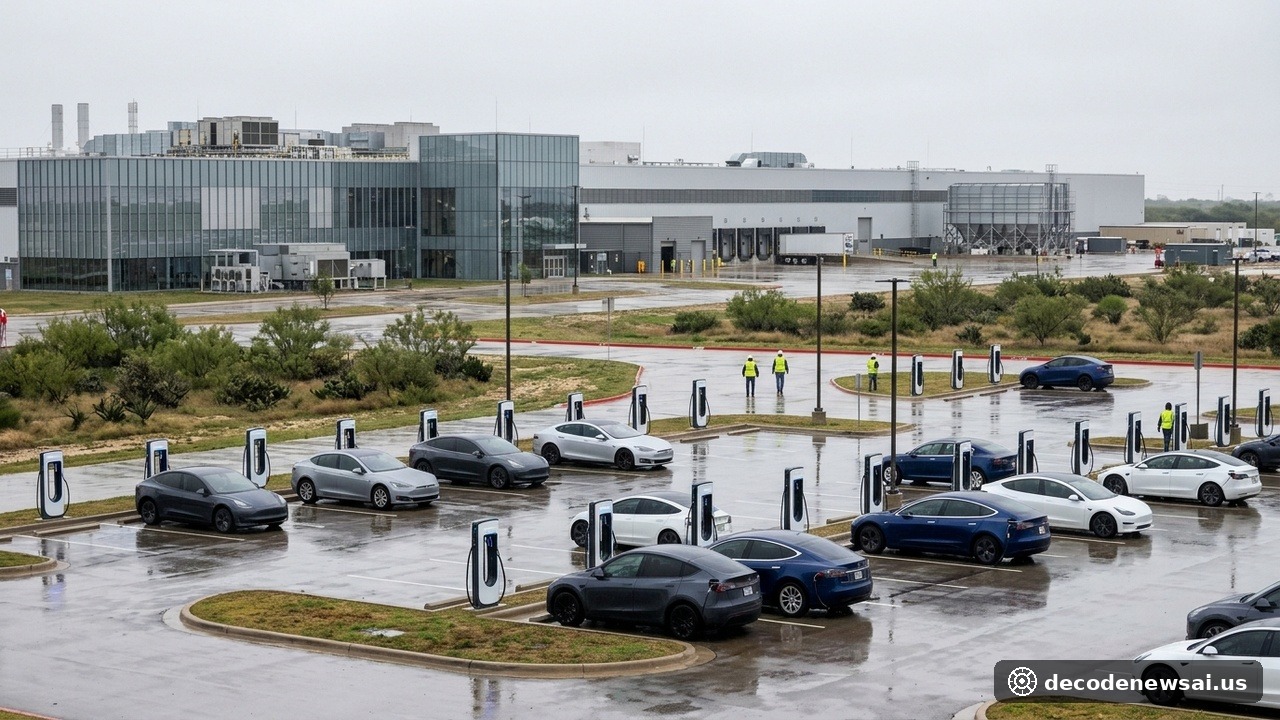
Tesla and SpaceX shares fell on November 4 after Democrats won control of both chambers of Congress and defeated several Republican candidates backed by Elon Musk, including in Texas. The results put renewed attention on the billionaire’s political influence and on the regulatory and local-policy environment facing his companies.
The reported declines varied by trading venue and time of day. Premarket and early-session coverage put the drops at roughly 3% to 7% at different points, while Reuters cited European trading prices showing declines of about 4.5% to 5%. Those figures describe different snapshots, not a single closing price. U.S. stocks later recovered from early volatility, making it important to distinguish the initial reaction from the full trading session.
Nearly $500 Million in Political Spending Did Not Prevent Republican Losses
Musk spent hundreds of millions of dollars supporting Republican candidates and political organizations during the election cycle. A New York Times analysis of Federal Election Commission, Internal Revenue Service and state campaign-finance records estimated that he directed about $474 million to political groups during the cycle. The estimate relied on federal filings available through mid-October and may not include some spending from the final weeks of the campaign.
Texas was a major focus of that spending. Media reports based on campaign-finance records estimated that about $224 million was directed toward Texas races. Musk backed Republican Senate candidate Ken Paxton and incumbent Governor Greg Abbott. Both lost: Democrat James Talarico won the Senate race, while Democrat Gina Hinojosa defeated Abbott in the governor’s contest.
The defeats came as Democrats also captured control of the House and Senate nationally. Musk’s spending did not prevent losses by several candidates he supported, and the results could change the political relationships his companies have relied on in Texas.
Musk was not a candidate in the elections, but his companies have substantial operations and plans in the state. Tesla has its headquarters and a major vehicle factory in Austin. SpaceX operates its Starbase launch facility in South Texas and is pursuing large-scale artificial-intelligence and data-center projects. Texas has attracted technology companies with its business climate, tax incentives and energy infrastructure.
Texas Data-Center Policy Is a Central Investor Concern
Hinojosa campaigned on stronger community protections around data-center development. She called for a pause on new projects until safeguards are established and argued that residents should not bear higher electricity or water costs caused by large facilities. She has also criticized tax incentives for companies.
Her election prompted investors to consider whether state policy could affect project approvals, infrastructure construction and expansion schedules. SpaceX’s AI ambitions require substantial computing capacity, while Tesla also operates major facilities in Texas. A change in the state’s approach to data centers could therefore matter to both companies, although the scale and timing of any effect remain uncertain.
The governor cannot unilaterally determine every energy, land-use or data-center policy. Republicans continue to control the Texas Legislature, which could limit how quickly Hinojosa can change state rules. Local governments, regulators, utilities and permitting processes will also shape the outcome. Her campaign positions are not, by themselves, enacted policy.
The election therefore creates a potential policy risk rather than proof that specific projects will be halted. Investors will need to watch whether the new administration proposes formal rules, whether lawmakers support them and how local authorities handle individual developments.
Congressional Oversight and a Possible Merger Add Uncertainty
Democratic control of Congress could also increase scrutiny of Musk’s business interests. NPR reported that Democratic lawmakers may examine federal contracts and subsidies received by Musk’s companies, as well as his earlier role leading the Department of Government Efficiency. The scope and timing of any formal inquiry remain unclear. The election result does not itself establish wrongdoing by Musk or his companies.
Investors are also weighing the possibility of a Tesla-SpaceX combination. Musk previously said independent committees at the two companies were examining a potential deal. No merger has been finalized, and any transaction would still face corporate governance requirements and the need for shareholder support.
Some analysts have argued that a Democratic-controlled Congress could increase political scrutiny around a potential combination or make the regulatory path less predictable. That is not the same as saying Congress can directly cancel a private merger simply because lawmakers oppose it. Any actual review would depend on the relevant legal and regulatory process.
The share-price declines do not establish that a merger will fail. Investors are weighing several risks at once: data-center policy, AI regulation, government contracting, corporate strategy and the valuation of businesses whose growth plans require large amounts of capital and infrastructure.
One Trading Session Is Not a Final Verdict
The November 4 market response was mixed. Tesla and SpaceX fell while major U.S. stock indexes recovered and moved higher after early volatility. Reuters reported that investors were concerned about tighter oversight of AI and data-center development, but also saw a divided government as a possible constraint on abrupt policy changes.
Reported stock moves differed across premarket trading, regular trading and overseas venues. Some outlets reported declines exceeding 4% at certain points, while other snapshots showed smaller losses. Those differences should not be collapsed into one figure or treated as evidence of a permanent repricing.
The broader market context also matters. Company-specific prices can move with investor expectations, trading liquidity, interest rates and wider sector sentiment. A one-day decline cannot establish how much of the move was caused by election results rather than other factors.
For Musk, the political consequences are clearer than the eventual business impact. Several candidates he backed lost in important races, Democrats gained congressional oversight power, and Texas elected a governor who has called for stronger limits on data-center development. Whether those changes materially delay projects, affect federal contracts or complicate a possible merger will depend on decisions still to come.
Sources
- Reuters: Elon Musk's business empire braces for Democratic wave as Texas flips blue
- NPR: Elon Musk will face scrutiny from Democrats in Washington and Texas after midterms
- Bloomberg: Tesla, SpaceX Shares Take Early Hit as Midterm Blue Wave Unfolds
- The Wall Street Journal: Stocks to Watch Recap: AMD, CoreWeave, McDonald's, SpaceX
- The Washington Post: Musk threw his fortune at the midterms. Voters handed him a stunning defeat.