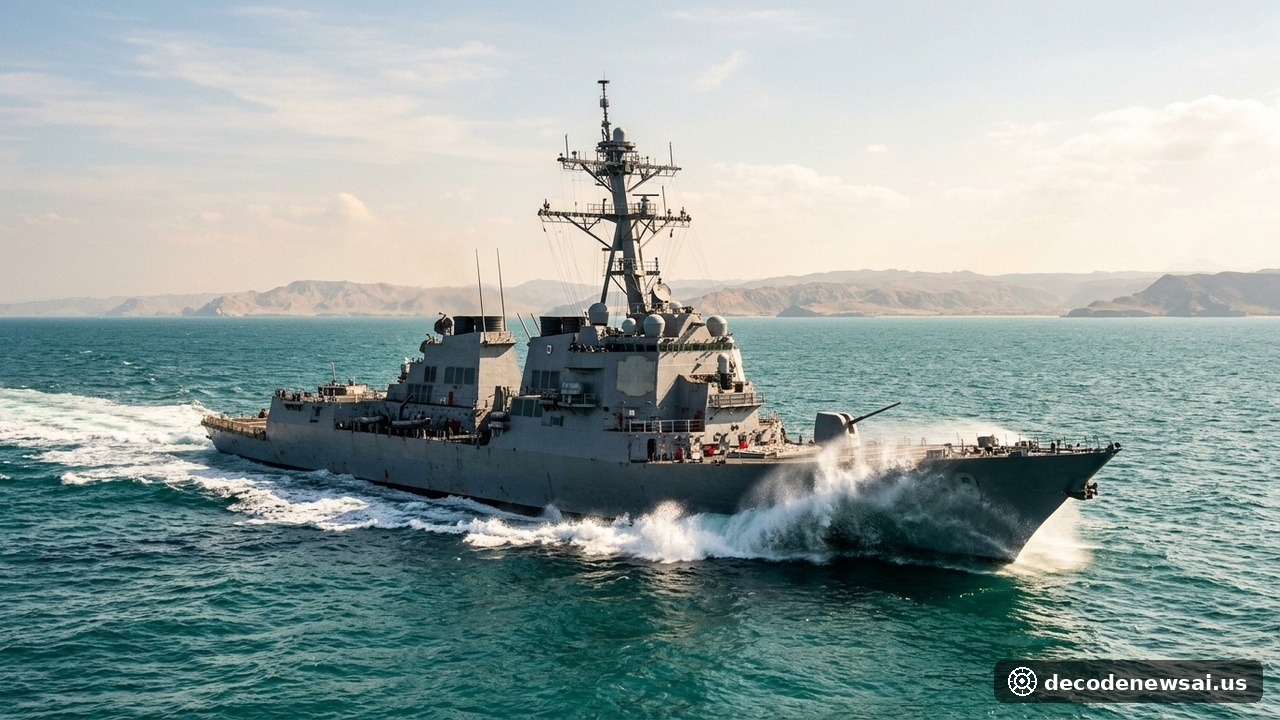
On November 5, 2026, premier international news agencies and defense publications including Al Jazeera, SBS News, Reuters, and The Hankyoreh reported that South Korea’s Ministry of National Defense formally submitted a legislative motion to the National Assembly to extend the operational mandate of its anti-piracy Cheonghae naval unit, which was scheduled to expire at the end of 2026. The government proposal substantially widens the naval task force’s operational theater from the Gulf of Aden toward the strategic waters surrounding the port of Duqm in eastern Oman—approximately 650 kilometers (403 miles) from the Strait of Hormuz—effectively doubling its maritime operational patrol area. Accompanied by specialized unmanned mine-clearing hardware and explosive ordnance disposal (EOD) detachments, the deployment represents an intricate geopolitical balancing act by Seoul to address persistent security demands from the United States while safeguarding critical commercial shipping lanes and preserving delicate diplomatic ties across the Middle East.
Extending Patrol Perimeters to Duqm with Autonomous Mine Countermeasures Deployments
The Cheonghae Unit, centered on a 4,400-ton class guided-missile destroyer, has operated continuously off the Somali coast since 2009, conducting maritime counter-piracy operations and escorting commercial merchant shipping. According to briefings provided by defense officials during a parliamentary briefing in Seoul, the newly proposed operational framework shifts the unit’s primary patrol focus northeastward across the northern Arabian Sea. Positioning the destroyer adjacent to Duqm grants the task force rapid operational transit capabilities toward the Gulf of Oman, placing naval assets within immediate reach of critical tanker transit corridors.
To counter emerging hybrid naval threats, including loitering maritime surface drones and drifting sea mines that have disrupted regional commercial corridors, the Republic of Korea Navy is reinforcing the destroyer's onboard tactical equipment. For the first time in the unit's operational history, the deployment incorporates autonomous unmanned underwater mine-detection vehicles alongside a specialized naval special warfare detachment certified in explosive ordnance disposal. These specialized capabilities are specifically designed to allow the warship to execute independent route clearance, render safe floating ordnance, and provide direct armed escort to vulnerable commercial crude carriers traversing international choke points without relying on external coalition support.
Naval architecture specialists emphasize that operating in the high-temperature, high-salinity waters of the northern Arabian Sea places unique mechanical demands on propulsion and cooling infrastructure. The deployed destroyer will receive upgraded filtration mechanisms and enhanced satellite command-and-control links to maintain continuous real-time data synchronization with fleet headquarters in Busan. This technical hardening ensures that Korean naval commanders can maintain persistent sensor coverage over surrounding maritime traffic while operating semi-autonomously across contested waters.
Navigating Alliance Pressures While Preserving Strategic Non-Interventionist Boundaries
The strategic realignment unfolds amid intense geopolitical friction in the Persian Gulf and mounting diplomatic pressure from Washington. Following repeated security alerts and drone strikes against commercial shipping corridors, the United States administration has persistently lobbied key Indo-Pacific allies—most notably South Korea and Japan—to integrate naval assets directly into multilateral maritime security coalitions operating against Iranian proxy networks. However, because South Korea relies overwhelmingly on regional producers for its national hydrocarbon reserves and maintains sensitive economic and diplomatic relationships throughout the region, participating in overt offensive coalition patrols risks precipitating acute retaliatory measures against Korean commercial interests.
To mitigate these geopolitical vulnerabilities, South Korean defense and diplomatic officials emphasized that the expanded mission remains an autonomous, sovereign operation strictly unaligned with offensive coalition frameworks. Ministry spokespersons explicitly clarified that the Cheonghae Unit’s operational rules of engagement are strictly confined to defending Korean nationals and escorting South Korean-flagged merchant vessels, rather than executing collective security strikes against sovereign entities. Furthermore, military authorities provided assurances that the naval unit will not transit through the Strait of Hormuz into the Persian Gulf without explicit, separate parliamentary deliberation and authorization, creating an intentional operational buffer that satisfies allied burden-sharing expectations while forestalling military entanglement.
Diplomatic analysts observe that maintaining this precise degree of strategic ambiguity is critical for Seoul’s overarching foreign policy. South Korea cannot afford to alienate Western defense partners given the security challenges on the Korean peninsula, yet it cannot jeopardize commercial stability across energy supply routes. By framing the deployment strictly around humanitarian escort protocols and international freedom of navigation, South Korea seeks to insulate its merchant fleet from partisan warfare while projecting stabilizing naval power along its primary trade artery.
Securing National Hydrocarbon Arteries Amid Legislative Scrutiny in the National Assembly
The imperative to project naval power across Middle Eastern waters is driven by fundamental economic vulnerability: more than 70 percent of South Korea’s total petroleum imports and substantial volumes of liquefied natural gas transit directly through the Strait of Hormuz. Prolonged regional instability has already exerted severe economic friction on domestic conglomerates, triggering unprecedented surges in war-risk maritime insurance premiums and forcing international shipping lines to execute protracted, capital-intensive detours around the Cape of Good Hope. Domestic shipowners and industrial trade associations have consequently maintained aggressive advocacy for state-backed maritime defense along Persian Gulf transit routes.
Nevertheless, the defense ministry’s expansion motion faces rigorous legislative scrutiny within the National Assembly. Opposition lawmakers have voiced deep concern that stationing high-value naval assets in close proximity to contested waters risks inadvertent military escalation, warning that Korean destroyers could become entangled in asymmetric drone attacks or retaliatory naval skirmishes without reciprocal defense guarantees. Over the coming weeks, parliamentary defense committees will conduct closed-door hearings examining the mission's rules of engagement, joint air-defense coordination protocols with regional naval bases, and emergency contingency funding. The final vote will determine the trajectory of South Korea’s expeditionary defense posture, testing the nation’s ability to defend sovereign resource lifelines across a fracturing international maritime order.