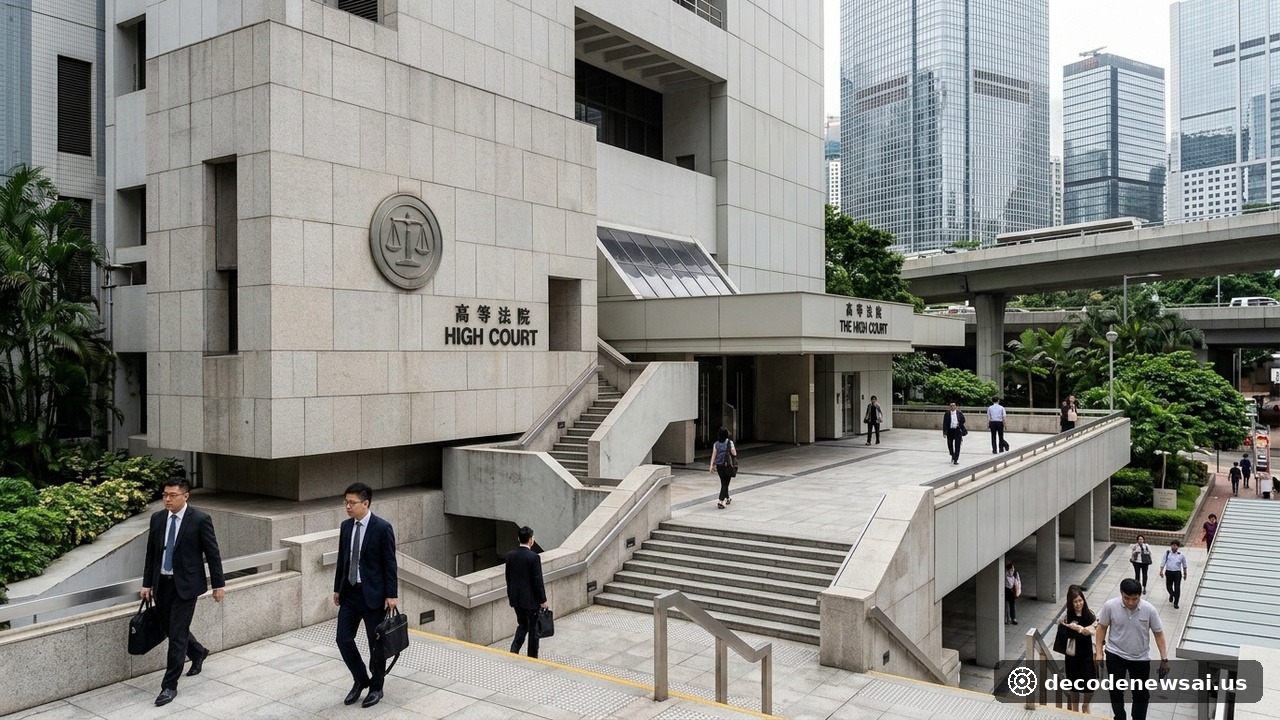
On November 5, 2026, premier global news organizations and international human rights monitors including The Guardian, CNN, The Washington Post, Human Rights Watch, and the Financial Times reported that the High Court of Hong Kong formally sentenced prominent pro-democracy campaigner Joshua Wong to ten years in prison. Wong, who pleaded guilty to conspiracy to commit collusion with foreign countries or external elements under the Beijing-imposed National Security Law, received the harsh sentence just two months before his scheduled release from prior detentions. The landmark judicial decision triggered immediate diplomatic condemnations from the United States and the United Kingdom, intensifying international geopolitical tensions surrounding civil liberties and judicial autonomy in the Chinese territory.
Guilty Plea Fails to Avert Maximum Penalty as Court Imposes Extended Prison Term
Now 30 years of age, Wong rose to global prominence more than a decade ago as a charismatic student organizer who spearheaded mass civic demonstrations and subsequent pro-democracy mobilizations across the territory. Prior to the national security proceedings, Wong had already spent more than six cumulative years incarcerated across several high-security detention facilities following convictions related to unauthorized public assemblies. Under preceding sentencing schedules, he had been legally anticipated to regain his freedom within eight weeks.
According to the sentencing judgment delivered by designated National Security Law judges at the High Court, Wong’s formal guilty plea provided only limited mitigation against the severe baseline tariff. The presiding bench categorized Wong as a "principal offender" whose sustained engagement with overseas political figures and advocacy for economic sanctions against mainland Chinese and Hong Kong officials constituted a grave and ongoing threat to national security. Consequently, the court ruled that mitigating factors were substantially outweighed by the gravity of the foreign collusion charges, handing down a full decade of additional continuous imprisonment that effectively detains Wong until the late 2030s.
Legal scholars analyzing the written ruling observed that the High Court established an exceptionally rigorous threshold for substantial sentence reductions under national security statutes. While common-law jurisdictions traditionally grant a standard one-third discount for early guilty pleas, the national security panel determined that the statutory gravity of conspiring with overseas entities to influence sovereign policy required uncompromising deterrent sentencing. By categorizing his advocacy as a continuing criminal enterprise, the court effectively insulated the verdict from routine appellate reductions.
Western Governments Condemn Harsh Sentence as Civil Rights Advocates Demand Immediate Release
The pronouncement of the ten-year sentence provoked immediate diplomatic pushback across Western capitals. The British Foreign, Commonwealth and Development Office and the United States Consulate General in Hong Kong issued coordinated public statements condemning the prolonged judicial penalty as disproportionate and cruel. Both governments argued that criminalizing peaceful international political discourse and legislative lobbying directly violates the Sino-British Joint Declaration and dismantles the fundamental civil liberties formally guaranteed to Hong Kong residents under the Basic Law framework.
Prominent international non-governmental organizations, including Human Rights Watch and Fortify Rights, published urgent policy briefs denouncing the ruling as a transparent campaign of state-directed legal retaliation. Civil liberties advocates stated that extending Wong’s confinement indefinitely seeks to permanently neutralize the symbolic figurehead of Hong Kong’s youth civic movement, urging democratic administrations worldwide to demand the immediate, unconditional release of Wong and all political prisoners held under national security statutes.
Human rights monitors emphasized that the extended sentence arrives amid a broader contraction of independent legal representation within the territory. Defense attorneys representing national security defendants face intense regulatory scrutiny, creating a chilling effect across the local legal bar. Diplomatic representatives from multiple European Union member states who attempted to observe the courtroom sentencing noted that procedural restrictions severely curtailed public gallery access, reflecting the systematic insulation of sensitive trials from international transparency.
Hong Kong Authorities Rebut Foreign Inquiries as Geopolitical Fault Lines Solidify
In response to the mounting international outcry, the Government of the Hong Kong Special Administrative Region released an assertive official communique on Thursday evening. A government spokesperson expressed firm opposition and strong condemnation regarding statements made by foreign consular officials, characterizing their interventions as malicious attempts to interfere with independent judicial proceedings in China’s internal affairs. The administration maintained that the judiciary operated in strict conformity with statutory evidentiary thresholds and established common-law jurisprudence without political consideration.
Regional geopolitical analysts observe that the sentence delivered to Joshua Wong cements Beijing’s comprehensive restructuring of the territory’s judicial landscape. By imposing maximum statutory penalties on high-profile activists who maintain relationships with Western legislative bodies, authorities have established an uncompromising deterrent against cross-border human rights advocacy. As international scrutiny intensifies over Hong Kong’s financial standing and regulatory divergence, the ruling underscores how national security enforcement continues to take absolute institutional precedence over traditional judicial accommodation.
The verdict also carries lasting implications for diplomatic negotiations between Beijing and Western powers. Legislative committees in the United States Congress and the European Parliament have already indicated that the harsh punishment inflicted on veteran civil rights leaders will accelerate calls for targeted sanctions against judicial and law enforcement officials involved in national security prosecutions. As Hong Kong continues to market its institutional advantages as an international financial and arbitration hub, the expanding chasm between domestic security enforcement and international legal expectations poses an enduring challenge to the territory's long-term economic integration.