What Are the Key Technical and Storage Figures Behind the 366GB Patch Anomaly?
- Abrupt Installation Size Requested by Steam: Approximately 366.56 GB
- Standard Recommended Storage Requirement: 50.00 GB
- File Size Expansion Magnitude: Over 7.3 Times Baseline Size
- Scope of Underlying Content Changes: Three Language Localizations Only
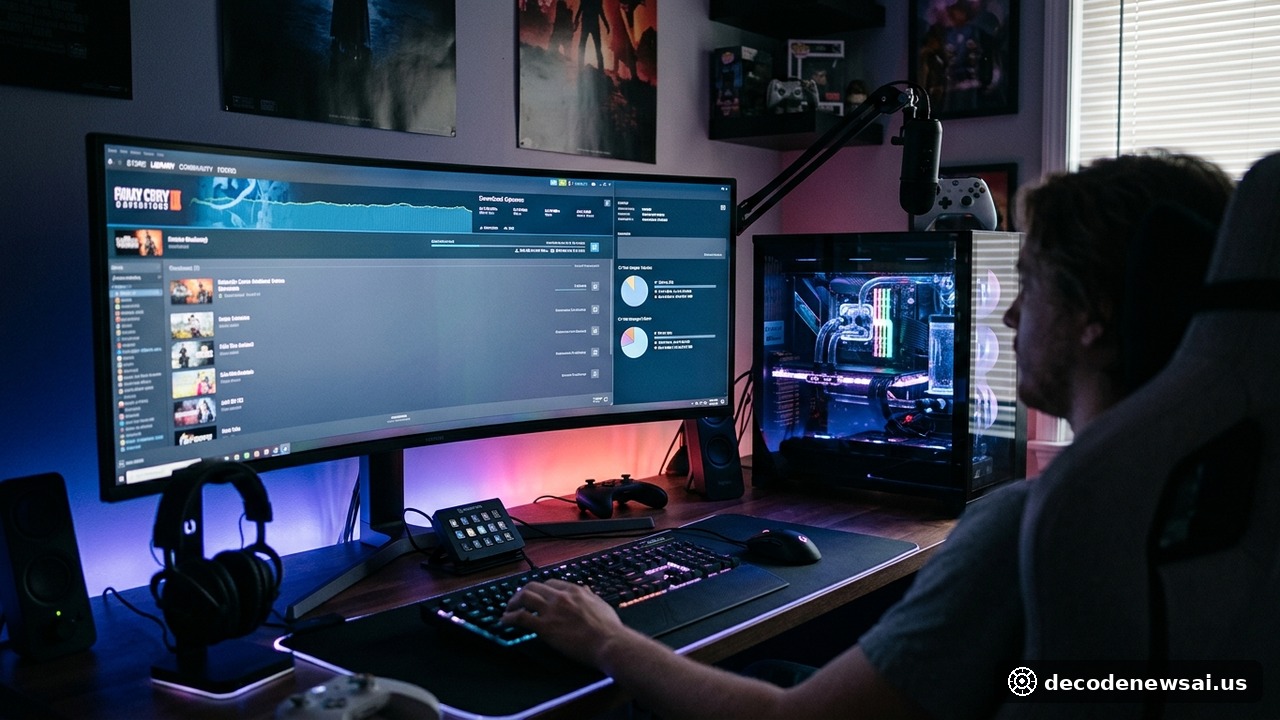
Technical telemetry analyzed by SteamDB researchers and independent software developers revealed that the dramatic footprint expansion was not caused by malicious tampering, but by a severe packaging directory circular redundancy introduced during the build pipeline. When preparing localization asset packs for the Game of the YoRHa Edition, release engineers inadvertently bundled the complete 50 GB base game asset archive into each separate downloadable content (DLC) package. As the Steam client processed the cumulative directory requirements for multiple language packs, it calculated a staggering 366 GB requirement before permitting file decompression.
The error affected players attempting fresh installations as well as existing users queuing the automatic patch. Because modern operating systems enforce strict local drive pre-allocation before downloading compressed Steam depots, players lacking nearly 400 GB of continuous free storage were completely locked out of launching a title they had previously enjoyed without difficulty.
How Did Square Enix and the PC Gaming Community React to the Bloat?
In an official advisory published on social media platform X on the morning of November 6, 2026, Square Enix acknowledged the severe technical disruption, extending apologies to the community and confirming that internal engineering teams were urgently investigating the depot discrepancy to prepare a hotfix.
To alleviate immediate player frustration, community managers outlined an interim manual workaround: users can navigate to the NieR: Automata entry within their Steam library, open properties, navigate to the DLC tab, and deselect the bundled accessory and localization add-ons. By isolating the base game from the corrupted add-on packages, the installation envelope immediately collapses back to the standard 50 GB baseline. Meanwhile, global gaming forums embraced the incident with widespread humor, with prominent gaming publications Kotaku and GameSpot cataloging the blunder as one of the most eccentric packaging mishaps in modern digital PC distribution history.
What Does This Deployment Failure Reveal About Legacy Game Maintenance Pipelines?
The comical scale of the storage miscalculation highlights critical structural vulnerabilities within post-launch digital asset distribution and quality assurance pipelines.
As major gaming publishers transition classic titles to long-tail catalog revenue models, minor patch maintenance is frequently delegated to regional third-party porting contractors operating without access to end-to-end continuous integration test environments. Pushing multi-hundred-gigabyte redundant builds onto global content delivery networks (CDNs) wastes international server bandwidth and risks customer alienating friction. Software reliability engineers emphasized that digital storefront operators like Valve must implement automated file delta threshold alerts that flag and suspend uncharacteristically oversized updates before they reach commercial retail consumers.
The community fallout triggered widespread satirical commentary across international streaming platforms and gaming communities. Prominent digital content creators posted viral demonstrations attempting to initiate the update, only for automated operating system warnings to demand the immediate deletion of major titles like Cyberpunk 2077 or Baldur's Gate 3 just to accommodate a maintenance build adding text localizations.
From a game architecture standpoint, the incident exposes the severe perils of monolithic asset bundling within legacy multi-platform releases. When publishers retroactively graft new localization metadata onto legacy software architectures without maintaining clean separation between dynamic game logic and static high-resolution textures, automated package managers often default to recursive file inclusion. Industry specialists emphasized that digital distribution gatekeepers like Valve must enforce automated file size anomaly alerts that quarantine unexpectedly massive updates before they propagate across consumer networks.