What Are the Core Capital Expenditure Targets and Facility Metrics at CFB Suffield?
- Total Territorial Footprint Encompassed by CFB Suffield Base: 2,690 Square Kilometers (Largest Live-Fire Range in Canada)
- Lead Infrastructure Partner Awarded Pre-Construction Contract: EllisDon Corporation (Canadian General Contracting Group)
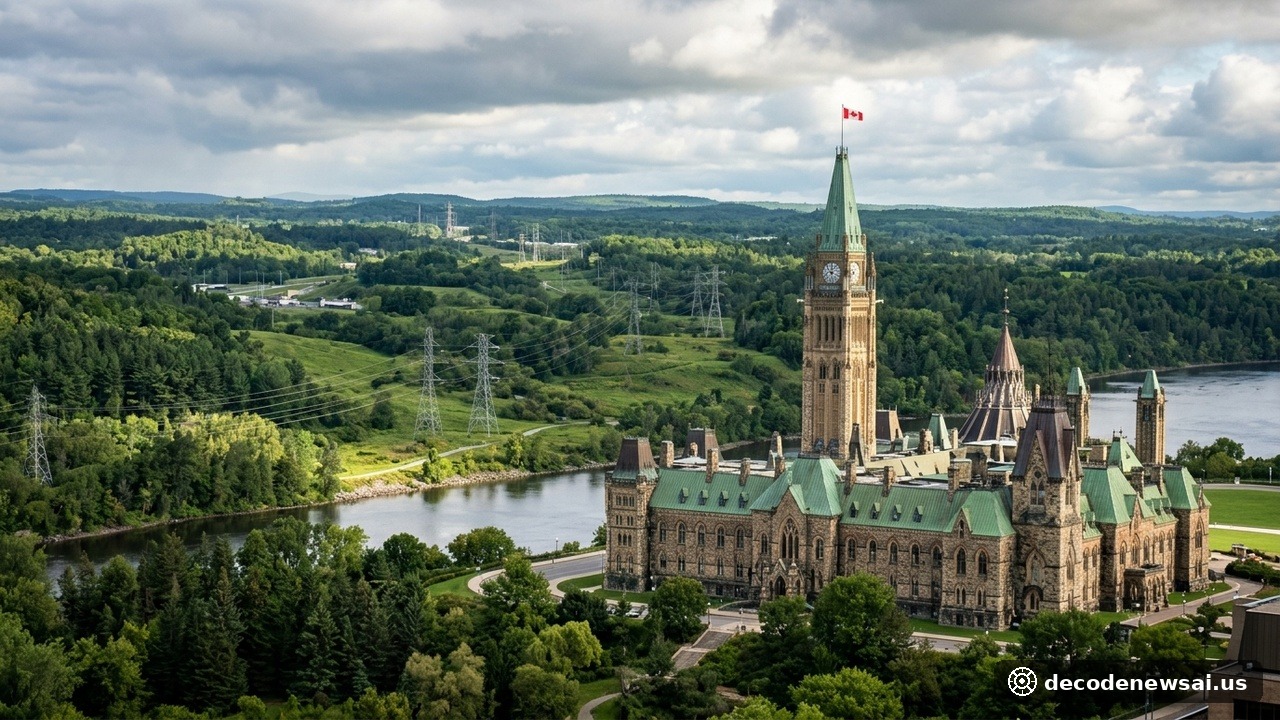
Speaking at a national press briefing in Ottawa, Canada's Minister of National Defence contextualized the investment within evolving geopolitical threats: "In an era marked by state-sponsored hybrid warfare, proliferation of synthetic chemical compounds, and rapid battlefield deployment of weaponized autonomous drones, Canada must ensure its military personnel and scientific corps operate from the most technologically advanced facilities in the democratic world. Consolidating our DRDC research capacity at CFB Suffield modernizes our globally recognized CBRN defensive countermeasure programs while establishing state-of-the-art proving grounds for sovereign uncrewed military technologies, fortifying Arctic sovereignty and our commitments to NATO collective security."
How Will the 37,000-Square-Meter Facility Bridge CBRN Defense and Autonomous Robotics?
CFB Suffield has functioned as a premier proving ground for allied defensive chemical research since World War II, but aging, decentralized laboratories constructed during the Cold War era proved inadequate for modern multi-domain operational testing.
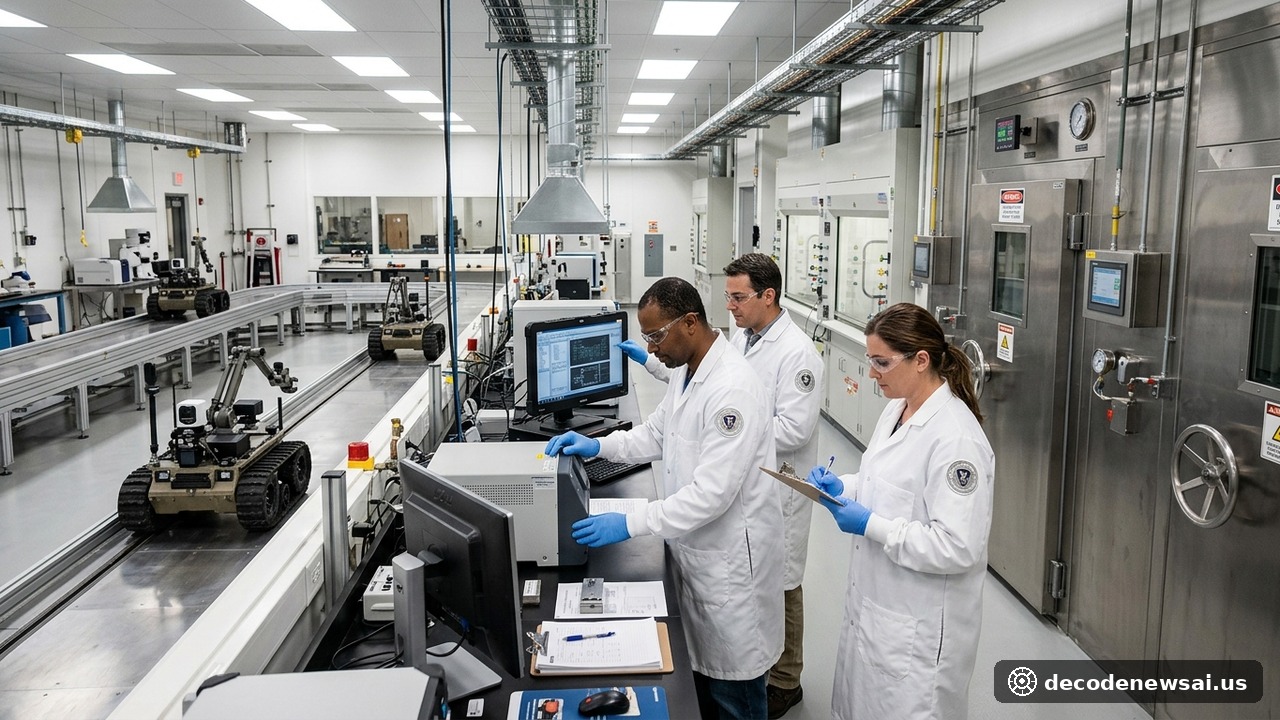
The new 37,000-square-meter consolidated complex incorporates biocontainment protocols compliant with elevated BSL-3+ and specialized BSL-4 isolation requirements, featuring automated pressure-gradient airlocks, micro-environmental aerosol dispersal chambers, and real-time toxicological mass spectrometry sensor arrays. Critically, the architectural design breaks traditional silos between chemical sciences and robotic engineering by physically linking hardened laboratory suites directly to an instrumented indoor-outdoor autonomous systems test track. Military researchers can deploy autonomous unmanned ground vehicles (UGVs) and drone swarms equipped with specialized protective coatings directly into hazardous containment environments, validating artificial intelligence algorithms capable of autonomous toxic agent identification, remote decontamination, and casualty extraction without placing human warfighters in harm's way.
Defense infrastructure analysts highlighted that modernizing facility containment systems is essential for meeting stringent international environmental safety covenants. The consolidated facility incorporates redundant high-efficiency particulate air filtration and automated chemical neutralization reservoirs, ensuring that experimental biocontainment protocols operate with zero environmental discharge risk into surrounding prairie ecosystems.
Additionally, the co-location of civilian academic specialists alongside military research scientists fosters rapid commercialization pipelines for dual-use technologies, spanning civil pandemic preparedness and emergency municipal hazardous material response systems.
What Economic and Industrial Dividends Does the Federal Procurement Bring to North America?
The C$752 million procurement initiative provides tangible momentum toward meeting NATO defence expenditure benchmarks while delivering substantial economic diversification for Alberta.
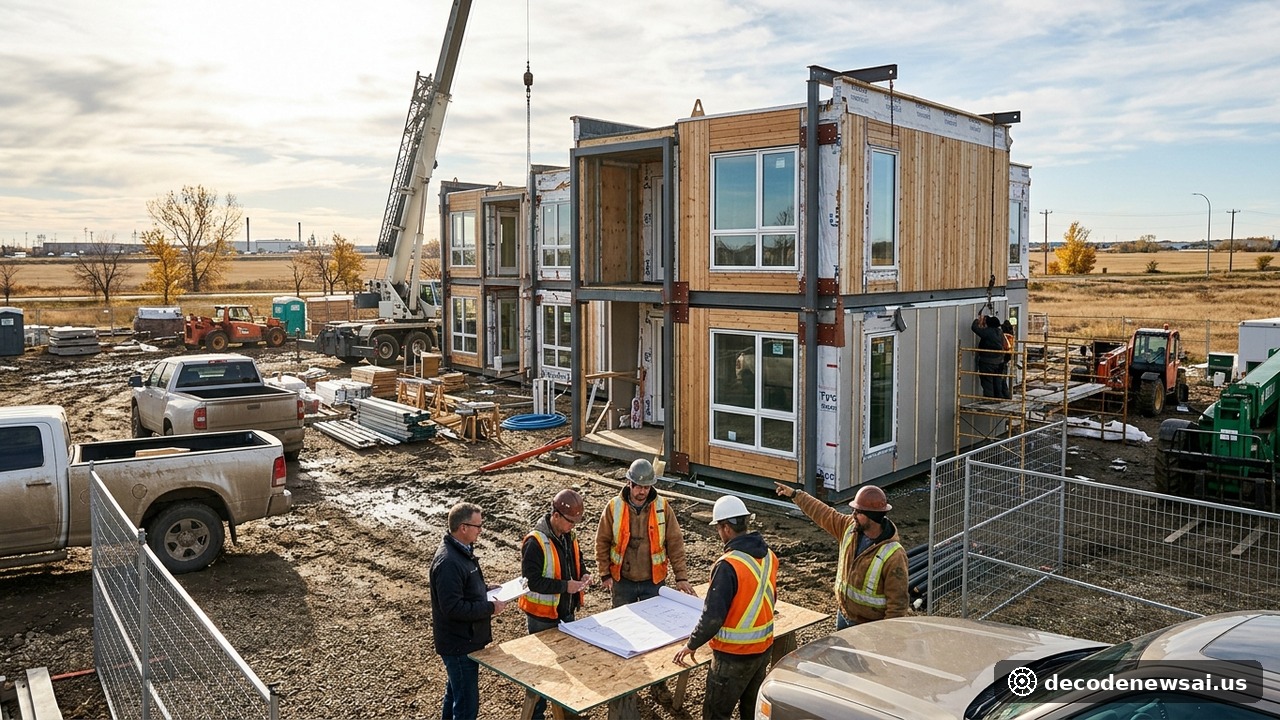
While the regional economy has historically depended on hydrocarbon extraction, the decade-long buildout of CFB Suffield will stimulate robust private-sector demand for specialized mechanical engineering, high-efficiency particulate air filtration systems, and sensor telemetry manufacturing. EllisDon has committed to allocating significant procurement packages to local Indigenous businesses and regional sub-contractors throughout the construction lifecycle. Within the Five Eyes and NATO defense architecture, the upgraded Suffield facility will serve as an indispensable staging node for allied defense scientists, solidifying collaborative transatlantic readiness against unconventional warfare threats.