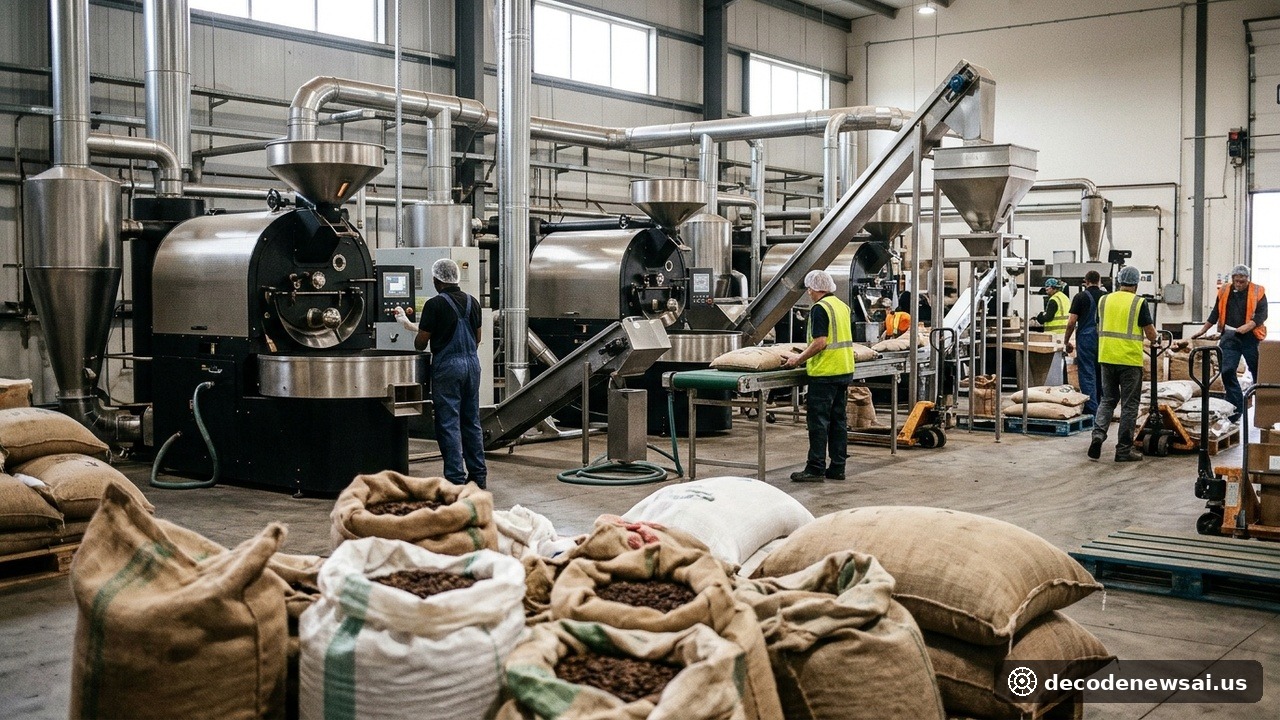
Global investment banking institution Goldman Sachs, alongside the Bank Policy Institute, formally announced a landmark economic empowerment initiative on November 7, 2026, establishing the Goldman Sachs Small Business AI Institute. Funded through a newly authorized $500 million philanthropic and commercial capital allocation from the Goldman Sachs Foundation, the institute represents the definitive expansion of the firm's sixteen-year-old 10,000 Small Businesses initiative. Partnering with leading foundational artificial intelligence developers and premier business schools, the program will provide customized enterprise AI agents, automated workflow training, and practical operational toolsets to more than 10,000 retail, manufacturing, and supply chain enterprises across the United States.
Key Strategic Allocations and Targets of the Small Business AI Institute
- Designated Institutional Entity: Goldman Sachs Small Business AI Institute
- Frontier AI Technology Research Partners: Tier-1 LLM Developers & Frontier Labs
- Operational Focus Areas & Efficiency Goals: Automated Accounting, Marketing, Supply Chain
Why Did Goldman Sachs Allocate $500 Million to Main Street AI Adoption?
While the initial phase of the generative artificial intelligence boom concentrated tens of billions of dollars in risk capital within hyperscale cloud providers and venture-backed frontier laboratories, Main Street enterprises faced persistent technological exclusion. Industry research conducted by the National Federation of Independent Business indicates that while 82% of small business owners acknowledge AI's potential to eliminate administrative inefficiencies, fewer than 12% have successfully integrated automated toolsets into daily operations due to cost, technical complexity, and severe workforce talent deficits.
David Solomon, Chairman and Chief Executive Officer of Goldman Sachs, noted at the official unveiling that small businesses generate nearly half of all private-sector employment and 44% of United States gross domestic product, serving as the foundational ballast of the American economy. The $500 million commitment seeks to eliminate barriers to enterprise-grade AI tools. By curating pre-configured, privacy-compliant software architectures alongside major foundation model developers, Goldman Sachs aims to democratize advanced computational tools for Main Street operators.
How Will the Institute Address Practical Implementation Hurdles?
According to published operational guidelines, the Small Business AI Institute will establish four regional training centers across the United States in partnership with Babson College and regional academic partners. Rather than emphasizing theoretical machine learning mechanics, the curriculum concentrates on tangible, cash-flow-positive applications designed for immediate implementation.
The programming delivers targeted instruction across three core domains: automated bookkeeping and regulatory compliance tools that streamline multi-state sales tax auditing and cash-flow projections; multi-modal marketing suites that enable local merchants to autonomously produce localized promotional campaigns and visual collateral; and automated inventory optimization software designed to minimize warehousing bottlenecks. Each participating founder receives tailored operational evaluations from dedicated Goldman Sachs technology advisors to ensure deployed systems match balance sheet capacity.
What Are the Long-Term Macroeconomic Implications for US Labor Productivity?
Major business publications, including The Wall Street Journal and Forbes, commended the initiative as a pioneering model for mobilizing institutional financial capital to address structural productivity divergence.
Macroeconomists emphasize that chronic productivity stagnation across small businesses has historically limited potential national economic growth. Relieving small business owners from routine administrative and bookkeeping burdens frees management capacity to concentrate on product refinement, localized market expansion, and customer relationship building. Over a multi-year horizon, broad-based enterprise automation strengthens business survival rates against prolonged borrowing cost pressures while seeding hundreds of thousands of technologically proficient jobs across the domestic economy.