- Extended Strike Deadline: Midnight Pacific Time on Friday, November 6, 2026
- Employer Bargaining Entity: Pacific Maritime Association (PMA) shipping consortium;Represents terminal operators and ocean cargo carriers
- Cargo Volume Vulnerability: Affects terminals managing over 50% of combined cargo
- Secondary Labor Impact: Longshore workers and marine clerks honoring picket lines;Poses imminent risk of total operational shutdown across docks
Secondary Picket Risk at Los Angeles and Long Beach
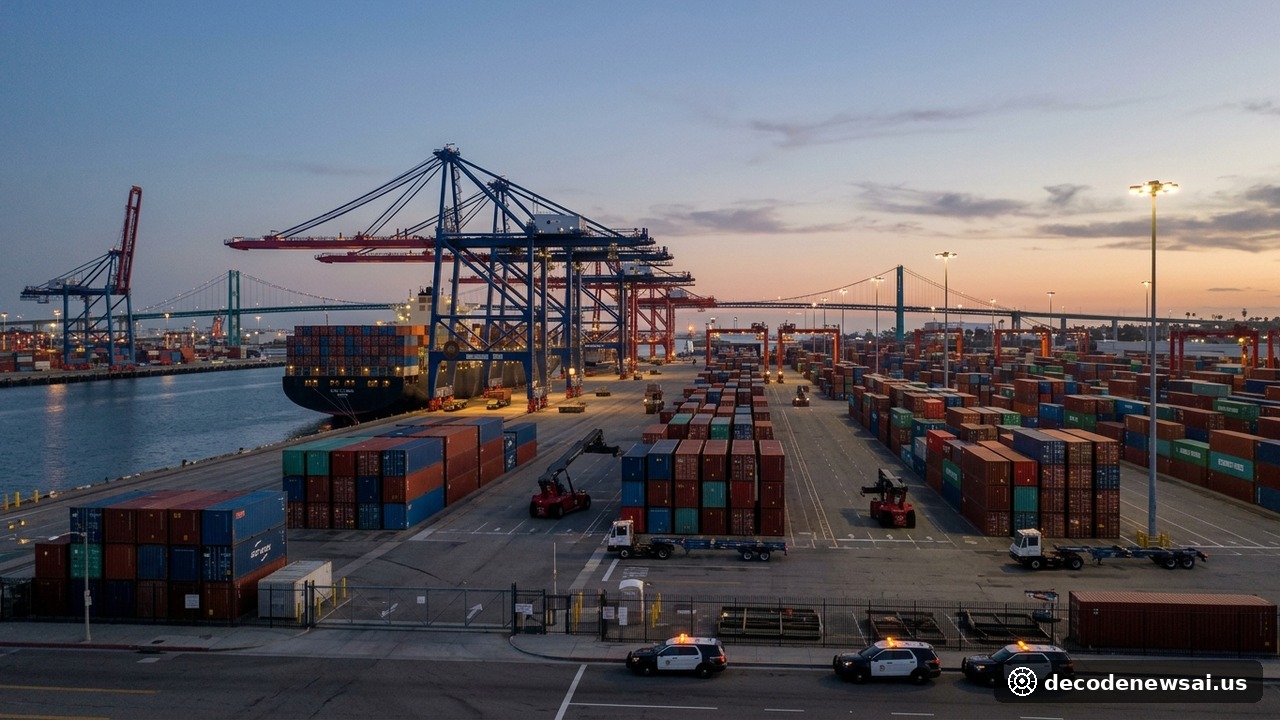
A catastrophic operational shutdown across the United States’ largest maritime trade gateway was narrowly averted as the union representing terminal security watchmen agreed with port employers to extend its contract negotiation deadline to midnight Pacific Time on Friday, November 6. The last-minute procedural extension allows negotiators from the International Longshore and Warehouse Union (ILWU) Local 26 and the Pacific Maritime Association (PMA) to continue emergency mediation under the auspices of the Federal Mediation and Conciliation Service (FMCS).
Although the labor dispute directly centers on approximately 250 security watchmen employed across maritime container terminals, their role is statutorily indispensable to port operations. Federal maritime homeland security and safety regulations mandate that bonded container yards, international breakbulk terminals, and intermodal railheads maintain continuous active physical security surveillance. ILWU Local 26 members are stationed at terminal facilities that collectively handle more than half of the containerized cargo moving through the Port of Los Angeles and the adjacent Port of Long Beach.
The principal systemic risk stems from traditional labor solidarity across maritime transport unions. While primary longshore dockworkers and marine clerks operate under separate master collective bargaining agreements that remain in full legal force, union protocols historically permit dockworkers to honor secondary picket lines established by affiliate union locals. The PMA issued stern warnings to the shipping community, noting that if ILWU Local 26 watchmen initiate strike action and deploy picketers at terminal access gates, unionized longshore crane operators and equipment drivers are expected to refuse entry, effectively freezing vessel discharging and gate logistics across Southern California.
Pre-Holiday Cargo Vulnerabilities and Terminal Recovery
The timing of the standoff presents acute vulnerabilities for national freight logistics during the peak pre-holiday retail inventory cycle. The twin ports of Los Angeles and Long Beach process billions of dollars in consumer electronics, apparel, and industrial machinery destined for distribution hubs throughout the American West and Midwest. Logistics directors have actively formulated contingency diversions toward Gulf Coast and Atlantic seaports, yet national rail intermodal networks remain vulnerable to localized cargo backlogs.
Supply chain economists emphasized that a protracted work stoppage at the nation’s premier container gateway would rapidly trigger structural demurrage penalties, equipment imbalances, and inflationary shipping surcharges. With both negotiating teams remaining locked in federal mediation through the final hours of the extension, industrial stakeholders across North America are watching intently for a binding labor resolution capable of preserving port fluidity into the 2027 shipping calendar.
Terminal operators and logistics analysts warned that even a brief operational pause would create severe vessel congestion across San Pedro Bay. Past labor impasses have demonstrated that every single day of gate disruption requires up to five days of subsequent terminal recovery to normalize container dwell times and rail intermodal dispatch schedules. The high-stakes federal mediation in Los Angeles serves as a critical bellwether for labor stability across North American transport infrastructure.