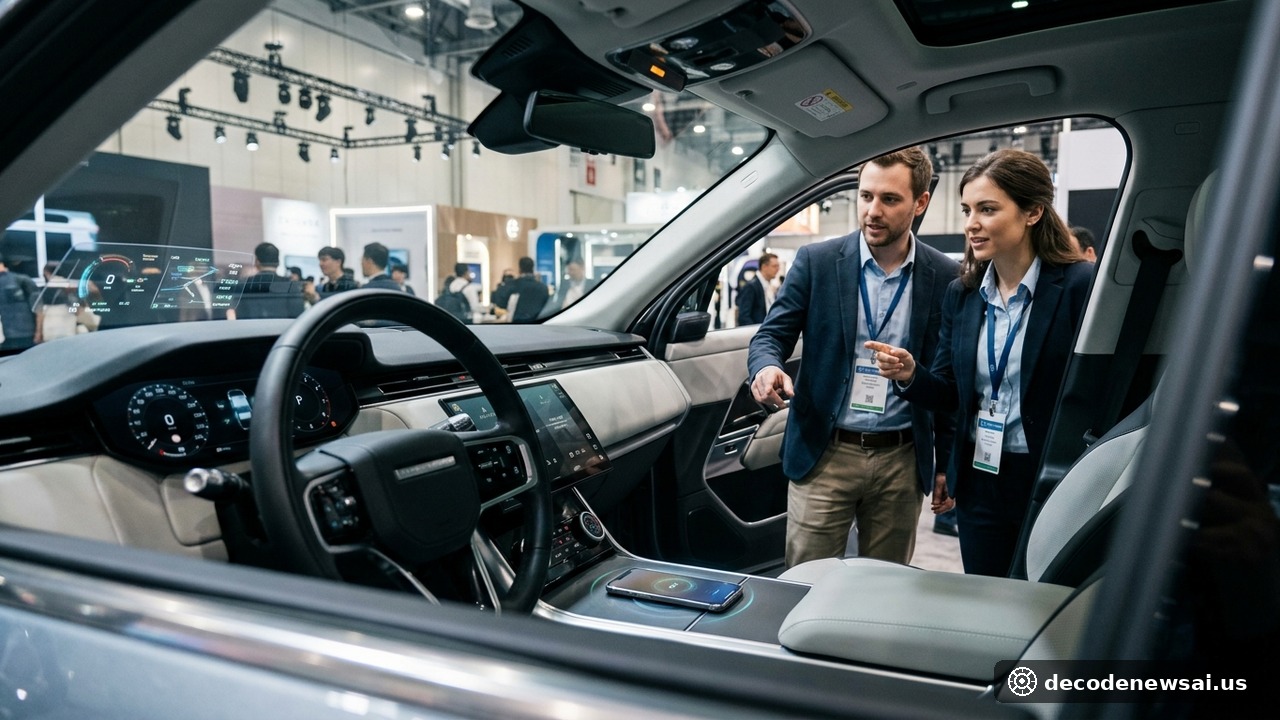
Consumer electronics leader vivo and electric vehicle manufacturer BYD officially signed an expansive artificial intelligence strategic collaboration agreement at BYD's global corporate headquarters in Shenzhen on November 5–7, 2026. The high-profile ceremony, attended by BYD Chairman Wang Chuanfu and vivo Executive Vice President Hu Baishan, establishes a deep architectural framework integrating vivo's proprietary Blue Heart Xiao V multimodal AI agent with BYD's proprietary in-cabin intelligence platform. Debuting across premium vehicle nameplates such as the Denza N8 through instant NFC physical touchless interfaces, the unified software architecture is projected to scale across more than 5 million connected BYD vehicles, inaugurating a transformative era of cross-device edge computing between personal telecommunications and automotive mobility.
Core Technical Architecture and Deployment Scope of the vivo-BYD AI Partnership
- Executive Signatories & Signing Venue: BYD's Wang Chuanfu and vivo's Hu Baishan in Shenzhen;Sina Finance Technology Report
- Core Integrated AI Agent Foundations: vivo Blue Heart Xiao V & BYD In-Cabin Smart Models;MLQ AI Technology & Enterprise Wire
- System-Level Feature Implementations: Cross-Device Computational Sharing, Dynamic HUD Sync;36Kr Future Mobility Observatory
Why Did BYD and vivo Choose Deep System Architecture Integration Over Isolated Development?
As the global automotive industry transitions from electrification toward software-defined intelligence, in-cabin digital user experiences have transcended static infotainment touchscreens and basic voice commands. Modern connected mobility requires comprehensive contextual comprehension, real-time spatial awareness, and predictive execution.
Automotive computational platforms often encounter long hardware refresh cycles and siloed application architectures, creating friction with rapidly updated flagship smartphone processors. By pairing vivo's lightweight on-device neural processing models with BYD's dominant global automotive manufacturing footprint, the companies established unified low-latency protocol stacks. The partnership allows vehicle cabins to directly utilize smartphone neural engines, providing continuous algorithmic processing and eliminating fragmented software interactions across mobile and automotive settings.
What Hardware Innovations and Multimodal Software Capabilities Were Introduced?
According to technical briefings delivered during the formal signing ceremony, engineering teams from both corporations executed comprehensive platform validations to bridge dozens of closed system-level application programming interfaces.
The resulting cross-platform intelligence framework introduces notable hardware and software breakthroughs: At the physical layer, drivers utilizing OriginOS-powered devices can establish secure biometric digital vehicle keys and personal cabin telemetry profiles in less than 0.1 seconds via precision NFC sensors embedded in the vehicle pillars. At the computational layer, vivo's Blue Heart Xiao V coordinates with the BYD vehicle assistant to enable bidirectional context streaming. Contextual addresses, navigational milestones, or scheduling reminders received on personal mobile messaging channels are instantaneously parsed by on-device natural language models and projected onto the vehicle's heads-up display without requiring driver manual intervention.
How Will Cross-Industry Synergies Influence the Global Connected Mobility Landscape?
Analyses published by DigiTimes and Technode indicate that the vivo-BYD collaboration illustrates a pragmatic alternative to heavy capital expenditure trends within consumer technology.
Rather than independent automotive manufacturers financing proprietary mobile device divisions, or consumer hardware giants expending billions on autonomous vehicle production, this alliance demonstrates the efficacy of open standardized protocol layers. As over-the-air firmware upgrades deploy the multimodal agent suite across 5 million premium, off-road, and mass-market BYD vehicles, the domestic smart vehicle ecosystem will establish aggressive benchmarks, accelerating development cycles among global technology conglomerates seeking to dominate next-generation intelligent transportation. Market strategists emphasize that seamless cross-device interoperability, robust user privacy protections, and continuous neural network enhancements will serve as the primary foundational pillars driving global consumer adoption of next-generation intelligent electric vehicles.