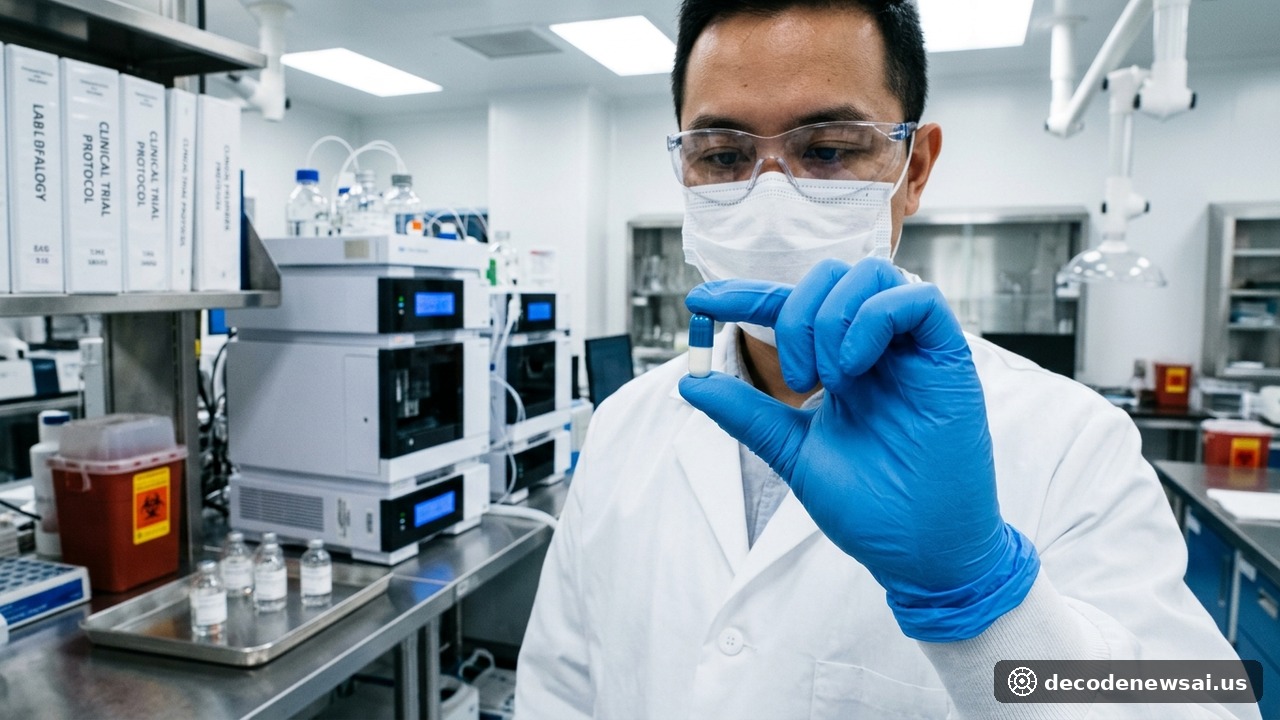
The United States Food and Drug Administration (FDA) formally announced an administrative extension of the Prescription Drug User Fee Act (PDUFA) target action date for Capricor Therapeutics' lead investigational cellular therapy deramiocel (CAP-1002) on Sunday. The revised regulatory action date has been set for November 22, 2026, granting the agency additional operational time to review a major clinical amendment submitted by Capricor and commercial partner Nippon Shinyaku Co., Ltd. The biologics license application (BLA) seeks market clearance for deramiocel as a disease-modifying cell therapy for patients diagnosed with Duchenne muscular dystrophy (DMD).
HOPE-3 24-month data leads to major amendment classification
Duchenne muscular dystrophy is a fatal X-linked recessive monogenic neuromusculoskeletal disorder characterized by severe, progressive skeletal and cardiac muscle degeneration. Boys diagnosed with the disorder lack functional dystrophin protein, resulting in progressive muscle cell necrosis, nonfunctional fibrotic scar substitution, and premature loss of ambulation in early adolescence. Late-stage disease progression is invariably complicated by cardiomyopathy and progressive respiratory compromise, creating acute medical urgency across patient advocacy communities.
The 90-day PDUFA review extension follows Capricor's formal submission of comprehensive 24-month open-label extension data from the pivotal randomized Phase 3 HOPE-3 clinical trial (NCT05126758). Statistical analysis of the updated clinical dataset demonstrated statistically significant and sustained preservation of upper limb motor capacity, assessed using the validated Performance of the Upper Limb (PUL 2.0) clinical scoring matrix. The FDA's Center for Biologics Evaluation and Research (CBER) designated the comprehensive data filing as a Major Amendment, necessitating standard administrative schedule adjustments.
Capricor Therapeutics Chief Executive Officer Dr. Linda Marbán updated commercial stakeholders during an investor conference call: "The FDA's decision to classify our extended dataset as a major amendment demonstrates the agency's dedicated scientific engagement with the profound unmet therapeutic need in advanced non-ambulatory DMD. We are working in close collaboration with CBER review divisions as we approach the final PDUFA target date." Clinical coordinators reiterated high confidence in the therapy's safety profile.
Deramiocel CDCs preserve upper limb function in non-ambulatory DMD
Deramiocel comprises allogeneic cardiosphere-derived cells (CDCs) that exert potent immunomodulatory, anti-fibrotic, and regenerative bioactivity. Preclinical investigation confirms that systemically infused CDCs localize within stressed vascular beds and release non-coding RNA-enriched extracellular exosomes. This paracrine cascade downregulates pro-fibrotic cytokines, promotes endogenous cellular repair, and preserves contractile compliance within residual skeletal and cardiac muscle fibers without requiring genomic alteration.
Patient advocacy groups, including Parent Project Muscular Dystrophy (PPMD), commended the regulatory continuation. Clinicians emphasized that for non-ambulatory adolescent patients who rely permanently on motorized wheelchairs, retaining preserved hand, wrist, and forearm dexterity translates directly to independent eating, keyboard usage, and motorized chair navigation. Commercial partner NS Pharma confirmed that cold-chain specialty logistics distribution channels are prepared to deploy commercial vials across specialized muscular dystrophy treatment centers nationwide upon final regulatory clearance.
Neuromuscular clinical trialists observed that extracellular exosome paracrine signaling represents an innovative, highly targeted therapeutic modality for advanced muscular dystrophy. Unlike viral vector gene editing therapies that carry immunogenicity hurdles, allogeneic cardiosphere-derived cells deliver sustained biological benefits through repetitive intravenous administration without treatment-limiting immune rejection.
Capricor and Nippon Shinyaku plan EU and Japan filings
Capricor and commercial partner Nippon Shinyaku confirmed active preparatory discussions with regulatory authorities across the European Union and Japan to coordinate synchronized international filing dossiers. Global patient advocacy networks emphasized that regulatory approval of deramiocel would establish an indispensable therapeutic option for late-stage non-ambulatory Duchenne muscular dystrophy patients worldwide.
Biotechnology equity analysts noted that the FDA's rigorous evaluation of upper limb preservation data highlights an evolving regulatory paradigm for late-stage neuromuscular disorders. In non-ambulatory Duchenne muscular dystrophy patients who have lost the ability to walk, retaining basic motor control of arms and hands directly determines daily personal autonomy, from operating motorized wheelchairs to using communication devices. Clinical investigators stressed that cellular therapies addressing secondary cardiac fibrosis and skeletal muscle degradation fulfill a critical therapeutic void that genetic therapies alone cannot fully address. Patient advocacy organizations commended the collaborative dialogue between regulatory authorities and clinical developers, expressing hope that objective biomarker evidence and validated functional endpoints will facilitate prompt market availability.