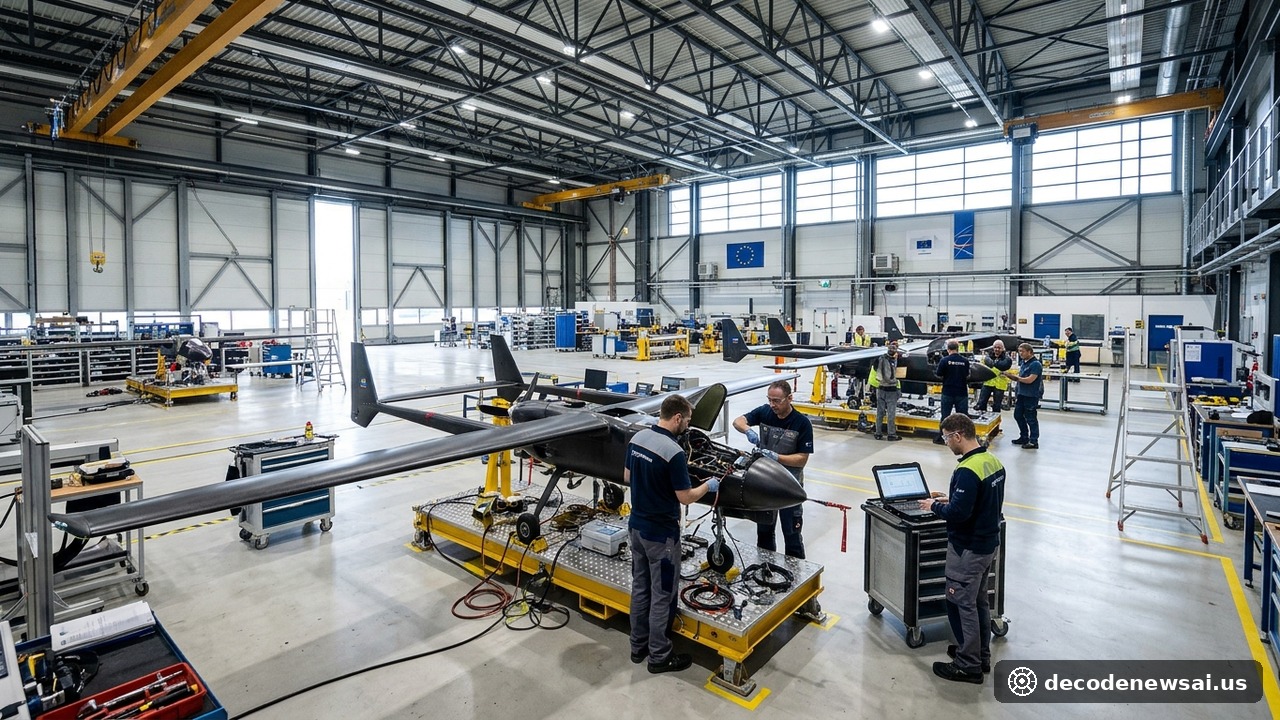
Los Angeles-based commercial electric vehicle chassis manufacturer Harbinger announced on November 6, 2026, the formal closing of a $240 million Series D equity financing round. The capital raise was led by defense-focused growth technology funds alongside participating institutional logistics fleet investors and sovereign infrastructure vehicles. Management designated proceeds to construct an automated Phase II assembly line at its Detroit manufacturing center, expanding volume production for medium-duty commercial chassis and specialized tactical logistics transports. By designing its electric powertrain in-house, Harbinger achieved price parity with conventional diesel vehicles without relying on federal fleet subsidies.
Series D Financing Overview and Manufacturing Expansion Metrics
- Financing Round & Total Capital Raised: Series D Growth Equity; $240.0 Million Capital Closed
- Lead Institutional Investor Profile: Defense Technology Growth Funds & Commercial Fleets
- Total Cost of Ownership (TCO) vs Diesel: 20% Net Operating Cost Reduction over Fleet Lifespan
- Defense Delivery Schedule for Prototype Fleet: Q1 2027 Field Evaluation Deliveries to Contractors
Integrated Electric Axle Architecture Eliminates Commercial Vehicle Green Premium
Commercial fleet operators navigate narrow operating margins, making upfront capital expenditure the decisive barrier to electric adoption.
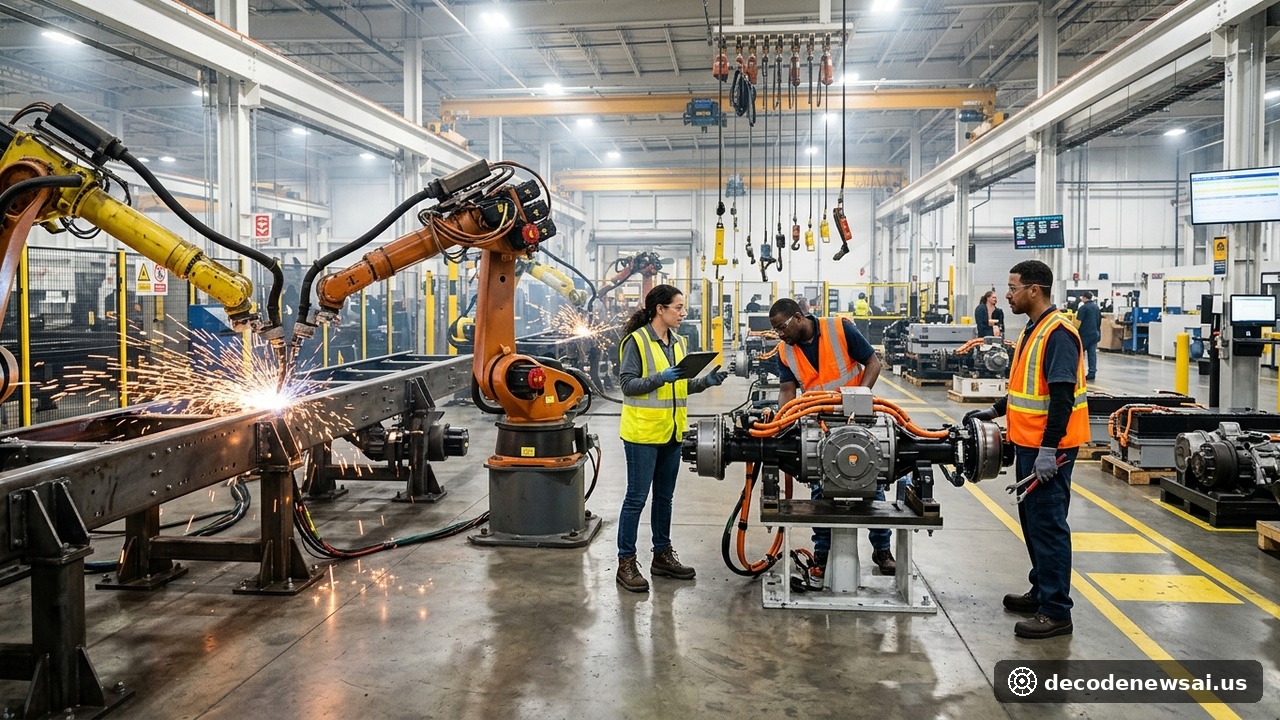
During early market transitions, electric truck startups assembled vehicles using fragmented off-the-shelf motors, inverters, and battery enclosures, inflating unit manufacturing costs and requiring substantial state subsidies to compete. Harbinger engineered an integrated electric architecture that unites motor components, power inverters, and drive axles into a single casting. This structural integration eliminates drive shafts and redundant wiring harnesses, reducing chassis parts counts by roughly thirty percent. Because intellectual property and production processes are retained internally, Harbinger matches the initial purchase price of legacy diesel platforms while offering fleet managers lower lifetime maintenance expenditures.
Expanding Defense Department Procurement Drives Contracted Backlog Growth
Beyond commercial parcel and freight transport, Harbinger's strategic valuation expansion reflects growing integration within military logistics programs.
The Department of Defense established modernization objectives directing military installations to transition non-tactical transport vehicles to battery-electric systems over the coming decade. However, specialized tactical vehicles from legacy defense primes carry prohibitive unit costs. Harbinger's medium-duty commercial chassis incorporates structural impact standards and high-current electrical interfaces that adapt readily to armored personnel modules and mobile field generators. The company executed joint development agreements with tier-one defense systems integrators, with initial tactical prototypes scheduled to commence cross-country mobility testing at federal proving grounds in early 2027.
Detroit Automation Facility Expansion Positions Startup for Industrial Scale
The $240 million funding provides balance sheet liquidity as Harbinger accelerates production to fulfill multi-year commercial commitments.
Chief Executive Officer John Harris confirmed that procurement for automated robotic welding and stamping cells at the Detroit plant is complete, with full production commissioning slated for late 2027. Once operational, the expanded facility will deliver over 30,000 finished electric vehicle platforms annually, fulfilling long-term purchase agreements with national fleet operators. As competing commercial vehicle ventures face capital retrenchment, Harbinger's execution across fleet commercialization and defense contracts positions the company as a durable manufacturing enterprise within domestic industrial sectors. Commercial transport analysts observe that scalable chassis architectures are crucial to decarbonizing regional delivery operations. By demonstrating durable economic parity with diesel equipment, Harbinger accelerates widespread commercial electrification while supporting domestic manufacturing jobs and securing competitive supply chain advantages across critical industrial and defense transport sectors.
International industry observers and regulatory authorities will continue to monitor these developments closely as operational benchmarks and market conditions evolve over the coming quarterly financial and regulatory reporting cycles across global jurisdictions.