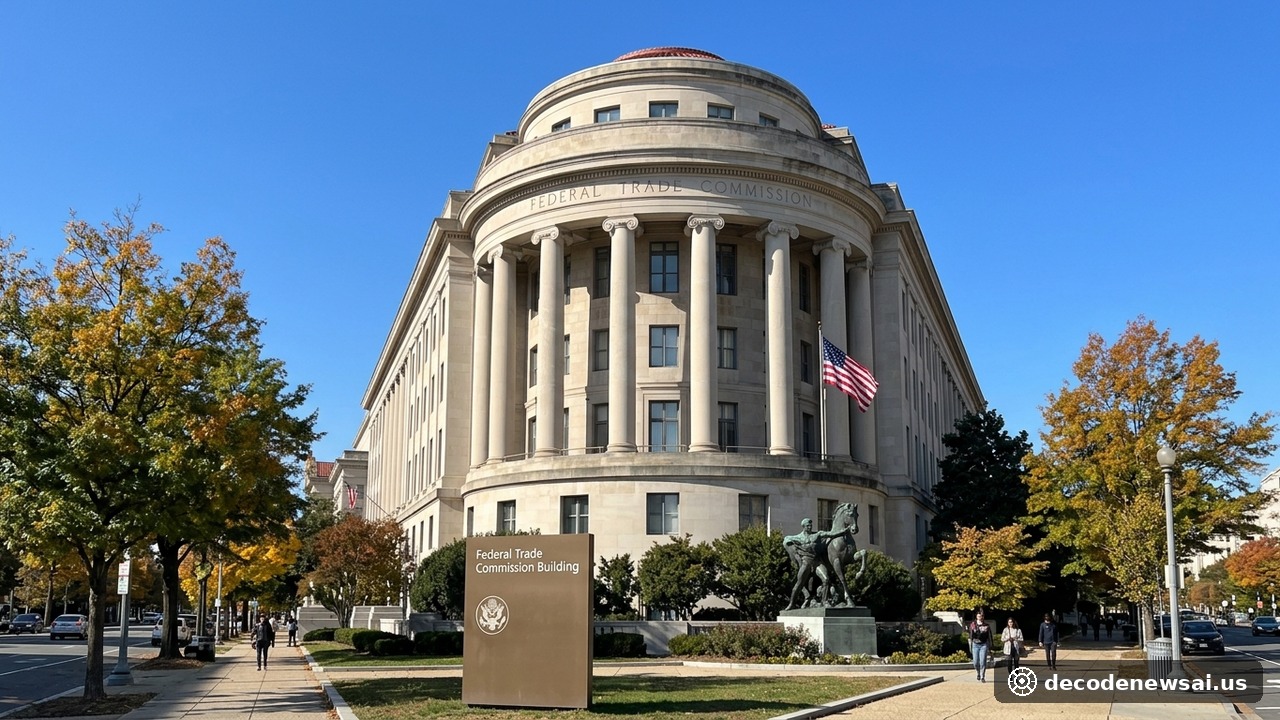
SEATTLE — The Federal Trade Commission and the Washington State Attorney General's Office announced a $600,000 settlement with commercial credit card processor Riverside Payments Inc. to resolve allegations of deceptive sales tactics. Regulators challenged hidden contract provisions. The agreement requires the vendor to eliminate unilateral cancellation penalties and halt unauthorized fee deductions. Deceptive Fee Savings and Buried Multi-Year Terminations Federal and state prosecutors filed a civil complaint in the U.S. District Court for the Western District of Washington outlining extensive deceptive practices. Sales pitches targeted independent retailers. The complaint named Riverside Payments alongside its affiliated leasing company Cascade Equipment Leasing LLC and principal corporate officers Brandon Skinner and Jason Reese.
Riverside promised 40 to 60 percent savings but hid 26-page contracts
Corporate promotional materials claimed prospective merchant clients could reduce overall card processing expenses by 40 percent to 60 percent. Expected cost reductions proved illusory. Inside sales representatives frequently marketed agreements as risk-free trials with flexible cancellation guarantees. In reality, merchants were enrolled into 26-page electronic contracts containing concealed restrictive provisions.
Small business owners subsequently discovered mandatory three-year automatic renewal obligations. Exiting contracts proved exceptionally difficult. When merchants attempted to terminate service, Riverside assessed early cancellation penalties of $695 while demanding continued monthly payments for point-of-sale equipment leases. Suspended Civil Penalty and Unconditional Sixty-Day Rescission The consent decree concludes extensive administrative inquiries into deceptive business-to-business practices. Financial sanctions were substantial. The proposed court order establishes a total monetary judgment of $32.1 million, which is suspended upon payment of $600,000 based on the defendants' documented inability to pay.
The settlement provides immediate transactional relief for affected small enterprises across Washington state. Contractual relief is immediate. More than 300 regional small businesses are legally authorized to cancel payment processing agreements within a 60-day window without incurring early termination fees.
Christopher Mufarrige, Director of the FTC's Bureau of Consumer Protection, highlighted the agency's enforcement posture in an official release. Mufarrige stated: "Riverside promised small businesses significant savings, only to trap them in auto-renewing contracts loaded with hidden fees and restrictive terms. This action signals that predatory business-to-business practices face rigorous federal accountability." Enhanced Oversight Across Merchant Acquisition Channels The joint regulatory action underscores a broader expansion of federal and state oversight into commercial service contracts. Commercial regulatory enforcement is broadening. Consumer protection authorities are extending traditional retail anti-deception standards to protect vulnerable small enterprises against aggressive third-party payment facilitators.
The Washington Attorney General's Office confirmed it will oversee the distribution of restitution funds to affected merchants. Restitution oversight remains rigorous. State authorities will monitor company compliance to ensure small business operators receive lawful contract terminations and prompt refunds.
Financial analysts note that the consent order establishes an operational benchmark for independent sales organizations across North America. Contract transparency is mandatory. Processing facilitators must revise sales documentation to provide conspicuous disclosures regarding termination liabilities and equipment lease structures, establishing transparent operational baselines for the broader financial services industry. Commercial Transparency Directives and Merchant Recourse The settlement reflects growing regulatory intolerance for obscured contractual covenants in business-to-business agreements. Enforcement scrutiny is intensifying. While consumer protection statutes traditionally insulated retail individuals, regulatory authorities are increasingly recognizing that independent small business proprietors face identical informational asymmetries when negotiating complex point-of-sale processing commitments.
Consent decree requires annual sworn compliance documentation to the FTC
Federal regulators emphasized that commercial service contracts must state pricing schedules unambiguously. Deceptive introductory pricing models remain prohibited. In addition to delivering immediate restitution to regional merchants, the consent decree establishes strict reporting mandates requiring executive personnel to submit sworn compliance documentation to the FTC annually, ensuring that sales representations align strictly with underlying billing records and regulatory consumer protection standards across all regional jurisdictions.