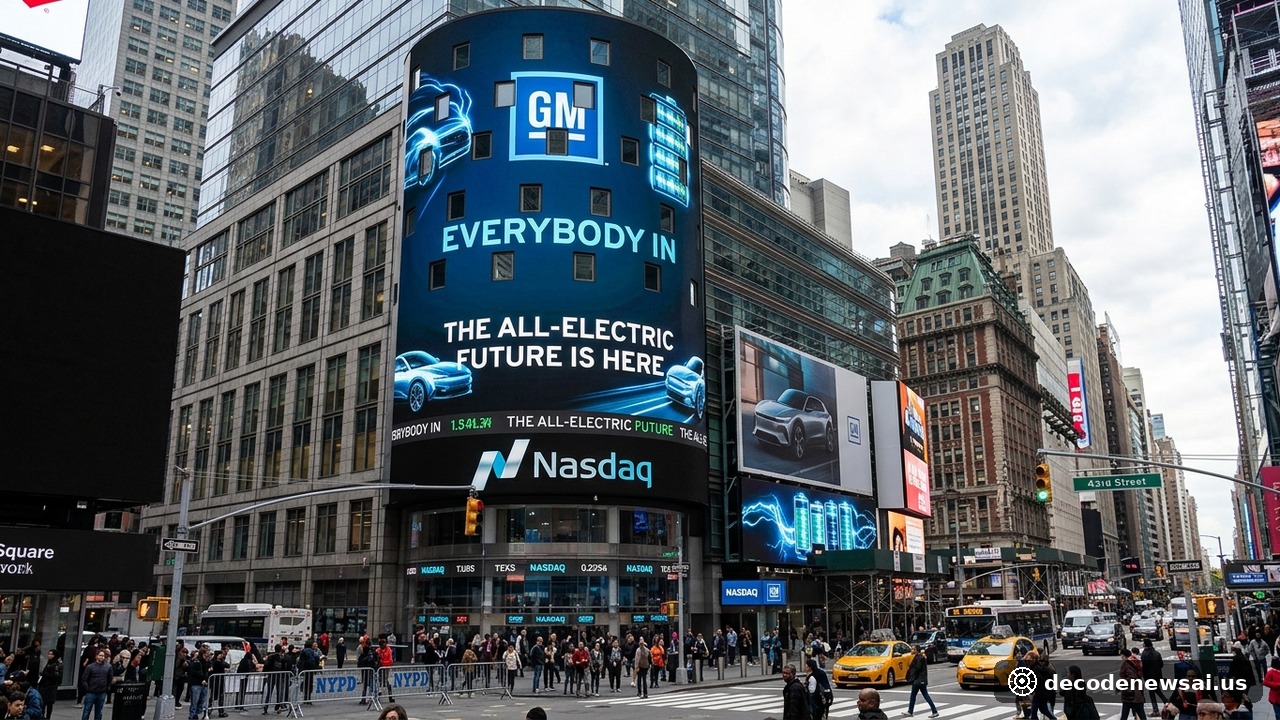
DETROIT - General Motors Company formally filed regulatory documentation with the Securities and Exchange Commission on Monday, November 9, initiating a voluntary transfer of its primary stock listing from the New York Stock Exchange to the Nasdaq Global Select Market. The 118-year-old automaker confirmed that its final day of common equity trading on the Big Board will occur on November 20. The company will retain its historic ticker symbol GM across trading screens.
GM cites cost savings and Nasdaq-100 index eligibility
General Motors has maintained a trading listing on the New York Stock Exchange dating back to 1916. Following its comprehensive 2009 corporate restructuring and subsequent public re-listing, the automaker continued anchoring its equity trading floor operations at eleven Wall Street. The planned exchange transition underscores an intentional shift in corporate capital strategy, aligning the Detroit automaker with institutional technology funds and algorithmically driven electronic liquidity pools concentrated on Nasdaq.
Corporate leadership emphasized that the exchange transfer yields operational cost efficiencies while expanding exposure to growth-focused institutional asset allocators. Crucially, General Motors' current market capitalization and trailing revenue performance satisfy admission criteria governing the benchmark Nasdaq-100 Index. Formal inclusion within the index would trigger structural passive equity buying from index-tracking funds managing hundreds of billions in exchange-traded assets.
General Motors' Chief Financial Officer stated in an official company disclosure: "Transferring to Nasdaq aligns with our electrification strategy. This transaction delivers substantial growth-oriented equity liquidity." Investment banking advisers endorsed the strategic rationale.
Ultium EV sales top 32,000 units in third quarter
The legacy industrial manufacturer continues allocating substantial capital towards software-defined vehicle platforms and electric vehicle architecture. Wholesale volume for Ultium-based battery electric models exceeded 32,000 units during the third fiscal quarter. Active enterprise subscriptions across the Ultifi integrated software environment crossed the multi-million user threshold. Robotaxi subsidiary Cruise is steadily resuming driverless operational commercial validation across urban markets.
Automotive original equipment manufacturers have historically traded at depressed valuation multiples compared to broader equity benchmarks. Legacy automakers frequently trade between five and eight times trailing earnings, standing in sharp contrast to software enterprise multiples ranging between twenty and thirty times. General Motors seeks to narrow this structural gap by trading alongside leading enterprise hardware and computing innovators, cultivating market appreciation for high-margin connected vehicle subscriptions.
Nasdaq leadership officially welcomed the historic listing migration. The electronic exchange confirmed it will deploy dedicated market intelligence tools and high-volume institutional liquidity facilities to support continuous equity order execution. Both organizations will host an opening bell ceremony featuring GM's next-generation autonomous vehicle prototypes. New York Stock Exchange administrators expressed disappointment regarding the departure of its legacy constituent.
Analysts see passive index funds as immediate catalyst
Automotive equity research analysts pointed out that passive benchmark reconstitution represents an immediate quantitative catalyst. Exchange-traded funds tracking the Nasdaq-100 must mathematically adjust constituent weighting factors, generating mandatory equity buy orders upon formal index entry. For quantitative index funds, the transition introduces an industrial titan with substantial recurring free cash flows into a tech-dominated benchmark.
The migration also provides General Motors with direct access to specialized corporate governance and environmental disclosure toolkits maintained by Nasdaq. The automotive executive suite is expanding its investor relations outreach to West Coast venture funds and technology-focused asset management firms. Corporate strategists believe this demographic diversification will reduce equity volatility during cyclical automotive downturns.
Automotive market analysts noted that the transition mirrors strategic moves executed by legacy industrial firms including Texas Instruments and PepsiCo. If General Motors captures valuation multiple expansion following index integration, competing automakers including Ford Motor Company and Stellantis may reevaluate listing venues. General Motors begins trading as a Nasdaq-listed enterprise on Monday, November 23.
GM begins Nasdaq trading on Monday, November 23
Corporate governance and equity strategy specialists pointed out that transitioning to an electronic, technology-heavy exchange enhances direct engagement with quantitative and thematic ESG investment funds. General Motors' inclusion within major tech benchmarks provides sustained index-linked demand while lowering long-term capital costs. Automobile industry observers noted that rival legacy manufacturers will closely monitor GM's secondary trading volume and valuation multiples following its official Nasdaq debut.