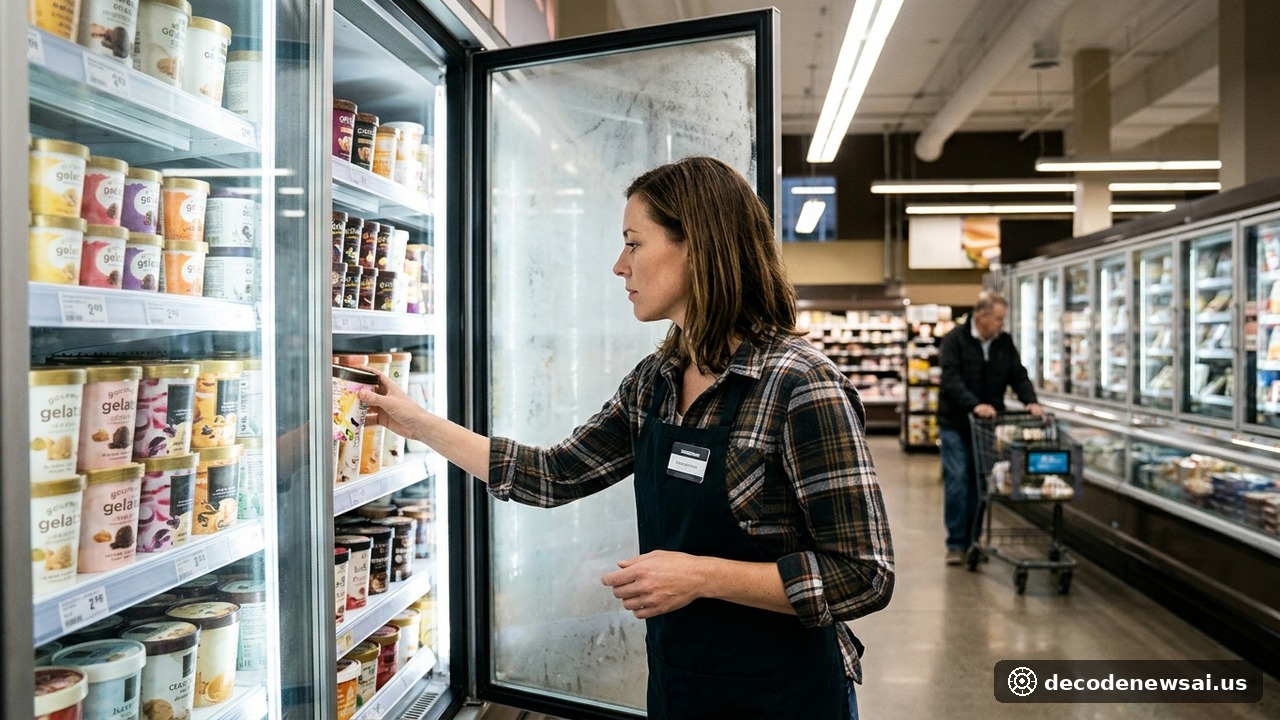
The United States Food and Drug Administration officially designated the product recall of Lidl brand gelato as a Class I enforcement action on Sunday. The highest regulatory classification is reserved for products where exposure carries a reasonable probability of serious adverse health consequences or death. Laboratory testing confirmed the presence of Listeria monocytogenes across distributed product inventory. Federal regulators instructed consumers to dispose of the dessert products immediately.
Listeria Risk and October Lidl Recall Details
Listeria monocytogenes represents a hardy bacterium capable of multiplying within refrigerated and sub-zero storage environments. Agency inspection records confirm that the contaminated batches were merchandised exclusively through Lidl grocery stores situated across eastern seaboard states. Recalled items encompass multiple retail variations including chocolate and vanilla flavors packaged in retail tubs. Consuming contaminated foodstuffs can precipitate life-threatening systemic listeriosis infections. Pregnant women, newborns, and immunocompromised individuals face severe medical complications.
The contaminated frozen dessert batches were distributed across hundreds of regional discount supermarkets beginning earlier this calendar year. State agricultural health laboratories detected bacterial contamination during routine retail surveillance sampling programs. Regional departments of health alerted federal authorities upon receiving confirmed pathogen cultures. Lidl US initiated a voluntary recall in October before formal federal reclassification. The Food and Drug Administration elevated the recall classification following risk assessments.
Lisa Hammond, lead food safety investigator at the agency, issued an urgent consumer advisory during an agency briefing. Hammond warned consumers: "A Class I classification signifies that an adulterated food presents potential life-threatening hazards, and households must immediately discard any remaining tubs in residential freezers." Regulatory authorities established an uncompromising compliance posture.
No Illnesses Reported as Lidl Offers Refunds
As of the date of the classification elevation, healthcare facilities have reported no confirmed epidemiological illnesses linked directly to the recalled gelato. However, clinical microbiologists note that listeriosis involves incubation windows extending up to seventy days following dietary exposure. Mild initial symptoms including muscle aches and fever are frequently confused with standard gastrointestinal illness. Public health physicians advised symptomatic consumers to seek prompt medical diagnostic evaluations.
Lidl US management published a formal statement pledging complete financial refunds for all returned or discarded gelato containers. Supermarket managers installed prominent warning signs adjacent to store checkout counters and freezer aisles nationwide. Digital delivery applications and inventory platforms automatically purged the affected SKU listings. Corporate compliance officers are cooperating with federal inspectors to audit sanitation practices at manufacturing co-packing facilities.
The National Grocers Association distributed revised food contact surface sanitation checklists to commercial retail store operators. Supermarket chains initiated comprehensive environmental hygiene audits and deep-cleaning protocols across frozen display cases. Microbial monitoring across refrigerated supply chain networks has expanded significantly. Retail merchants moved to prevent secondary pathogen cross-contamination.
Legal and Reputational Fallout for Lidl
Product liability legal specialists highlighted that multinational supermarket retailers face strict legal accountability for private-label contracted food producers. Third-party manufacturing failures increasingly trigger nationwide brand recalls and consumer class-action claims. Consumers exposed to contaminated lots are consulting legal counsel regarding personal injury protections. Corporate compliance costs continue to climb steadily across grocery operations.
Food industry financial analysts noted that the high-profile Class I designation poses reputational headwinds for the fast-expanding German supermarket chain in North America. Beyond direct product write-offs and reverse logistics costs, consumer confidence across private-label dairy lines could experience temporary weakness. Multinational grocery chains face increasingly stringent regulatory scrutiny.
The Food and Drug Administration stated that field investigators will monitor corrective sanitation enhancements at the primary production facility. Manufacturing equipment must pass rigorous biological validation swab protocols prior to receiving operational recertification. Federal food safety authorities remain vigilant in safeguarding consumer health.
State Webinars on Freezer Sanitization Protocols
State agricultural extension services initiated educational webinars instructing specialty food store managers on proper sanitization protocols for commercial display freezers. Food safety attorneys noted that rapid voluntary recalls combined with transparent consumer communication mitigate long-term brand damage during microbiological contamination events.