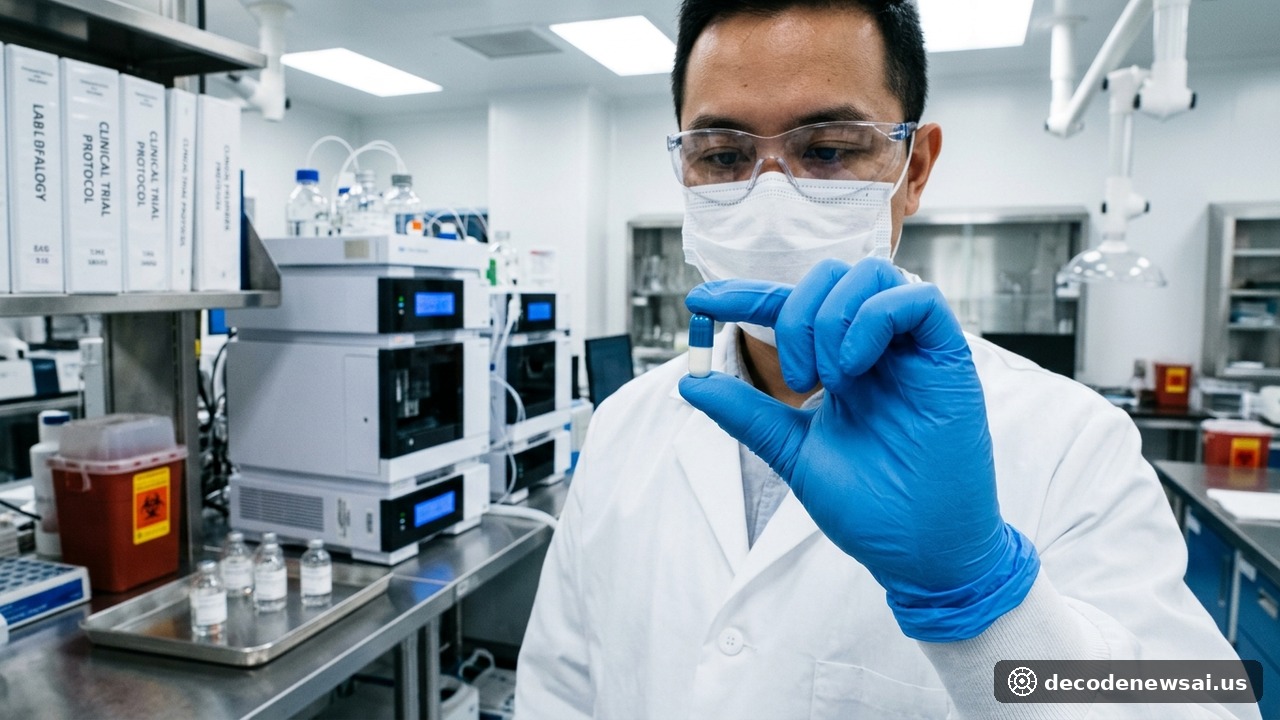
WALTHAM, Mass. - Viridian Therapeutics, Inc. filed a current report on Form 8-K with the Securities and Exchange Commission on Monday, November 9. The filing details positive top-line clinical data from its ongoing Phase 1 single-ascending dose trial. The trial evaluates extended half-life FcRn inhibitor VRDN-008 in healthy human volunteers. Clinical pharmacodynamic data showed maximum mean serum immunoglobulin G (IgG) reductions of up to 74 percent.
VRDN-008 cuts IgG up to 74 percent in 64 volunteers
That profile supports subcutaneous maintenance dosing once every eight weeks. The neonatal Fc receptor acts as the primary homeostatic salvage receptor. It protects circulation IgG antibodies from lysosomal intracellular degradation. In chronic autoantibody-driven autoimmune indications including generalized myasthenia gravis and thyroid eye disease, pathogenic autoantibodies inflict irreversible neuromuscular and periorbital tissue destruction.
Competitive antibody antagonism of FcRn pathways accelerates endogenous clearance of pathogenic IgG variants. The double-blind, placebo-controlled Phase 1 clinical trial enrolled 64 healthy adult participants. They were randomized across five sequential ascending dose cohorts ranging from 50 milligrams to 600 milligrams. Biomarker assays showed that study subjects within the top dose cohorts experienced an average serum total IgG reduction of 74 percent by day 14 post-administration.
Clearance dynamics across inflammatory IgG1 and IgG3 subclasses matched overall antibody reduction trends. Viridian's Chief Scientific Officer stated in the regulatory filing: "Achieving deep antibody reductions exceeding seventy percent validates an eight-week subcutaneous maintenance schedule for patients suffering from generalized myasthenia gravis and thyroid eye disease." Clinical investigators endorsed the biological profile.
VRDN-008 half-life exceeds 38 days with no serious events
VRDN-008 incorporates molecular protein modifications engineered to extend systemic antibody recirculation half-life. Observed terminal elimination half-life exceeded 38 days. That compares favorably to the two-to-three-week elimination windows documented by first-generation approved FcRn inhibitors. The sustained biological clearance duration allows chronic patients to transition away from hospital infusion suites toward at-home self-administration utilizing prefilled autoinjector pens.
Across all evaluated dosing cohorts, VRDN-008 demonstrated favorable safety and clinical tolerability. Investigators reported zero serious adverse events. They observed no dose-limiting toxicities. Observed adverse events consisted of transient mild headaches and localized injection site erythema occurring at frequencies comparable to placebo groups.
Crucially, laboratory panels documented no clinically meaningful depressions in serum albumin concentrations. That mitigates systemic peripheral edema risks. Clinical immunologists noted that avoiding serum albumin depletion represents a paramount safety threshold in FcRn engineering. First-generation FcRn inhibitors frequently triggered unintended albumin binding.
Eight-week dosing versus Argenx and Roche schedules
Those drugs forced clinical oncologists and rheumatologists to monitor patient lipid profiles and peripheral fluid retention closely. The clean biochemical profile exhibited by VRDN-008 suggests high epitope specificity. That specificity spares physiological albumin recycling mechanisms. From a commercial perspective, biopharma portfolio managers emphasized that dosing frequency serves as the primary differentiator in the multi-billion-dollar autoimmune biologic market.
Patients diagnosed with chronic neuromuscular or ocular inflammatory conditions frequently report severe treatment fatigue when bound to weekly clinic visits. Offering a reliable self-administered subcutaneous autoinjector every two months establishes a superior standard of patient care. Biotechnology equity analysts responded positively to the clinical disclosures. Wall Street investment banks model aggregate annual peak sales across next-generation FcRn inhibitors surpassing five billion dollars.
Market incumbents marketed by Argenx and Roche necessitate weekly or biweekly dosing schedules. An eight-week dosing interval delivers substantial compliance advantages for chronic patient populations. Viridian confirmed in its regulatory disclosure that it remains on track to launch Phase 2 international clinical trials during the first half of 2027. Primary clinical development tracks will prioritize moderate-to-severe thyroid eye disease and generalized myasthenia gravis.
Phase 2 trials planned for 2027 after Phase 1 results
The clinical results establish a validated platform for subsequent registrational testing. Immunology clinical trial directors emphasized that achieving deep IgG depletion with an extended eight-week dosing schedule addresses a profound unmet medical need in chronic autoimmune therapy. Patients burdened by frequent clinical infusions or weekly injections experience substantial lifestyle disruption. A bimonthly subcutaneous regimen dramatically improves long-term therapy adherence.
Biopharma equity analysts anticipate that favorable Phase 1 pharmacokinetic durability will accelerate commercial partnership discussions ahead of upcoming Phase 2 clinical trials.