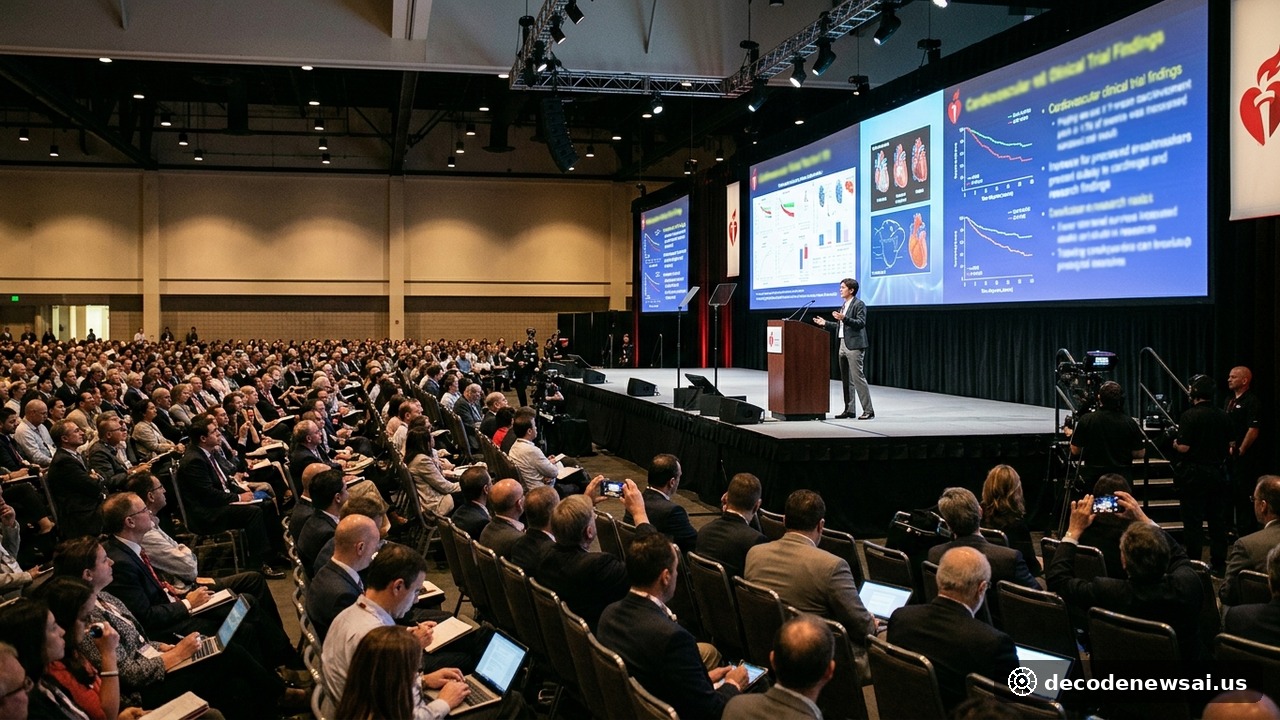
CHICAGO - Boehringer Ingelheim and development partner Zealand Pharma announced positive top-line results on Monday, November 9, from the landmark Phase 3 SYNCHRONIZE-CVOT clinical trial presented at the American Heart Association Scientific Sessions. The global outcome trial met its primary objective, demonstrating that survodutide, an investigational glucagon/GLP-1 dual receptor agonist, did not increase major adverse cardiovascular event risks across a high-risk adult population living with obesity.
Obesity is recognized clinically as a systemic, chronic metabolic disease driving atherosclerosis, chronic kidney disease, and heart failure. While conventional single-target GLP-1 receptor agonists have established cardio-protective properties, understanding the long-term hemodynamic safety of dual-target receptor agonism has remained a paramount clinical requirement. Survodutide simultaneously activates glucagon and GLP-1 receptors, elevating energy expenditure while dampening appetite.
The Phase 3 SYNCHRONIZE-CVOT clinical trial enrolled 5,530 adult participants across international investigative sites. Study protocol required patients to present with obesity or clinical overweight accompanied by established cardiovascular disease, chronic kidney disease, or multiple metabolic risk factors. Study subjects received titrated weekly subcutaneous injections of survodutide or matching placebo over multi-year evaluation periods under rigorous double-blind controls.
Shashank Deshpande, Head of Human Pharma at Boehringer Ingelheim, stated during the scientific symposium: "The SYNCHRONIZE-CVOT trial findings represent a pivotal accomplishment for survodutide clinical development, confirming cardiovascular safety with respect to major adverse events." Clinical investigators warmly received the safety disclosures.
Survodutide shows adjusted hazard ratio of 0.84 for 3P-MACE
Primary safety analyses evaluated incidence rates of three-point major adverse cardiovascular events (3P-MACE), defined as cardiovascular death, non-fatal myocardial infarction, or non-fatal stroke. Trial data demonstrated that survodutide achieved an adjusted hazard ratio of 0.84 with a 95 percent confidence interval ranging from 0.60 to 1.18. Non-inferiority testing reached statistical significance with a P-value under 0.0001, confirming non-inferiority relative to standard-of-care controls.
Secondary cardiometabolic endpoints demonstrated consistent broad-spectrum therapeutic dividends. Study participants treated with survodutide showed clinically meaningful reductions in systolic blood pressure, fasting glycated hemoglobin, and baseline lipid profiles. Hepatic safety assessments revealed no drug-induced liver injuries, supporting previously documented benefits across concurrent trials examining metabolic dysfunction-associated steatohepatitis (MASH).
Gastrointestinal adverse events occurred at frequencies comparable to existing incretin class therapeutics, primarily comprising mild-to-moderate transient nausea during initial dose titration. Discontinuation rates due to adverse events remained balanced between treatment arms. Investigators observed no adverse chronotropic arrhythmias or sustained blood pressure elevations.
Boehringer plans New Drug Applications in 2027 for survodutide
The clinical findings establish an empirical foundation supporting upcoming regulatory filings. Boehringer Ingelheim confirmed it plans to submit formal New Drug Applications to the United States Food and Drug Administration and the European Medicines Agency in 2027. Clinical development continues progressing across expanded cardiometabolic indications.
Cardiometabolic clinical trialists highlighted that establishing cardiovascular safety represents an essential regulatory gateway for next-generation multi-agonist obesity therapeutics. As pharmaceutical developers engineer dual and triple receptor agonists to achieve deeper weight reductions, evaluating potential chronotropic effects and autonomic nervous system impacts becomes critical for patient safety. The SYNCHRONIZE-CVOT outcomes provide reassuring empirical confirmation that survodutide's glucagon receptor activation does not elevate ischemic risks.
Biotechnology equity analysts noted that favorable cardiovascular safety data significantly strengthens Boehringer Ingelheim's competitive positioning against established incretin market incumbents. With obesity recognized globally as a primary driver of heart failure and vascular disease, demonstrating non-inferiority across major adverse cardiovascular events enhances clinical adoption among primary care physicians and cardiologists. The pharmaceutical firm's planned 2027 regulatory submissions will initiate a major commercial expansion across international metabolic disease markets.
Survodutide cardiovascular safety supports phase 3 combination studies
Clinical pharmacologists emphasized that demonstrating cardiovascular safety establishes a crucial foundation for upcoming phase 3 combination studies. By proving that survodutide does not elevate heart rate or blood pressure, researchers can confidently explore higher dose cohorts in complex patient populations living with advanced metabolic and cardiovascular comorbidities.