Botswana will double its shareholding in De Beers Group from 15% to 30% under a landmark acquisition of Anglo American's controlling interest, President Duma Boko announced Monday during his State of the Nation Address to parliament. The southern African nation's government will become the diamond giant's single largest shareholder. Botswana officially endorsed the Global Diamond Consortium as its preferred bidder to acquire Anglo American's 85% stake in De Beers. The historic transaction reshapes the global gem mining industry. Luxury supply chains across the world are adjusting to the structural realignment.
Botswana Exercises Sovereign Rights to Lead De Beers Ownership Overhaul
Anglo American put its controlling 85% equity interest in De Beers up for sale in 2024 as part of a multi-year restructuring program across its global commodity portfolio. As the world's premier producer of high-value natural rough diamonds by value, the government of Botswana possessed statutory pre-emption rights regarding any transfer of shares. President Boko stated clearly that Gaborone chose to support the bid submitted by the Global Diamond Consortium. That decision effectively removes the central regulatory hurdle facing Anglo American's planned divestiture. Transaction timelines have accelerated noticeably. Consortium banking partners are finalizing binding debt financing packages.
The consortium is led by former De Beers chief executive officer Gareth Penny, who brings extensive mining and diamond trading experience to the buyout team. Under the proposed transaction terms, Botswana will exercise its contractual options to lift its existing 15% holding to 30%. That planned expansion will position Botswana as the single largest individual shareholder in De Beers. Neighboring diamond producers Namibia and Angola will also participate in the consortium ownership arrangement. Southern African producing nations are forging an unprecedented collective resources alliance.
President Boko addressed lawmakers directly from the parliamentary rostrum on Monday afternoon. He stated: "This means that, when this transaction is complete, Botswana's shareholding in De Beers will double from the current 15% to 30%. Botswana will become the single largest shareholder in De Beers, and with that comes greater influence in the strategic decisions for decades to come." Members of parliament responded with prolonged applause. The development marks a decisive advance for sovereign resource governance in Africa.
Synthetic Stones Disruption and Natural Rough Diamond Market Dynamics
The global diamond sector is navigating severe structural turbulence and shifting retail consumer patterns. Laboratory-grown synthetic gems have expanded their market share rapidly across retail jewelry counters since 2023. That sustained price deflation depressed commercial auction prices for mined rough stones. Anglo American recorded substantial non-cash impairment charges against De Beers' book value over recent quarters. Resource-dependent national treasuries faced significant revenue contraction. Commercial risks surrounding the buyout remain genuine.
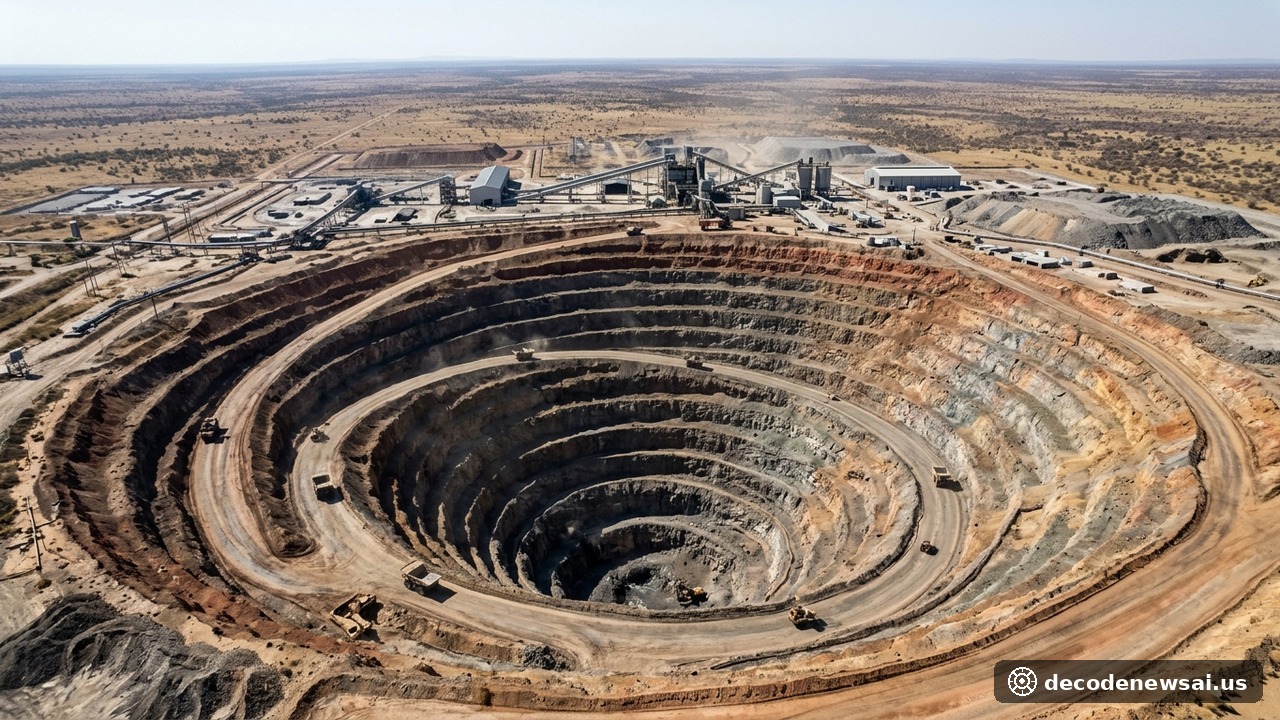
Botswana's expanded equity portfolio encompasses not only premier open-pit mines and sorting operations, but also Element Six, the synthetic diamond and advanced materials subsidiary owned by De Beers. Element Six holds advanced patents in diamond wafer synthesis and thermal management, which are highly critical for next-generation semiconductor cooling. Gaborone aims to use the asset to transcend raw mineral extraction and capture higher downstream technology value. The mineral value chain is extending toward advanced industrial technologies.
Industry commodity analysts emphasized that sovereign ownership by producing nations could help stabilize rough diamond auction volumes and inventory releases. Mining labor unions across southern Africa welcomed the increased state participation. Union representatives expressed hope that the new ownership structure will protect thousands of underground mining jobs and preserve negotiated wage standards. Workforce negotiations now face a clearer corporate counterpart. Market confidence is showing initial signs of stabilization.
Transaction Structuring and Regional Tripartite Cooperation Advance
While President Boko did not disclose the precise capital commitment required for Botswana to double its stake, financial advisors confirmed that participation structures for Namibia and Angola are undergoing detailed valuation. An Anglo American spokesperson said the corporation is working actively with Botswana and the consortium to finalize binding transaction documents. Multi-party negotiations have entered their final contractual stage. Sovereign credit rating agencies are evaluating the potential fiscal commitments involved.
Diamond exports provide roughly 70% of Botswana's foreign exchange earnings and a major share of government tax revenues. Recent volatility across wholesale diamond markets pushed Gaborone to seek greater governance control over its principal natural asset. Securing 30% equity grants Botswana veto authority over fundamental corporate maneuvers and rights to nominate the board chair. National fiscal stability is now directly intertwined with corporate governance.
The cross-border acquisition is anticipated to secure final anti-monopoly clearances and reach operational closing during the first half of 2027. The alliance between southern African governments and international private investors disrupts century-old conventions governing global gemstone trading. Decades of unilateral control by diversified Western mining conglomerates are drawing to a definitive close. Sovereign African resource capital is claiming a leading seat at the global commercial table.