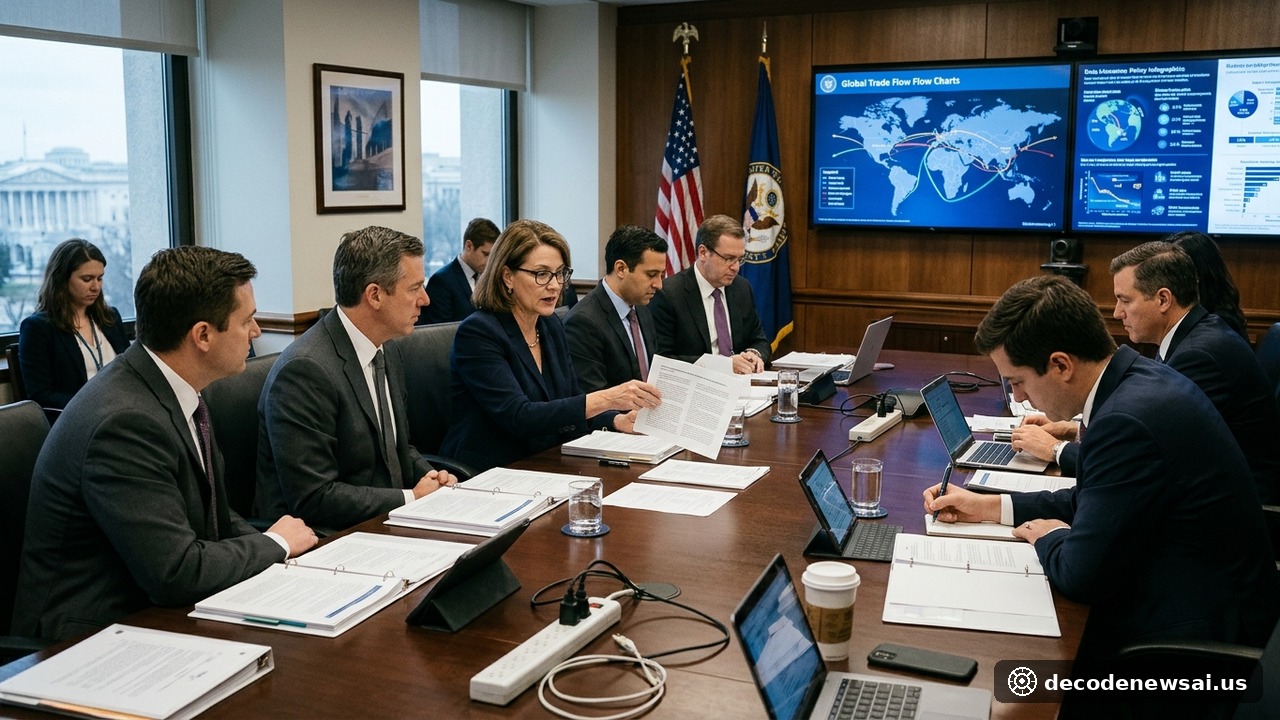
The U.S. Department of Commerce's Bureau of Industry and Security formally issued a final administrative rule on Monday, November 9, 2026, extending the temporary suspension of its landmark Affiliates Rule. The regulatory determination, designated as Federal Register Document 2026-22793, officially delays the reimposition of expanded export licensing controls until January 10, 2027. The ownership-based export restrictions were previously scheduled to take effect on Tuesday, November 10, 2026. The administrative reprieve grants cross-border supply chains a two-month compliance buffer.
Affiliates Rule 50 percent ownership licensing stays paused
The Affiliates Rule, originally promulgated under the Export Administration Regulations, established that foreign commercial entities owned 50 percent or more by entities listed on the Entity List, Military End User List, or certain Specially Designated Nationals would automatically inherit identical licensing restrictions. Under the temporary extension, the Commerce Department maintains its existing case-by-case evaluation standards rather than enforcing automatic ownership-based export restrictions.
During a federal regulatory briefing convened in Washington, a senior trade compliance director from the Bureau of Industry and Security detailed the scope of the administrative action. The official stated: "Extending the suspension of the Affiliates Rule aligns U.S. trade regulatory timelines with bilateral discussions while ensuring continuous export enforcement. This measured extension provides commercial exporters operational clarity to evaluate international ownership structures without causing uncoordinated logistics bottlenecks."
Trade policy experts observed that the postponement directly mirrors the extended bilateral trade framework established between Washington and Beijing through early 2027. The suspension avoids immediate commercial disruptions across multinational semiconductor supply chains, aerospace manufacturing, and advanced materials trade where corporate joint ventures feature complex international ownership layers.
Extension is timing measure, 50 percent threshold unchanged
Legal analysts across international trade practices highlighted that the extension represents an operational timing measure rather than a substantive policy retreat. In a compliance memorandum published on Tuesday, a senior regulatory partner affirmed: "While corporate entities receive welcome breathing room through January 10, 2027, the Department of Commerce made no structural modifications to the 50 percent ownership threshold. Compliance officers should utilize this interim period to conduct rigorous diligence on foreign supply chains."
Federal filings confirmed that the Bureau of Industry and Security did not adopt public comments on the substantive scope of the rule, reserving those evaluations for future rulemakings. Global enterprises are utilizing the extension to deploy advanced equity-mapping tools across international tier-one and tier-two suppliers, anticipating heightened compliance enforcement upon the expiration of the stay.
In addition, international trade attorneys and cross-border regulatory compliance specialists observed that maintaining administrative predictability provides vital stability for global high-technology manufacturing ecosystems. Because multinational semiconductor and electronics supply chains rely on complex international joint ventures, extending the suspension of the Affiliates Rule averts immediate disruptions across dual-use technology shipments. Export control analysts noted that the temporary reprieve allows compliance teams to conduct thorough ownership mapping across foreign corporate structures.
Clear deadlines support supply chain diligence and planning
Furthermore, industrial manufacturing federations and global trade compliance directors affirmed that clear administrative deadlines support orderly supply chain diligence. International business councils look forward to continuous regulatory guidance from the Bureau of Industry and Security to ensure transparent corporate compliance while protecting national security and cross-border commercial stability.
In conclusion, federal regulatory attorneys and international trade policy analysts highlighted that predictable administrative timelines safeguard cross-border manufacturing integrity. Corporate compliance officers look forward to transparent regulatory benchmarks from the Bureau of Industry and Security ahead of forthcoming policy determinations in early 2027.
Cross-border trade associations and supply chain risk managers highlighted that regulatory predictability is fundamental for strategic corporate planning. By providing clear guidance on export licensing standards, the Department of Commerce supports international commerce while maintaining rigorous oversight over sensitive critical technologies and national security priorities.