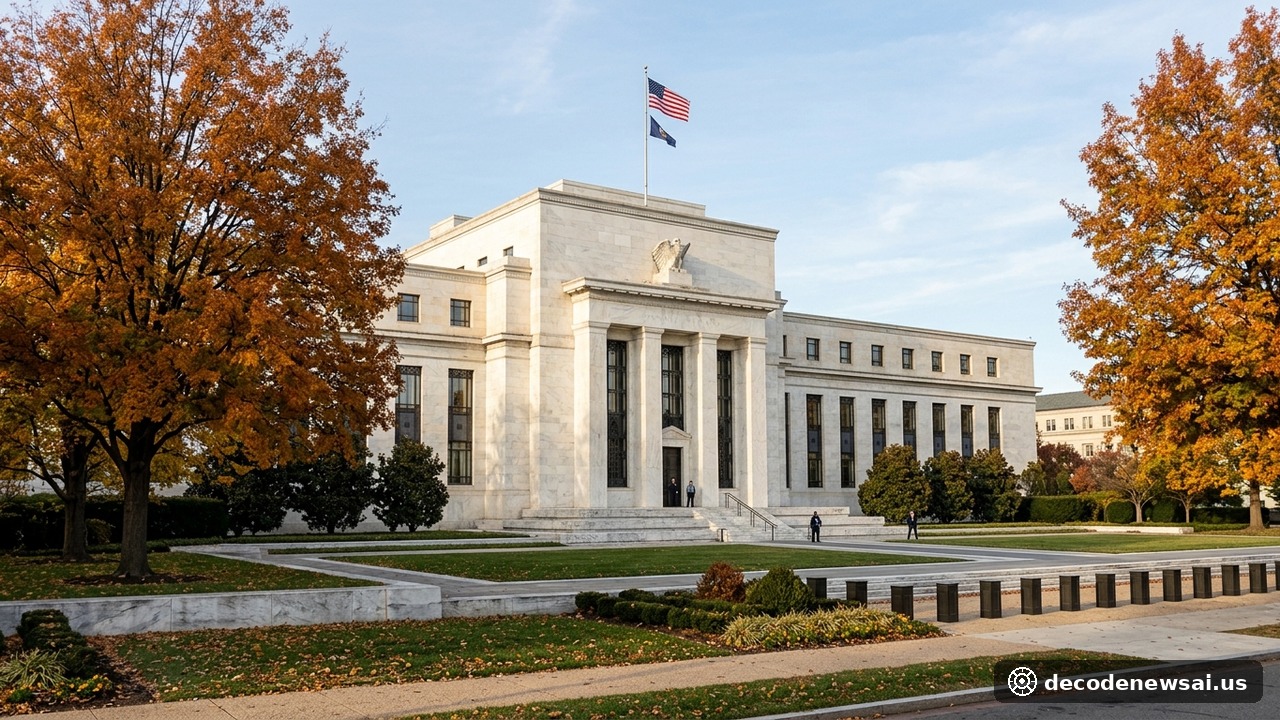
Federal Reserve Governor Christopher J. Waller presented an extensive macroeconomic policy address on November 10, 2026, evaluating structural tensions across domestic labor markets and consumer prices. The speech, published on the Federal Reserve Board of Governors' official portal, introduced a hawkish assessment of forthcoming monetary policy settings. Waller warned that if incoming core inflation measures remain stubbornly elevated, the Federal Open Market Committee must consider a 25-basis-point or potentially a 50-basis-point rate hike during its December policy meeting. The warning reshaped Wall Street expectations.
Long-Term Unemployment Rises from 18% to 27%
Reviewing labor conditions, Waller acknowledged that while aggregate nonfarm payroll creation remains superficially steady, structural metrics reveal emerging economic deceleration. Waller highlighted the rising proportion of long-duration displaced workers across national demographic segments.
Federal Reserve historical tracking indicates that the three-month moving average of workers reporting unemployment durations of 27 weeks or more climbed from approximately 18% in late 2022 to more than 27% through September 2026. The rising trend indicates that job seekers encounter mounting structural frictions securing alternative employment.
Waller argued that while labor softening warrants monitoring, anchoring consumer inflation expectations remains the primary legal prerequisite for sustained economic expansion. A premature monetary easing could unmoor medium-term inflation expectations, imposing severe long-term macroeconomic costs.
Waller Says 25 Basis Points Would Risk Credibility
Turning to core price dynamics, Waller expressed concern regarding wholesale input cost trends. Federal Reserve survey data tracking prices paid by manufacturing enterprises showed persistent price increases across industrial raw materials and logistics services.
During his address, Waller delivered a direct assessment regarding the central bank's policy credibility. Waller stated: "Hiking only 25 basis points would put our credibility at risk, a risk I am not eager to take if incoming core inflation data runs uncomfortably hot."
Waller emphasized that monetary policy decisions will remain strictly dependent on verified macroeconomic data. The impending release of the Consumer Price Index and personal consumption expenditure metrics will determine whether the committee pauses or implements tightening adjustments.
Markets Reprice as Two-Year Treasury Yields Climb
Financial markets responded immediately to the policy remarks. Interest rate swap contracts adjusted rapidly, sharply reducing probabilities previously assigned to near-term policy rate reductions. Benchmark two-year Treasury yields climbed as market participants repriced intermediate debt curves.
The Federal Reserve is scheduled to convene its final policy assembly of the year in mid-December. Commercial financial institutions are preparing balance sheets for higher interest rate environments through early 2027.
Macroeconomic policy researchers and monetary economists noted that divergent labor market metrics and persistent core inflation present delicate policy trade-offs for central bank officials. Because long-term unemployment indicators point to localized structural softening, aggressive interest rate increases could introduce unintended employment contraction across sensitive industrial sectors. However, monetary policy analysts underlined that unmoored inflation expectations pose an even greater long-term danger to macroeconomic stability, justifying a cautious and data-dependent approach during upcoming Federal Open Market Committee meetings. Institutional bond investors adjusted portfolio durations, anticipating that benchmark policy rates may remain restrictive well into the coming year.
Economists Flag High-Frequency Consumer Expenditure Indicators
In addition, financial markets economists and commercial banking research teams highlighted that monitoring high-frequency consumer expenditure indicators remains critical for predicting central bank rate adjustments. The Federal Reserve will carefully assess incoming monthly price indices before making definitive policy rate decisions in mid-December.
Furthermore, central bank observers and macroeconomic researchers emphasized that careful monitoring of intermediate inflation components ensures balanced monetary policy adjustments. Policy committee members will maintain data-dependent guidelines to foster sustainable economic growth while safeguarding long-term consumer purchasing power. Financial market participants and institutional asset managers will closely follow upcoming retail indicators to evaluate forward-looking economic momentum across all major industrial sectors. Government fiscal authorities and central bank economists will monitor consumer sentiment developments across all state territories to refine macroeconomic planning for the coming fiscal year.