Nonfarm business sector labor productivity in the United States increased at a robust 3.6% annualized rate during the third quarter of 2026, according to economic reporting released on November 9 and 10, 2026. The productivity gain substantially exceeded consensus forecasts, reflecting remarkable operational efficiency gains across commercial industries. Concurrently, unit labor costs, a critical gauge of wage-induced inflation pressures, fell by 0.7% during the same period. The dual economic metrics suggest that domestic enterprises are expanding output without exacerbating baseline consumer inflation pressures.
Manufacturing and business services drive productivity growth
Labor productivity measures the real economic output generated per hour worked across nonfarm businesses. The 3.6% annualized improvement marks the fastest pace of operational productivity growth recorded over the preceding four quarters.
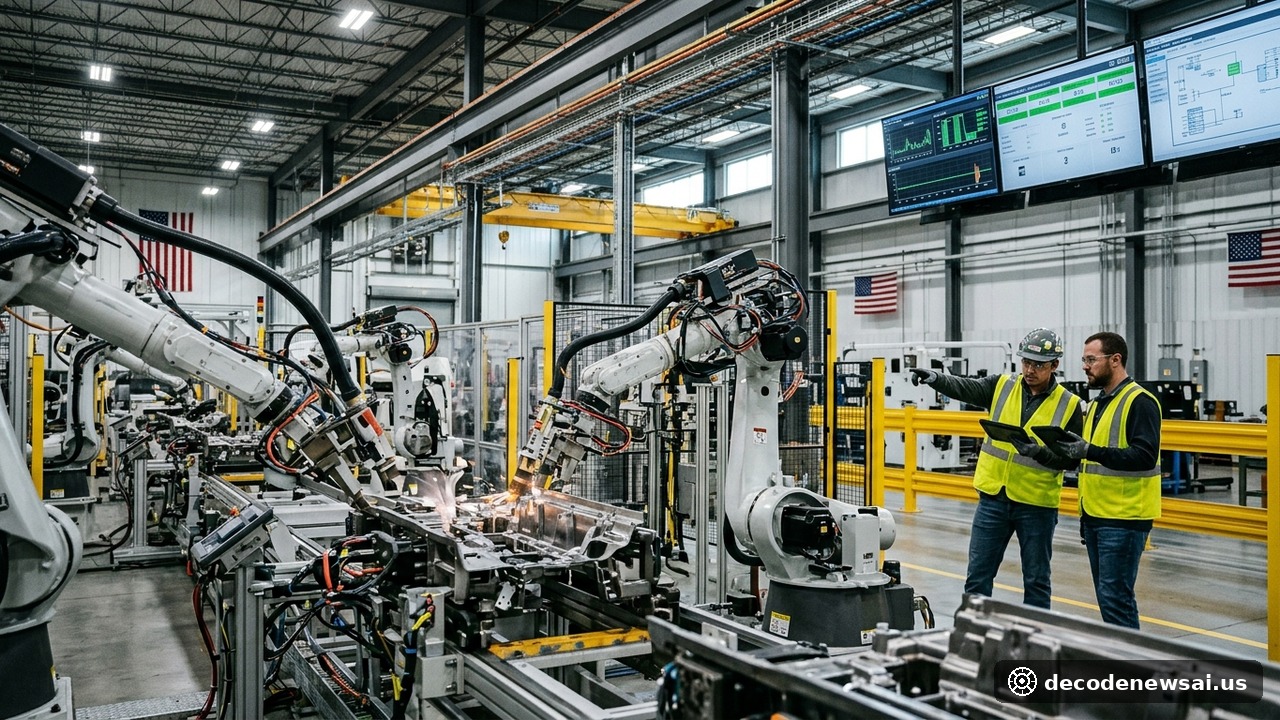
Detailed industry breakdowns indicated that advanced manufacturing and professional business services drove the productivity expansion. Industrial manufacturing facilities utilized automated robotic machining and digital inventory platforms to reduce per-unit assembly hours. Enterprise software suites and generative workflow systems streamlined administrative processes across corporate service departments.
The productivity surge coincided with steady expansions in aggregate real output. Nonfarm commercial output expanded at an annualized rate exceeding 3.0% during the third quarter, while aggregate labor hours worked grew at a modest pace.
Unit labor costs fall 0.7% as productivity outpaces wages
The parallel decline in unit labor costs represents the most encouraging development for financial markets. Unit labor costs declined 0.7% as productivity gains outpaced hourly compensation growth.
Unit labor costs measure the total compensation expenses required to generate one unit of commercial output. When worker productivity expands faster than nominal wages, unit production costs naturally decline, allowing commercial businesses to preserve profit margins without raising consumer retail prices.
A senior macroeconomic strategist at Gallagher Capital Markets in New York evaluated the macroeconomic implications during a market broadcast. The strategist stated: "Surging productivity paired with declining unit labor costs represents an ideal macroeconomic configuration, demonstrating that the economy is digesting price pressures through efficiency rather than recession."
The productivity data provides supportive evidence for the Federal Reserve's economic soft-landing scenario. Sustained productivity growth permits the domestic economy to absorb wage increases without triggering inflationary price spirals.
Macroeconomic researchers and labor market economists highlighted that accelerating nonfarm productivity offers a crucial buffer against lingering inflationary pressures without requiring restrictive monetary interventions. Because robust capital expenditures in automated manufacturing systems and digital enterprise software allow firms to expand output per employee, aggregate unit labor costs can decline even as real wages continue their moderate upward trajectory. Federal Reserve policymakers and regional bank presidents closely monitoring preliminary third-quarter productivity estimates noted that sustained supply-side improvements could expand the economy's non-inflationary growth potential over upcoming quarters. Industrial trade federations confirmed that capital equipment orders remain resilient across commercial logistics and high-tech manufacturing sectors, suggesting that productivity momentum may endure into early 2027.
However, economists cautioned that smaller enterprises continue facing elevated credit constraints. Sustained productivity gains over coming quarters will depend on broad-based capital equipment investment and technological adoption across mid-sized regional manufacturers. Federal monetary officials will examine the data during upcoming policy reviews.
Productivity expansion underpins real wage growth and competitiveness
Economic research institutes and commercial business roundtables highlighted that sustained productivity expansion provides the ultimate foundation for real wage growth and corporate competitiveness. Because technological innovation drives continuous operational improvements, firms are well-equipped to navigate global macroeconomic headwinds smoothly.
Macroeconomic analysts observed that productivity resilience reinforces overall commercial competitiveness across international markets. Industry stakeholders anticipate that continuous technological adoption and business process optimization will support stable non-inflationary economic expansion into the coming fiscal year.
In addition, federal statistical agencies reiterated that comprehensive productivity surveys provide indispensable benchmarks for evaluating long-term national economic health and sustainable domestic industrial expansion.