The National Highway Traffic Safety Administration opened a federal defect investigation into Ford Motor Company on Monday, November 9, 2026. Its Office of Defects Investigation began a preliminary evaluation. The probe covers over 1.2 million sport utility vehicles. Regulators acted on reports that seat-mounted side airbags caused severe burn injuries during crash deployments.
Scope of Probe Involves 1,236,155 Civilian and Police Vehicles
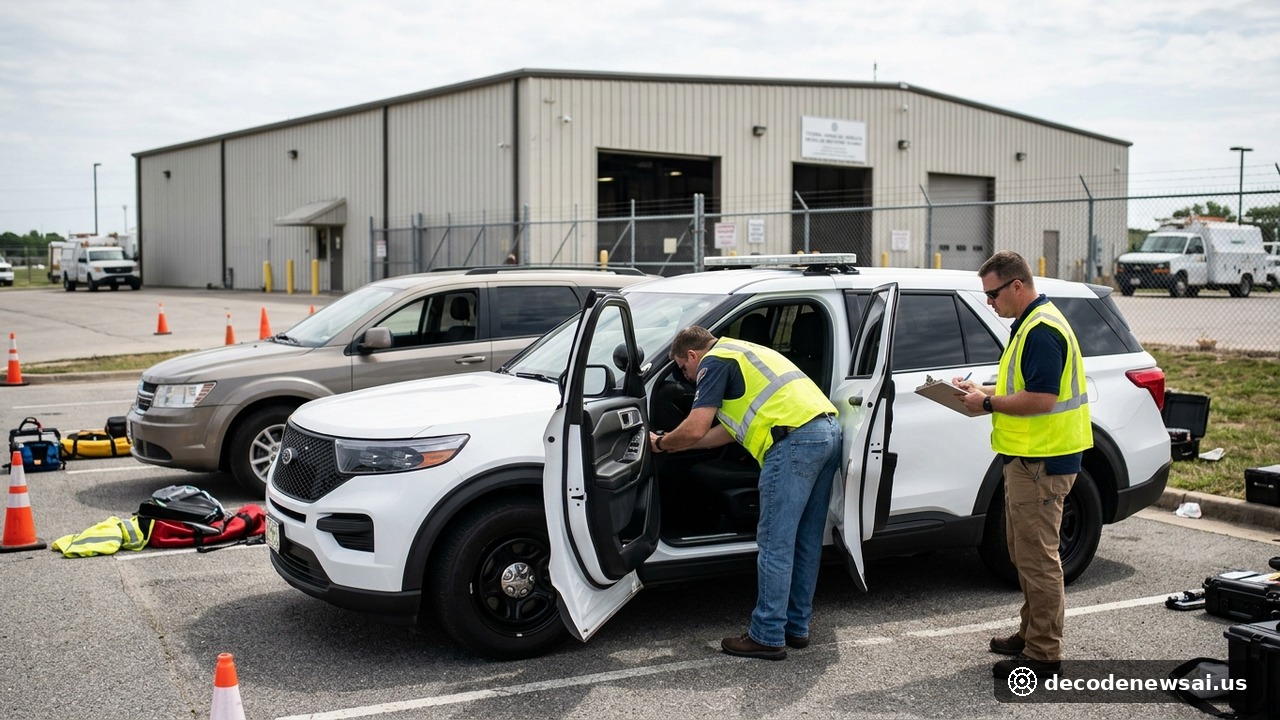
The investigation carries federal docket PE26008. The scope covers an estimated 1,236,155 Ford Explorer vehicles built between the 2021 and 2026 model years. The evaluation includes retail trims and Ford Explorer Police Interceptor vehicles. Municipal law enforcement agencies nationwide use those customized units.
Federal investigators confirmed eight direct consumer safety complaints and four field early warning reports. Complainants said side-mounted airbags expelled hot gas and pyrotechnic particles toward occupants during collision impacts. The inflators vented directly at the people inside.
Medical records submitted to the agency show drivers and front-seat passengers suffered second-degree and third-degree burns. Several people needed specialized burn treatment and surgical procedures. NHTSA summarized the concerns in official filings: "Consumers have described that during a crash involving deployment of the seat-mounted side airbag, they sustained serious burn injuries requiring medical treatment."
Airbag Venting Angles and Law Enforcement Injuries
Technical scrutiny focuses on where airbag pressure release vents sit within the seat bolsters. Multiple consumer petitions alleged the exhaust ports vent directly against occupant arms and torsos. Hot combustion gases expelled within milliseconds caused rapid thermal damage to skin and clothing.
Reports involving uniformed police personnel raised urgent concerns for fleet safety coordinators. In one documented incident, hot exhaust gas from a deploying seat airbag melted part of an active-duty officer's tactical duty belt.
Automotive safety engineers noted that side airbags are vital safety equipment designed to shield occupants from intrusion. Gas dissipation must be routed away from physical contact zones. Ford technical teams contacted regulatory examiners to supply crash sensor data and inflator component specifications.
Eight-Month Regulatory Timeline and Potential Recall
NHTSA emphasized that a preliminary evaluation is an initial investigative phase. It is not a formal finding of a safety defect. The agency set an eight-month technical evaluation target. Investigators will examine component testing telemetry, supplier manufacturing records, and warranty claim histories.
Examiners may request a nationwide safety recall if they determine the side-mounted inflator assemblies pose an unreasonable risk to motor vehicle safety. Ford Motor Company shares declined 5.2 percent on a year-to-date basis. Investors were evaluating potential warranty liabilities.
A corporate spokesperson stated that Ford is cooperating fully with the federal safety inquiry. Vehicle owners are advised to report unexpected airbag warning lamp alerts to authorized repair dealerships promptly. The government's formal defect determination is expected in mid-2027.
Highway safety analysts and automotive fleet directors underscored that rapid deployment dynamics for seat-bolster airbags require balanced pressure mitigation engineering. Supplemental side-impact restraints provide indispensable protection against severe structural intrusion during lateral collisions. Hot combustion exhaust must be redirected away from vehicle occupants. The federal investigation will examine whether alternative inflator housing geometries and thermal baffles could prevent thermal injuries without compromising deployment reaction times.
Municipal law enforcement procurement committees across several states are closely reviewing fleet telemetry data. Federal safety examiners are proceeding with testing. Legal teams representing injured drivers and fleet officers are gathering medical documentation. They plan to submit it during forthcoming technical hearings before federal vehicle safety regulators.