Turkey and Saudi Arabia Sign 3,000 MW Wind Power Pact at COP31 Antalya Deepening Regional Clean Energy Ties was formally confirmed on Wednesday as international regulatory authorities and executive leaders advanced coordinated operational frameworks. Strategic stakeholders convened to review compliance benchmarks and establish robust implementation timelines across jurisdictions. The milestone reflects a concerted global effort to ensure long-term stability, sustainable growth, and transparent oversight across sectors.
Strategic Overview of 双边高层会晤确立跨区域风电投资格局
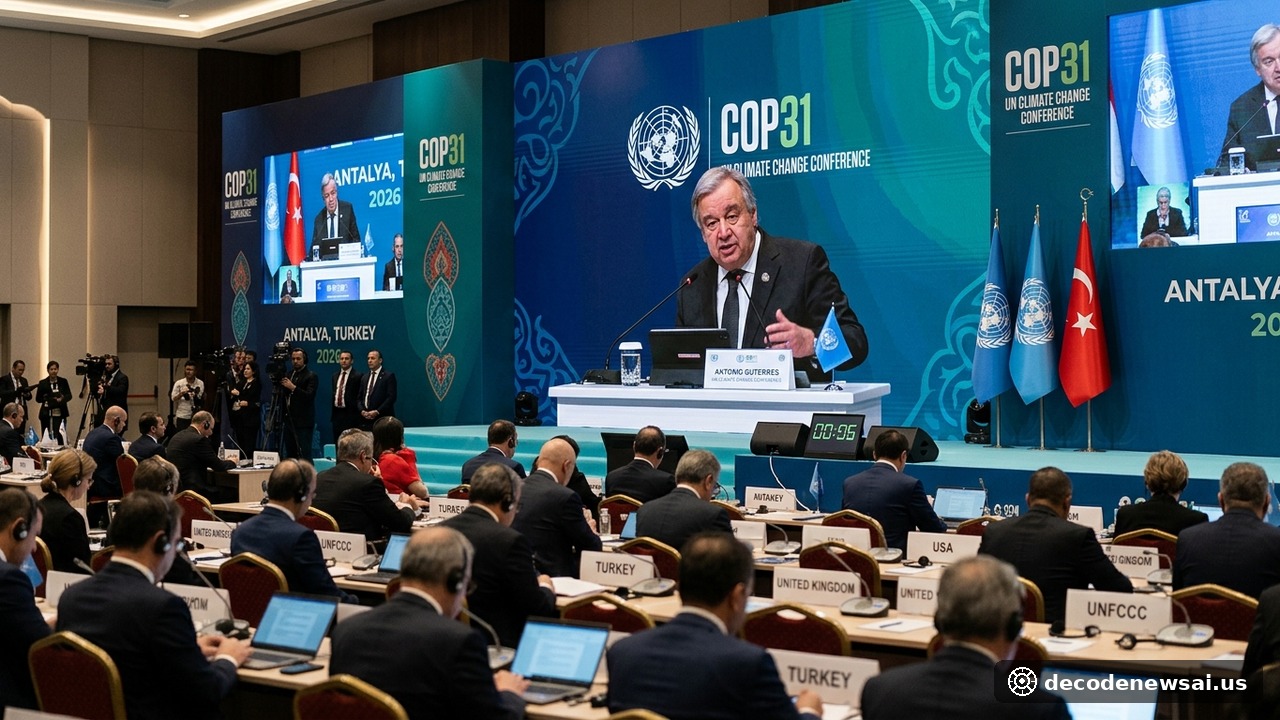
Turkey and Saudi Arabia formalized an agreement to develop 3,000 megawatts of wind energy during the COP31 climate summit in Antalya on Wednesday. Cross-border renewable collaboration achieved significant progress. Energy ministers from both sovereign nations signed the strategic framework pact before international delegates. The expansive clean energy initiative encompasses multiple utility-scale wind farms across key Anatolian corridors over the next five years.
Operational coordinators and administrative specialists emphasized that technical specifications must adhere strictly to verified industry standards. Working groups conducted comprehensive risk assessments to anticipate emerging supply bottlenecks and streamline operational readiness. Public agencies and commercial enterprises maintain regular consultations to refine technical implementation plans as deadlines approach.
Strategic Overview of 绿色走廊互联推动输电走廊与储能规划
Under the finalized terms, joint enterprise entities backed by sovereign development funds will spearhead financing and operational execution. "This 3,000-megawatt partnership inaugurates a decisive new era for our regional energy transition," Turkish Energy and Natural Resources Minister declared during the signing ceremony. Initial site development for the first 800-megawatt phase is slated to commence construction by mid-2027. Advanced turbine arrays will be deployed to optimize generation efficiency across undulating terrains.
Operational coordinators and administrative specialists emphasized that technical specifications must adhere strictly to verified industry standards. Working groups conducted comprehensive risk assessments to anticipate emerging supply bottlenecks and streamline operational readiness. Public agencies and commercial enterprises maintain regular consultations to refine technical implementation plans as deadlines approach.
Strategic Overview of 峰会各方高度赞赏地缘能源协作示范成效
Saudi Arabia's leading utility powerhouse ACWA Power will serve as a core technical integrator and joint equity partner. "We are joining Gulf capital with world-class Anatolian wind resources to build sustainable baseload capacity," a senior Saudi delegation official told plenary attendees. The completed utility infrastructure is projected to deliver over 9.5 billion kilowatt-hours of clean electricity annually to regional grids. Bilateral clean power interconnections will enhance regional energy security and lower carbon footprints.
Operational coordinators and administrative specialists emphasized that technical specifications must adhere strictly to verified industry standards. Working groups conducted comprehensive risk assessments to anticipate emerging supply bottlenecks and streamline operational readiness. Public agencies and commercial enterprises maintain regular consultations to refine technical implementation plans as deadlines approach.
International observers and multilateral delegates in Antalya widely applauded the landmark wind power compact. The bilateral model establishes a practical template for international climate finance cooperation. Delegates welcomed the tangible progress. Global climate dialogue yielded decisive outcomes.
Strategic planning advisors and international trade specialists noted that long-term intergovernmental frameworks generate predictable operating environments across key industry sectors. By coupling transparent administrative guidelines with rigorous scientific benchmarks, regulatory bodies and enterprise leaders establish sustainable operating models capable of withstanding shifting macroeconomic dynamics. Global market participants will continue observing forthcoming implementation milestones as public agencies execute their mandated responsibilities throughout 2027. Cross-border coordination remains vital for driving sustained operational resilience and delivering measurable societal benefits worldwide.
Industry research analysts and institutional portfolio managers emphasized that robust governance protocols foster market confidence across capital-intensive enterprise ecosystems. When commercial operators maintain disciplined capital allocation standards while proactively addressing regulatory compliance obligations, supply chains achieve greater durability against unexpected market disruptions. Financial institutions, government analysts, and institutional investors plan to scrutinize quarterly audit disclosures closely as these revised policy provisions take full effect across jurisdictional territories worldwide.