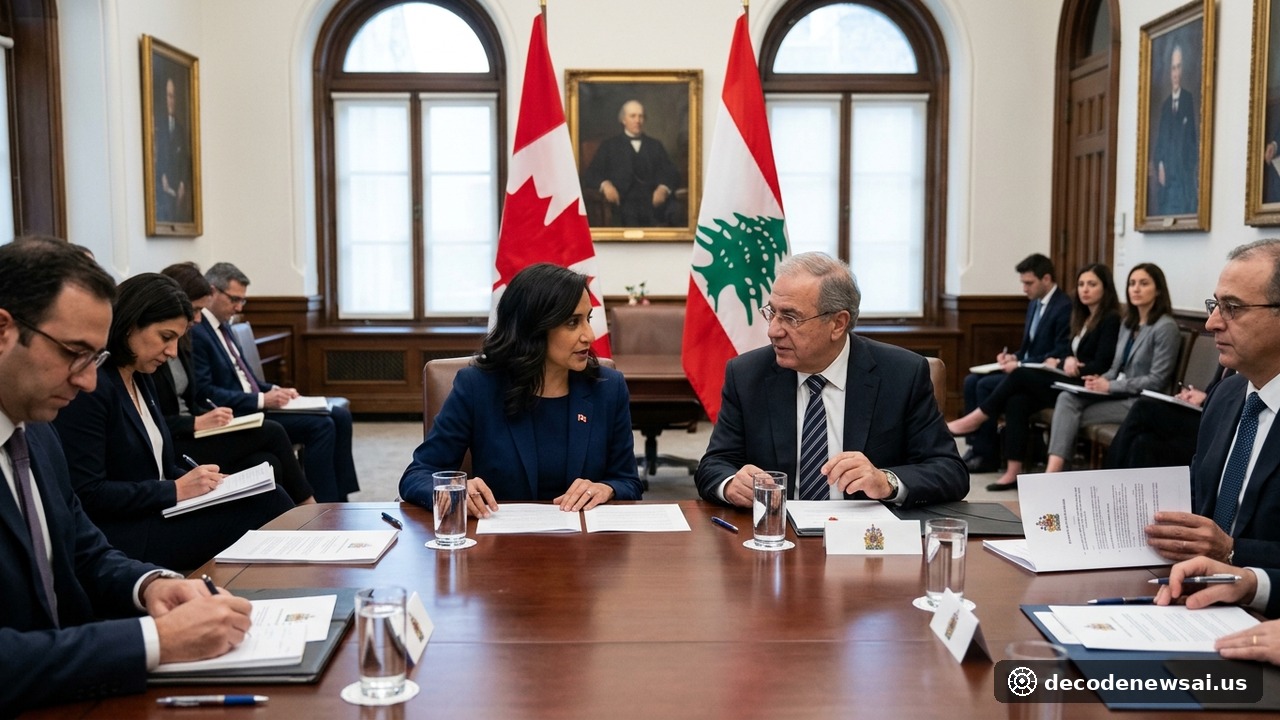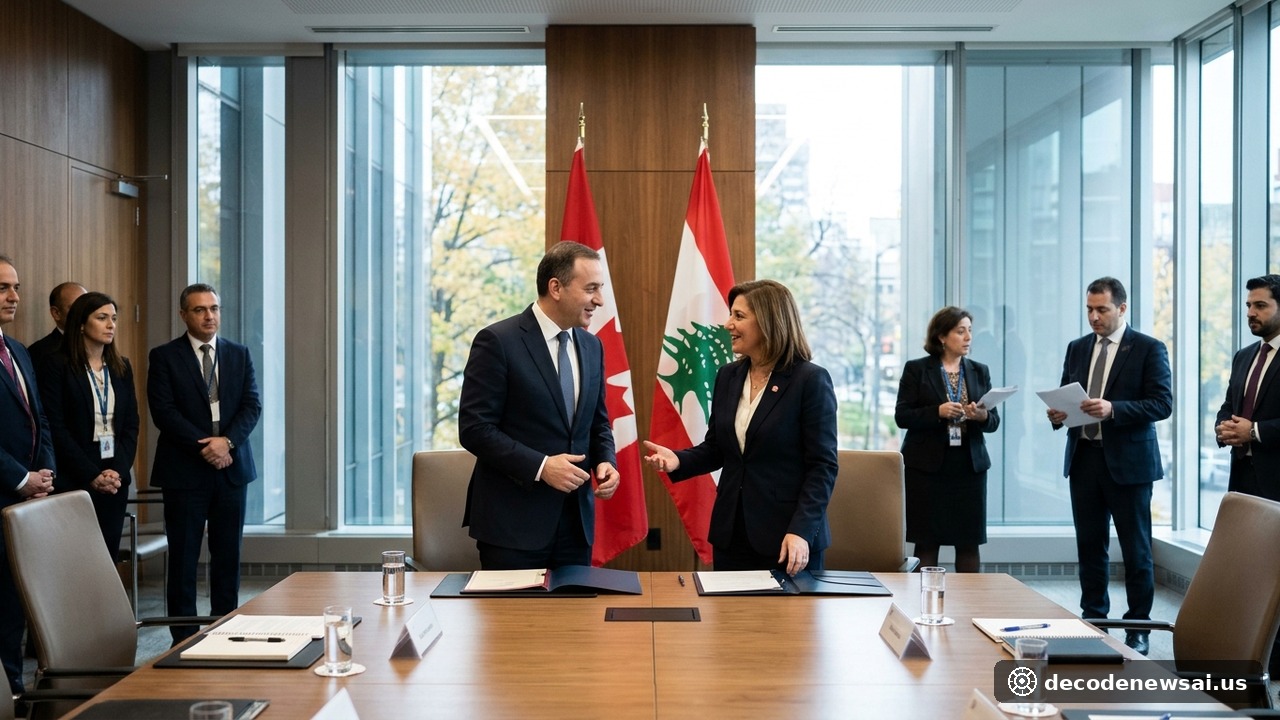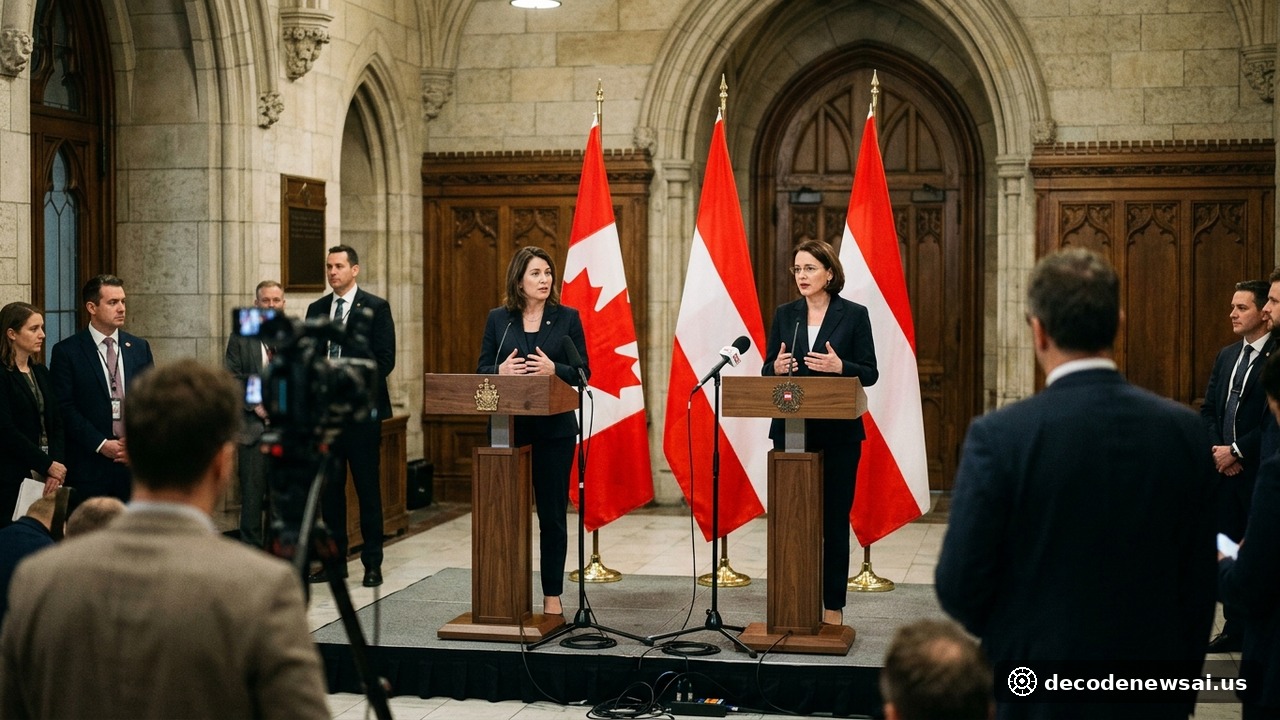
The Honourable Anita Anand, Minister of Foreign Affairs of Canada, officially hosted Beate Meinl-Reisinger, Federal Minister for European and International Affairs of the Republic of Austria, in Ottawa on November 6, 2026, for high-level bilateral deliberations culminating in the issuance of a comprehensive joint ministerial statement. Navigating an era of acute international volatility and geopolitical fragmentation, the ministers reaffirmed the enduring strategic partnership between Canada and Austria, formally announcing the operational inauguration of the inaugural Canada-Austria Political-Military Dialogue alongside expanded cooperation spanning multilateral international law, defense supply chain resilience, and critical mineral development.
What Are the Core Diplomatic Milestones and Security Parameters in the Canada-Austria Accord?
- Geographic Venue for Inaugural Bilateral Strategic Dialogue: Formally Convened in Vienna Between Senior Defense Officials
- Canada Multi-Year National Defense Policy Investment Scale: $163 Billion CAD Comprehensive Defense Modernization Plan
- Priority Bilateral Technology and Trade Initiatives Covered: Critical Strategic Minerals, Green Hydrogen, Cyber Defense
In an official joint press availability following bilateral meetings on Parliament Hill, Minister Anand underscored the alignment connecting both democracies: "In a period defined by escalating challenges to the rules-based international order, Canada and Austria stand united by common values anchored in international law, democratic accountability, and human rights. Deepening our bilateral dialogue reinforces the economic resilience and security architecture essential for like-minded allies navigating European and Arctic security imperatives." Minister Meinl-Reisinger echoed these sentiments, noting that while Austria maintains its constitutional permanent neutrality, Vienna remains deeply committed to defense diplomacy, international peacekeeping mandates, and cooperative civilian defense infrastructure.
How Does the Inaugural Political-Military Dialogue Solidify Trans-Atlantic Security Networks?
Austria occupies a unique geopolitical position as a militarily neutral Central European nation hosting key international agencies including the IAEA and OSCE, whereas Canada is a foundational NATO member.
The institutionalization of the Canada-Austria Political-Military Dialogue—which conducted its maiden senior-level session in Vienna earlier in the week—marks a major operational evolution from routine diplomatic engagement toward structured defense policy coordination. Bilateral delegations reviewed security developments across Eastern Europe, addressing hybrid warfare threats, foreign information manipulation, and critical maritime and cyber infrastructure protection. This structured security framework creates an agile bilateral mechanism enabling intelligence sharing and strategic alignment between a European non-NATO partner and an Arctic NATO ally.
Foreign policy scholars in Ottawa observed that the institutionalization of the bilateral security dialogue reflects a broader recognition that European and Arctic security environments are increasingly interlinked. As melting polar ice caps expand maritime transit corridors and commercial resource competition in the High North, non-Arctic European states are seeking structured defense consultative mechanisms with Canada to understand Arctic domain awareness and maritime sovereignty.
Furthermore, the bilateral initiative establishes working groups focused on international nuclear security and export control verification. Leveraging Vienna's status as host city for the International Atomic Energy Agency, Canadian and Austrian non-proliferation specialists will collaborate on automated safeguards monitoring and satellite verification tools to prevent the illicit diversion of sensitive nuclear technologies.
What Strategic Signals Does Canada-Austria Alignment Send Ahead of Their 75th Anniversary?
The Ottawa summit signals the growing influence of constructive middle powers leveraging values-based bilateral alliances to uphold multilateral stability amid great-power polarization.
As both capitals prepare to commemorate the 75th anniversary of bilateral diplomatic relations in 2027, Canada and Austria committed to coordinated diplomatic action across United Nations bodies, the International Criminal Court, and global export control regimes. Economically, the partnership pairs Canada's vast endowment of critical transition minerals—including nickel, cobalt, and lithium—with Austria's high-precision industrial manufacturing and clean hydrogen technology sectors. By fortifying bilateral institutional ties, Canada and Austria provide an actionable model of middle-power diplomatic agility, ensuring that trans-Atlantic solidarity remains an anchor of international legal norms and economic security.