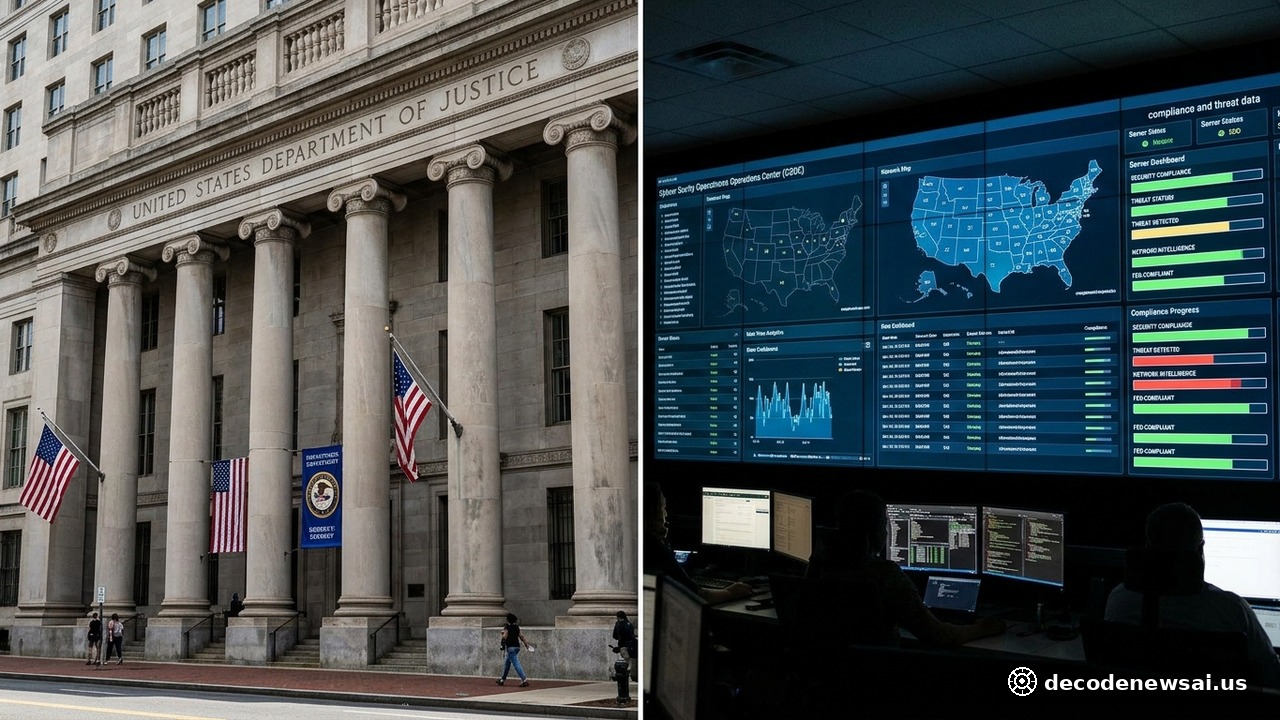
The United States Department of Justice announced a $13 million civil settlement on November 10, 2026, resolving allegations under the False Claims Act that a major defense technology contractor misrepresented its cybersecurity compliance posture across Department of Defense contracts. Negotiated jointly by the Civil Division's Commercial Litigation Branch and the Defense Criminal Investigative Service, the agreement addresses claims that the contractor knowingly submitted noncompliant self-assessments while handling controlled unclassified defense telemetry without required safeguards.
Contractor misrepresented security baselines under DFARS clause
The enforcement outcome reinforces federal determination to hold government contractors accountable for rigorous compliance with contractual cybersecurity mandates.
Federal procurement regulations, specifically Defense Federal Acquisition Regulation Supplement (DFARS) clause 252.204-7012, mandate that defense suppliers implement strict operational security controls to protect covered defense information. Explaining the resolution, senior Justice Department litigation leadership stated: "Contractor cybersecurity compliance is indispensable to safeguarding sensitive military capabilities and protecting American warfighters. Government suppliers that misrepresent their security baselines to obtain federal contracts will face severe legal and financial consequences."
The $13 million settlement resolves allegations that corporate managers submitted passing assessment scores despite internal audits documenting unaddressed network vulnerabilities.
CMMC reviews do not diminish existing contractor obligations
The enforcement action arrives amid broader programmatic reviews of the Cybersecurity Maturity Model Certification (CMMC) framework. Federal prosecutors explicitly emphasized that administrative adjustments to future CMMC verification phases do not diminish contractors' existing obligations to maintain compliant network protections.
Government contracts attorneys noted that the settlement illustrates how the Justice Department's Civil Cyber-Fraud Initiative utilizes False Claims Act liability to police cybersecurity representations independently of third-party certification timelines. In addition to financial restitution, the contractor agreed to comprehensive corporate compliance monitoring and annual third-party security audits over a three-year period. Defense industrial base associations advised member firms to audit localized cybersecurity protocols to ensure strict adherence to federal standards.
Federal procurement attorneys and defense industrial base analysts highlighted that rigorous civil enforcement under the False Claims Act serves as a vital deterrent against systemic cybersecurity vulnerabilities across government contracting networks. Because modern defense platforms depend on interconnected commercial suppliers for critical aerospace avionics, software components, and tactical logistics, ensuring strict compliance with mandatory National Institute of Standards and Technology security guidelines protects sensitive national defense assets from unauthorized foreign exfiltration. Independent cybersecurity compliance auditing firms observed that automated log telemetry and continuous multi-factor authentication verifications substantially improve organizational threat detection postures. Industry trade associations encouraged small and mid-sized contractors to leverage federal cybersecurity assistance grants to modernize defense network protections.
Internal auditing and compliance safeguards protect federal contracts
Government procurement integrity organizations and corporate governance consultants observed that implementing robust internal compliance safeguards protects contractors against costly statutory enforcement actions while preserving critical federal client relationships. Because digital supply chain security requires rigorous supplier oversight and verifiable documentation, investing in continuous workforce training and automated auditing tools strengthens institutional resilience. Federal inspectors general reaffirmed that collaborative transparency and proactive remediation remain the most effective strategies for maintaining eligibility across high-value federal defense contracts.
Corporate compliance officers and federal procurement specialists observed that proactive internal auditing safeguards contractors against civil liability while promoting ethical business standards. By institutionalizing rigorous cybersecurity verifications and transparent reporting mechanisms, commercial suppliers reinforce trusted partnerships with federal defense agencies, ensuring resilient support for national security missions. Defense acquisition authorities and independent cybersecurity monitors reiterated that maintaining continuous compliance across distributed supplier tiers provides indispensable protection for sensitive national security projects and sensitive federal data networks. Additionally, legal scholars emphasized that proactive adherence to federal contracting standards mitigates systemic operational risks and upholds highest levels of public integrity across commercial aerospace and defense ecosystems. Such comprehensive oversight ensures that federal procurement processes remain transparent, resilient, and fully compliant with statutory federal cybersecurity guidelines.