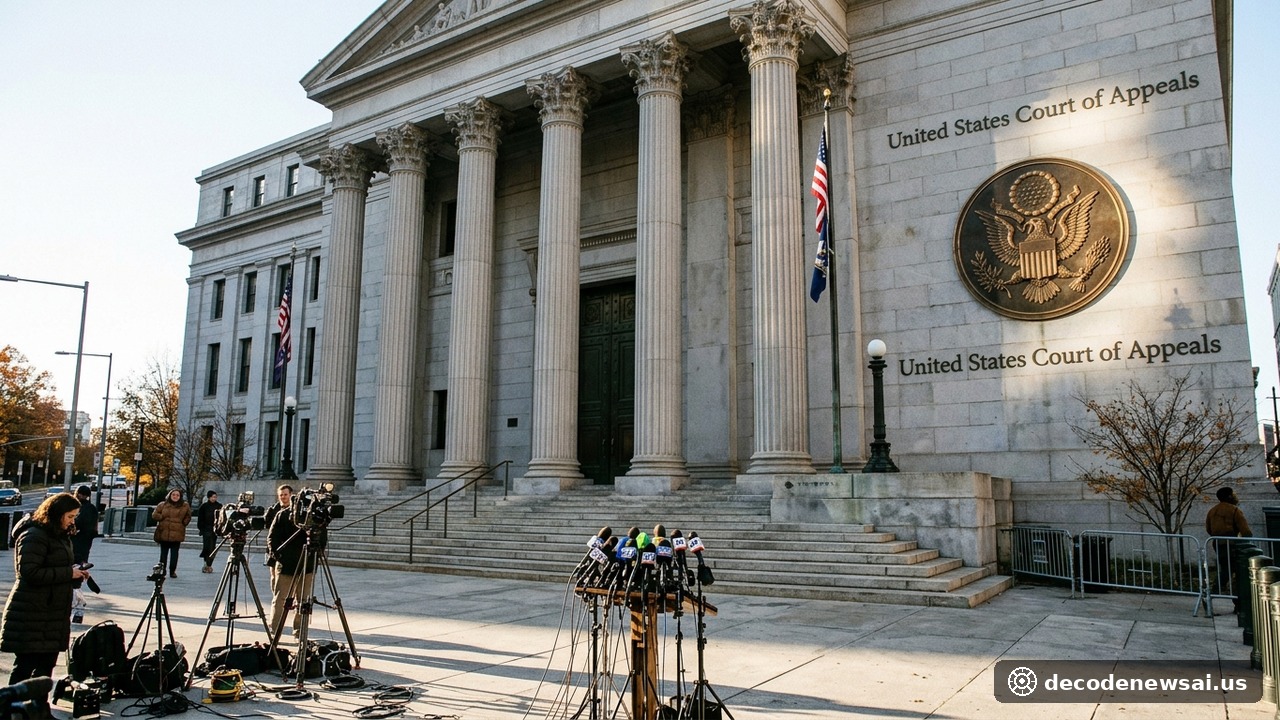
A federal appeals court pushed back on Tuesday against broad executive branch subpoenas seeking journalists' digital communication records from LinkedIn. Constitutional privacy protections were firmly reinforced. A unanimous three-judge panel of the U.S. Court of Appeals for the Fourth Circuit vacated an overbroad lower court disclosure order. The appellate ruling determined that the government's blanket data request improperly jeopardized confidential sources across hundreds of unrelated news stories.
Writing for the appellate panel, Circuit Judge J. Harvie Wilkinson III emphasized strict constitutional limits on law enforcement data gathering. "The government cannot automatically obtain every available record simply because collecting the information is administratively convenient," Judge Wilkinson wrote in the opinion. The targeted journalists had authored nearly 1,000 independent articles across an 18-month reporting window encompassing diverse public integrity topics. Judicial analysis concluded that wholesale electronic seizure would destroy the essential trust between investigative reporters and confidential sources.
Media advocacy groups and First Amendment organizations commended the appellate intervention as a vital protection for independent journalism. "Protecting confidential communications is indispensable for holding powerful public institutions accountable," an attorney for the press freedom coalition stated. LinkedIn actively resisted the original subpoenas, arguing that sweeping requests for private message metadata infringed on users' constitutional rights. The case returns to the district court with explicit instructions to narrow any permissible evidentiary requests strictly to relevant leads.
Constitutional scholars noted that the Fourth Circuit decision sets a crucial precedent governing federal inquiries into professional networking platforms. The ruling ensures that digital platforms cannot be subjected to unrestrained fishing expeditions in public sector investigations. Legal observers praised the proportionate outcome. Judicial independence demonstrated decisive protective authority.