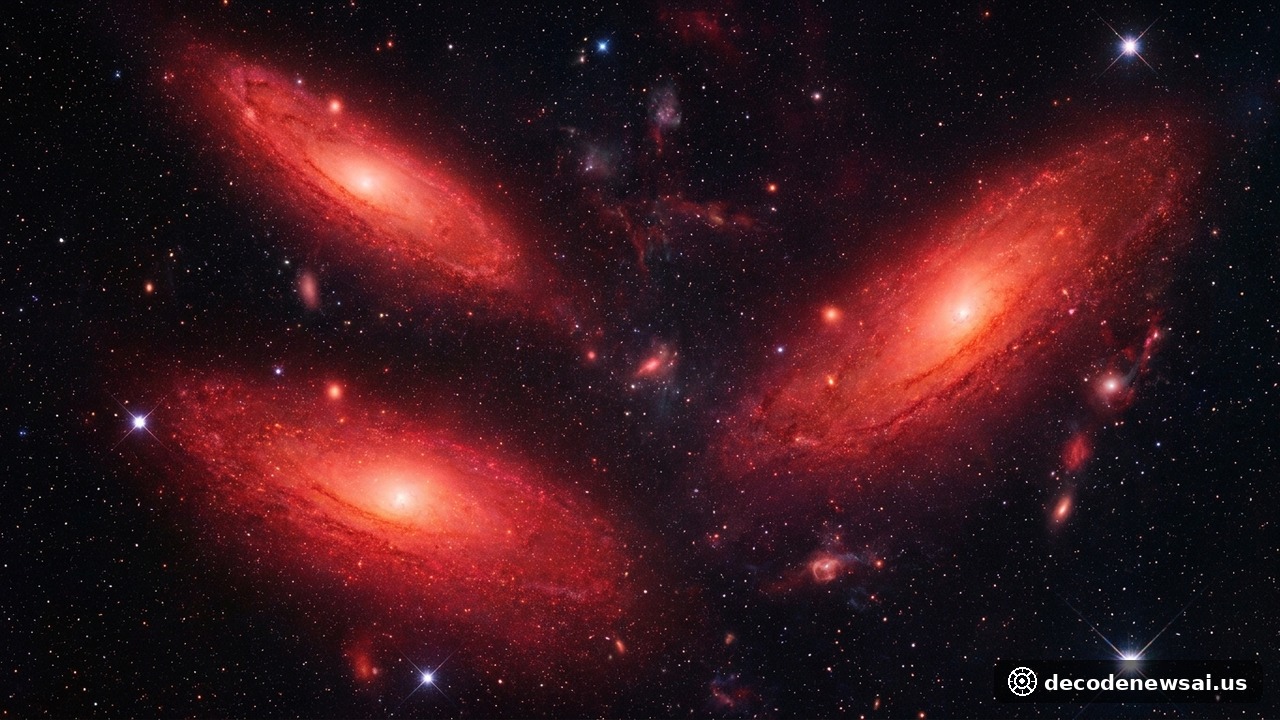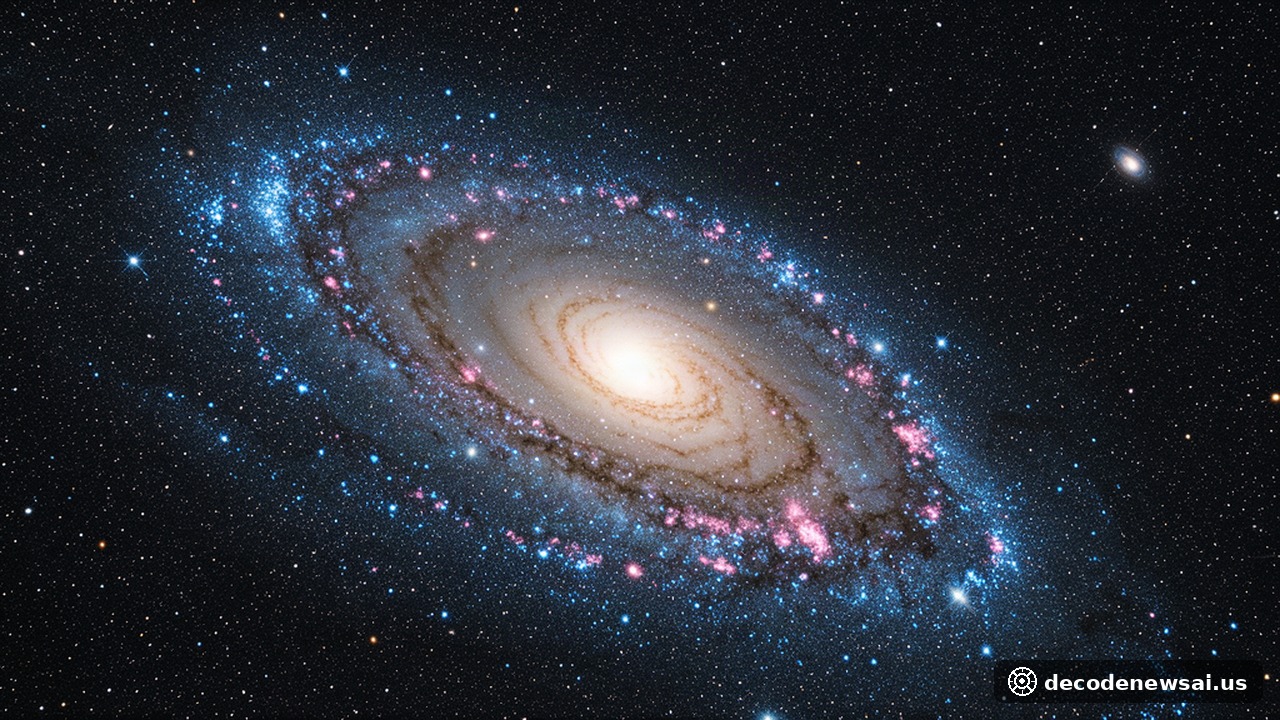
The European Space Agency and NASA released comprehensive multi-wavelength infrared observations from the James Webb Space Telescope on Tuesday, unveiling spiral galaxy NGC 5134 in remarkable detail. Astronomical researchers celebrated unprecedented observational clarity. The distant galaxy, located roughly 65 million light-years from Earth in the constellation Virgo, was imaged using both the Mid-Infrared Instrument and Near-Infrared Camera. The scientific dataset provides unmatched clarity regarding complex interstellar dust filaments and dynamic stellar nurseries.
Webb's powerful infrared sensitivity pierced dense obscuring dust layers that historically blinded optical observatories from viewing core galactic structures. "We are observing the exact physical environments where massive molecular gas clouds collapse into vibrant star-forming clusters," the lead project scientist explained during a technical briefing. MIRI imagery traced intricate glowing webs of polycyclic aromatic hydrocarbons illuminating the galaxy's winding spiral arms with precision. Fine cosmic dust particles trace the shockwaves of past stellar explosions across galactic disks.
Simultaneously, NIRCam observations isolated the luminous stellar population constituting the dense central galactic bulge. "Kinematic velocity gradients within the nuclear ring strongly imply the gravitational influence of a supermassive black hole exceeding 20 million solar masses," an astrophysicist reported. Energetic radiation and stellar winds driven by newly formed young stars are actively clearing surrounding cold gas reservoirs, moderating local star formation rates. Stellar lifecycle mechanisms were mapped across hundreds of light-years of galactic territory.
Astrophysicists worldwide commended the published imaging data as an extraordinary benchmark for galaxy evolution modeling. Webb's continuing observations provide fundamental observational data to validate next-generation cosmological hydrodynamics simulations. International scientific enthusiasm remains exceptional. Deep-space exploration unlocked transformative astronomical insights.