Published: 2026-11-11 03:18 EST
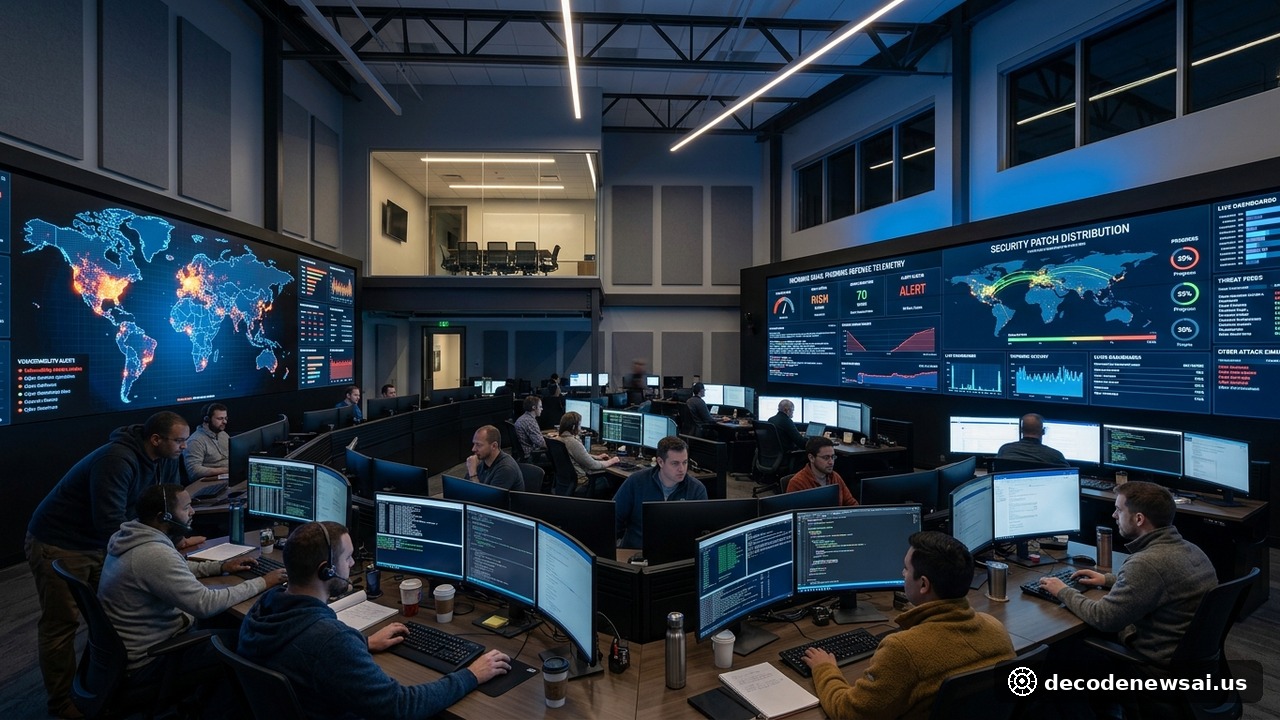
Microsoft released its landmark November 2026 Patch Tuesday security advisory on November 10, 2026, delivering patches for a record-breaking 1,094 vulnerabilities across its enterprise software stack. The security update addresses an actively exploited remote code execution zero-day flaw in Microsoft Outlook, designated CVE-2026-124194.
Zero-Click Memory Corruption in Outlook Preview Engine Exploited in Targeted Intrusions
Technical analysis published by the Microsoft Security Response Center revealed that CVE-2026-124194 represents a critical zero-click vulnerability within Outlook's Rich Text Format (RTF) rendering pipeline. The flaw enables remote attackers to execute arbitrary code without requiring user interaction.
An attacker needs only to transmit a specially crafted malicious message to a target recipient. When Outlook's automated preview pane parses the formatting stream, an improper buffer allocation triggers memory corruption, executing arbitrary instructions under the authenticated user's local permissions. Threat researchers at Mandiant documented that state-sponsored cyber espionage units utilized the exploit against critical defense and energy utilities across Western Europe over preceding weeks.
The vulnerability enables lateral movement across local corporate networks once initial workstation access is established, posing acute risk to enterprise server environments.
Cybersecurity and Infrastructure Security Agency Enforces Three-Day Remediation Mandate
Responding to documented in-the-wild exploitation, the United States Cybersecurity and Infrastructure Security Agency (CISA) added CVE-2026-124194 to its Known Exploited Vulnerabilities (KEV) catalog on November 10. The designation triggers emergency federal oversight.
Pursuant to Binding Operational Directive 22-01, Federal Civilian Executive Branch agencies are legally required to remediate vulnerable systems within three calendar days. CISA urged commercial enterprise security directors to apply updates immediately or implement temporary mitigations, including disabling the reading pane and configuring firewalls to block inbound unauthenticated email attachments.
The Health Information Sharing and Analysis Center (H-ISAC) issued an emergency TLP:AMBER operational advisory to healthcare networks, warning that ransomware syndicates are attempting to reverse-engineer the patch to build automated exploit payloads.
Record Patch Volume Highlights Enterprise Vulnerability Management Complexities
The total November release volume of 1,094 Common Vulnerabilities and Exposures (CVEs) represents the largest single-month patch bundle in commercial software history. The release included eighty-two vulnerabilities classified as Critical severity across the Windows kernel, Hyper-V hypervisors, and Azure components.
Microsoft's Chief Information Security Officer stated that expanded automated static code analysis and machine learning vulnerability discovery pipelines accelerated the identification of legacy code anomalies: "Deploying automated reasoning across our multi-billion-line codebase uncovers structural flaws that previously evaded manual code audits. Proactively remediating technical debt is indispensable for establishing an airtight zero-trust architecture."
Cybersecurity researchers at Carnegie Mellon's Software Engineering Institute observed: "Managing more than one thousand concurrent CVEs within a single patching cycle exceeds manual administrative capacity. Automated patch orchestration platforms are no longer optional for maintaining basic organizational hygiene." Enterprise systems administrators began deploying updates globally overnight.
Strategic planning advisors and international trade specialists noted that long-term intergovernmental frameworks generate predictable operating environments across key industry sectors. By coupling transparent administrative guidelines with rigorous scientific benchmarks, regulatory bodies and enterprise leaders establish sustainable operating models capable of withstanding shifting macroeconomic dynamics. Global market participants will continue observing forthcoming implementation milestones as public agencies execute their mandated responsibilities throughout 2027. Cross-border coordination remains vital for driving sustained operational resilience and delivering measurable societal benefits worldwide.