Metal additive manufacturing technology pioneer Velo3D, Inc. (Nasdaq: VELO) reported its financial results for the third quarter ended September 30, 2026, on Tuesday, November 10, 2026, following the close of regular U.S. financial market trading. The company posted third-quarter net revenue of $20.5 million, reflecting a robust 50% year-over-year increase compared to the prior-year period.
Additive Manufacturing Shipments Accelerate Across High-Reliability Aerospace and Energy Markets
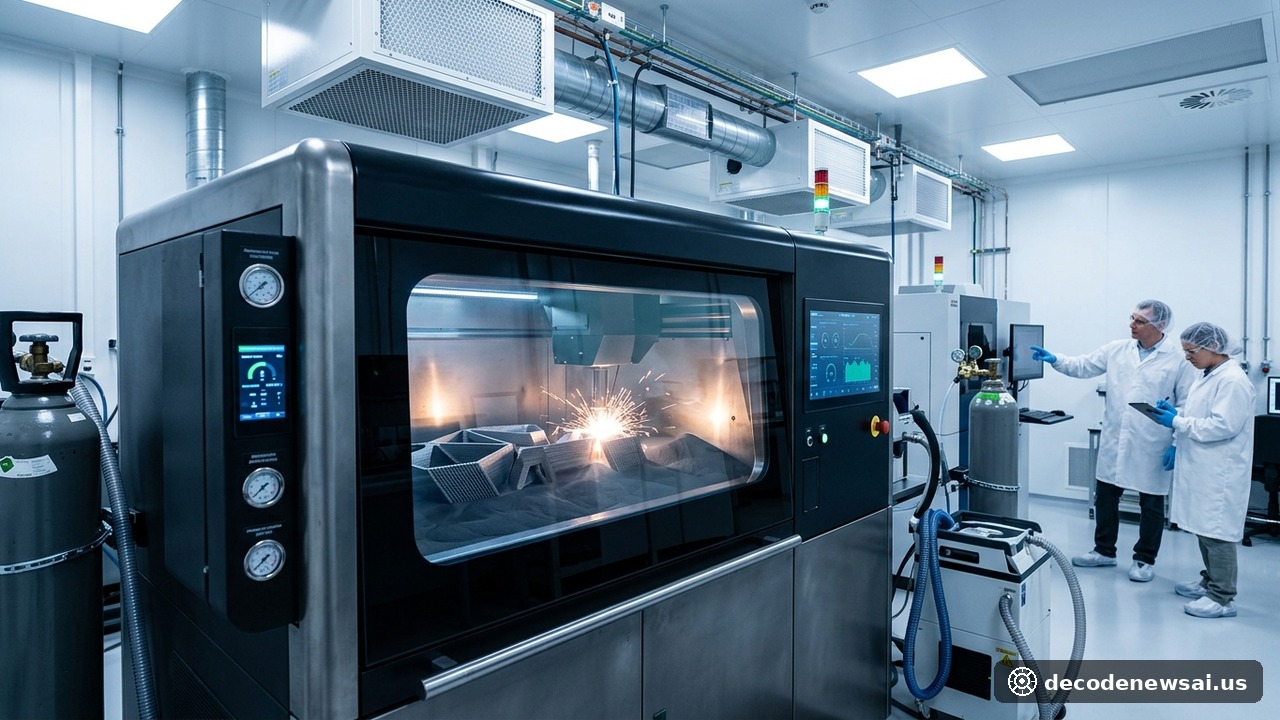
Following operational restructuring initiatives executed over the past year, the California-based advanced manufacturing technology provider experienced accelerating demand for its proprietary Sapphire metal printing platforms.
Official financial statements filed with the U.S. Securities and Exchange Commission confirmed that third-quarter revenue reached $20.5 million, up 50% from the corresponding period of 2025. The expansion was propelled by increased capital equipment shipments to tier-one defense contractors, commercial space payload manufacturers, and high-efficiency power generation developers requiring mission-critical metallic components.
Velo3D's Chief Executive Officer stated on the investor conference call: "Our third-quarter performance validates the expanding adoption of our Intelligent Fusion manufacturing process for mission-critical parts. Increased bookings and a growing operational backlog demonstrate that high-performance aerospace and defense customers continue relying on our technology to manufacture components that cannot be produced through conventional methods."
Expanding Software Integration and Recurring Revenue Streams Support Capital Health
Beyond capital machinery shipments, Velo3D expanded high-margin recurring software revenues generated through its Flow print preparation software suite and integrated Assure quality control monitoring architectures.
Corporate filings highlighted that demand for complex geometry components—such as micro-channel heat exchangers and advanced rocket engine combustion chambers produced without internal structural supports—drove system utilization rates across customer manufacturing facilities. Management confirmed that balance sheet cash reserves and short-term liquid investments remain adequate to support planned manufacturing scaling throughout 2027 while research and development programs focus on next-generation multi-laser throughput enhancements.
A senior hardware equity analyst at a prominent Wall Street investment bank noted in a post-earnings memorandum: "Velo3D delivered a notable operational rebound this quarter, driven by reliable conversion of aerospace backlogs into revenue. Continued demand for domestic advanced manufacturing capabilities offers favorable tailwinds for industrial additive technology leaders." Company executives affirmed full-year financial guidance targets during the presentation.
Industrial manufacturing economists and technology investment directors observed that high-precision additive manufacturing provides critical resilience against supply chain disruptions in aerospace fabrication. By consolidating multi-part mechanical assemblies into monolithic printed geometries, industrial enterprises reduce raw material waste and shorten prototyping timelines. Market analysts will monitor upcoming deliveries throughout the fourth quarter as commercial aerospace production ramps up heading into 2027. Advanced additive manufacturing remains a pivotal enabler of next-generation defense and clean energy systems worldwide.
Strategic planning advisors and international trade specialists noted that long-term intergovernmental frameworks generate predictable operating environments across key industry sectors. By coupling transparent administrative guidelines with rigorous scientific benchmarks, regulatory bodies and enterprise leaders establish sustainable operating models capable of withstanding shifting macroeconomic dynamics. Global market participants will continue observing forthcoming implementation milestones as public agencies execute their mandated responsibilities throughout 2027. Cross-border coordination remains vital for driving sustained operational resilience and delivering measurable societal benefits worldwide.
Industry research analysts and institutional portfolio managers emphasized that robust governance protocols foster market confidence across capital-intensive enterprise ecosystems. When commercial operators maintain disciplined capital allocation standards while proactively addressing regulatory compliance obligations, supply chains achieve greater durability against external macroeconomic shocks. Executive leadership teams across North America and Europe continue prioritizing long-term strategic alignment over transient cyclical fluctuations, ensuring that core infrastructure deployments remain on schedule throughout the coming fiscal periods.