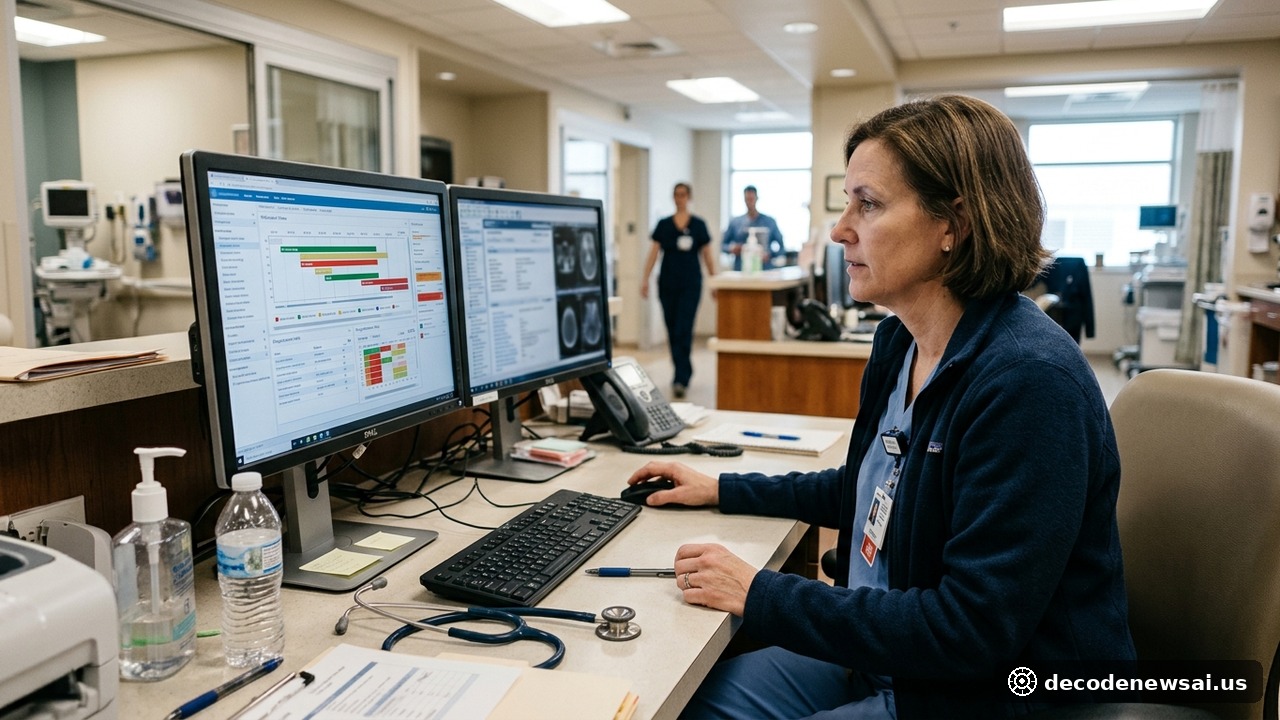
OpenAI announced on Nov. 16, 2026, that healthcare teams and clinicians can now access computer-use agents. The tools are available through ChatGPT for Healthcare, ChatGPT for Clinicians, and the OpenAI API. They are meant to automate fragmented clinical and administrative workflows.
Clinical Safety Reviews Rate Most Tasks Safe
OpenAI evaluated its GPT-6 Astra model on multi-step electronic health record inbox tasks. It found that 99% of 325 reviewed tasks were rated safe. Physicians also selected "very helpful" or "extremely helpful" in 93% of 646 assessments on a five-point scale. On HealthAdminBench, an independent administrative benchmark from Stanford researchers, GPT-6 Astra earned 94.3% of available rubric points, while GPT-6 Luna scored 91.8% at 8.5 cents per task, costing 98% less.
Healthcare Partners Automate Thousands of Daily Consults
CVS Health uses the computer-use agents in production. The agents send documents, process referrals, and handle system steps for tens of thousands of consults each day. CVS cleared a months-long backlog over one weekend. Cigna Healthcare deploys the models to pull member context from more than 10 separate systems.
"Around six months ago we set a research bet that we thought that the abilities for agents to use computers would end up being helpful and reliable enough in healthcare to help people with clinical and administrative workflows," Karan Singhal, head of Health AI at OpenAI, told Fierce Healthcare.
Access Controls Protect Patient Health Information
ChatGPT for Healthcare provides role-based access controls, configurable approval steps, and audit logs. These keep human reviewers in control of medical decisions. OpenAI confirmed that organization data is not used to train its foundation models. Eligible organizations can support HIPAA-compliant workflows under a Business Associate Agreement.