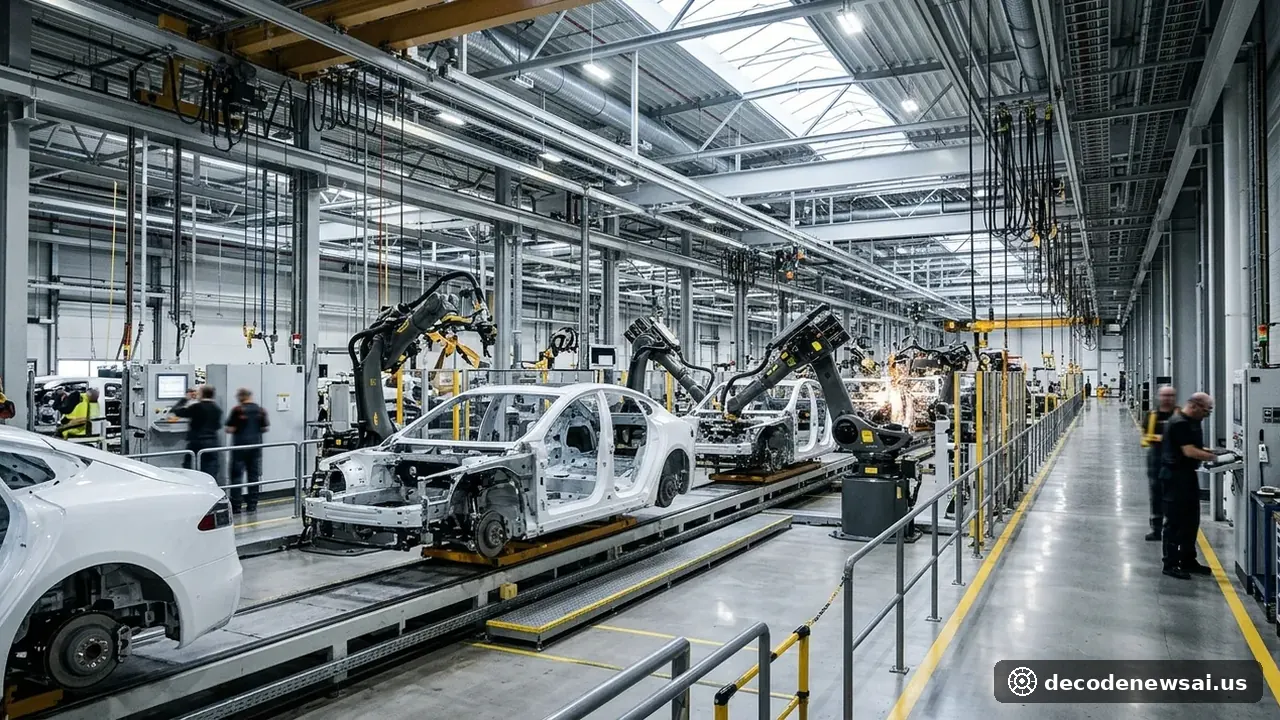
BERLIN - Tesla announced on November 16, 2026, a €3 billion ($3.3 billion) expansion of its Gigafactory in Grünheide near Berlin to build a new assembly hall dedicated to its steering-wheel-free Cybercab robotaxi. The facility aims to reach an annual capacity of up to 1 million autonomous vehicles.
Grünheide Construction Timeline and Battery Integration
The German expansion pairs dedicated Cybercab assembly lines with upcoming domestic battery cell manufacturing. "The new building in Grünheide, just east of Berlin, will be capable of producing up to 1 million vehicles per year, André Thierig, Tesla's senior director of manufacturing for the site, wrote on LinkedIn." Tesla expects to file construction permits before the end of 2026, begin building in the first half of 2027, and start production in 2029, alongside 18 gigawatt-hours of 4680 battery cell output launching in mid-2027.
European Driverless Caps Pose Steep Hurdles
Achieving mass production in Germany contrasts sharply with strict European regulatory caps on uncrewed vehicles. Current European Union small-series rules restrict driverless vehicle registrations without steering wheels to 1,500 units per year across the bloc, while Tesla currently holds only Level 2 supervised driver-assistance approval in 10 to 11 European countries. Meanwhile, the United States National Highway Traffic Safety Administration is reviewing Cybercab self-certification compliance, leaving regulatory reform crucial before 2029 production begins.