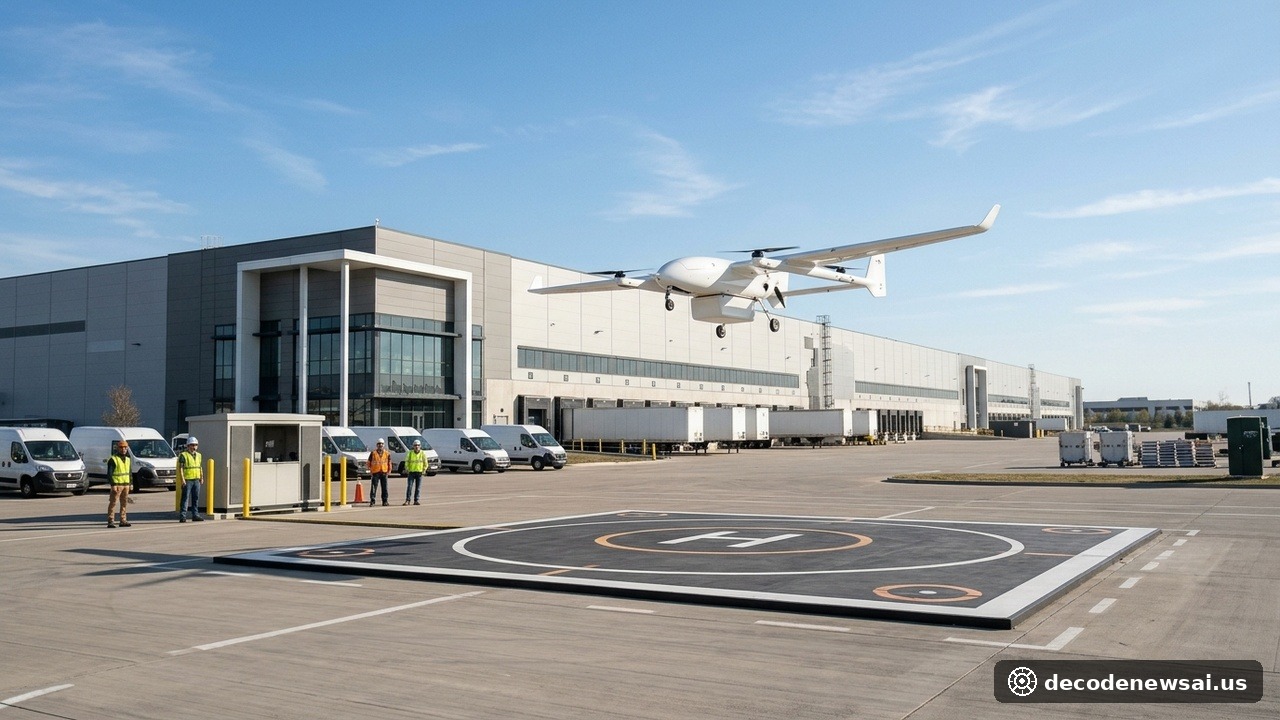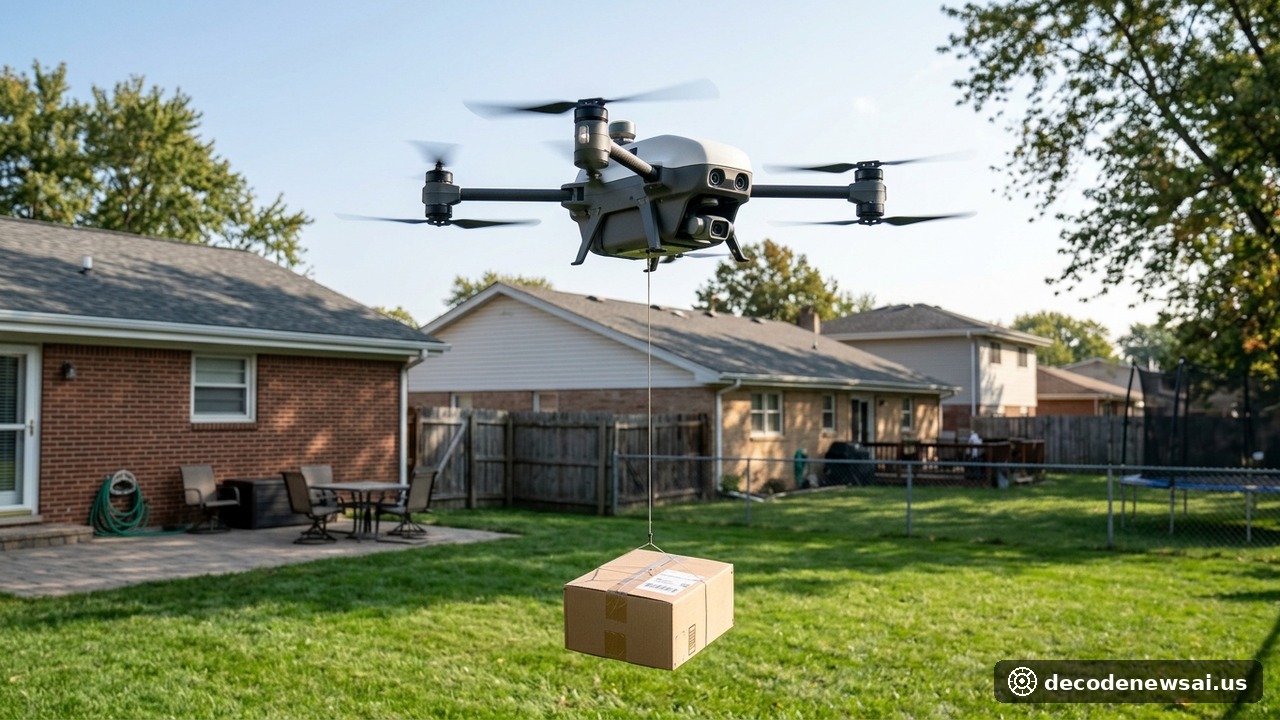
Wing, the autonomous drone logistics subsidiary of Alphabet, announced a major $125 million capital investment on November 9, 2026, to construct a dedicated domestic manufacturing plant and scale its commercial delivery infrastructure across the United States. The investment aims to industrialize the production of specialized delivery drones as commercial adoption of instant autonomous aerial transport accelerates. The new high-volume production facility will be situated in the Dallas-Fort Worth metropolitan area in Texas, serving as the central hardware manufacturing hub for Wing's global fleet.
Factory builds 5-pound eVTOL aircraft past 450,000 deliveries
The planned manufacturing complex spans more than 25,000 square meters and is slated to achieve full operational qualification by late 2027. The facility will incorporate automated precision robotic assembly lines, composite fabrication cleanrooms, and testing cells capable of assembling tens of thousands of commercial logistics aircraft annually. Building a dedicated domestic manufacturing facility allows Wing to maintain complete control over quality assurance, software-hardware co-design, and component traceability.
The factory will manufacture Wing's next-generation modular delivery aircraft, engineered around an electric vertical takeoff and landing (eVTOL) airframe. The updated airframe features an increased payload capacity of up to 5 pounds, catering to the vast majority of instant retail and pharmaceutical home orders. The aircraft delivers a operational round-trip delivery radius of 12 miles while maintaining minimal acoustic footprints across suburban neighborhoods. Advanced multi-sensor perception suites and redundant flight control computers enable safe navigation in diverse atmospheric environments.
The manufacturing expansion coincides with a historic operational milestone. Wing confirmed it has officially surpassed 450,000 commercial residential drone deliveries across its commercial footprint, with the vast majority occurring in Texas through commercial partnerships with retail giant Walmart and on-demand delivery platform DoorDash. Operating within suburban neighborhoods, Wing's drones deliver hot meals, groceries, and over-the-counter pharmaceuticals directly to customer lawns or driveways within an average elapsed time of 12 to 15 minutes from digital order placement.
CEO Adam Woodworth on FAA BVLOS approvals
Low-altitude airspace coordination across high-density suburban corridors is orchestrated autonomously via Wing's proprietary Uncrewed Traffic Management (UTM) digital platform. The software system continuously processes weather feeds, terrain models, and live flight trajectories to dynamically deconflict airspace without relying on dedicated human pilots for individual flights.
During a media briefing at the regional flight operations hub in Dallas, Wing Chief Executive Officer Adam Woodworth explained the operational vision behind onshoring hardware production. Woodworth noted that commercial drone delivery has graduated from initial technological demonstration into an essential logistics utility demanding industrial manufacturing scale. Woodworth stated: "Scaling our domestic production ensures our autonomous delivery fleet meets soaring commercial demand while keeping supply chains local."
The expansion follows critical regulatory approvals from the Federal Aviation Administration (FAA), which granted Wing comprehensive clearances for broad Beyond Visual Line of Sight (BVLOS) operations without visual observers. Industry logistics experts project that Alphabet's dedicated manufacturing commitment will significantly compress per-package delivery costs, positioning autonomous aerial logistics as a cost-effective substitute for traditional ground delivery vans in suburban retail corridors.
Experts on local assembly and domestic supply chains
Autonomous logistics engineers and urban planning experts noted that local drone assembly facilities significantly accelerate continuous iteration cycles for commercial aerial delivery fleets. Developing dedicated manufacturing capabilities within active operational hubs allows engineering teams to implement real-world operational feedback directly into composite fabrication and battery management hardware. As suburban retail logistics shifts toward electric low-altitude autonomous delivery, neighborhood noise mitigation and automated obstacle perception remain primary engineering benchmarks. Regulatory agencies and municipal transportation authorities are closely observing multi-hub residential operations to establish standardized commercial drone safety parameters nationwide.
Aeronautical manufacturing specialists and supply chain directors emphasized that establishing end-to-end domestic fabrication lines shields autonomous logistics networks from volatile international freight and component disruptions. The high-rate Texas manufacturing center will integrate advanced composite curing systems, automated robotic surface-mount electronics assembly, and environmental stress screening cells to guarantee aircraft airworthiness under extreme meteorological conditions. Continuous residential flight operations across suburban Dallas neighborhoods demonstrate that quiet electric drone delivery provides measurable environmental benefits by displacing carbon-intensive gasoline courier vans for small retail deliveries. Transportation researchers anticipate that widespread municipal deployment of autonomous logistics fleets will reshape last-mile e-commerce logistics over the coming decade.